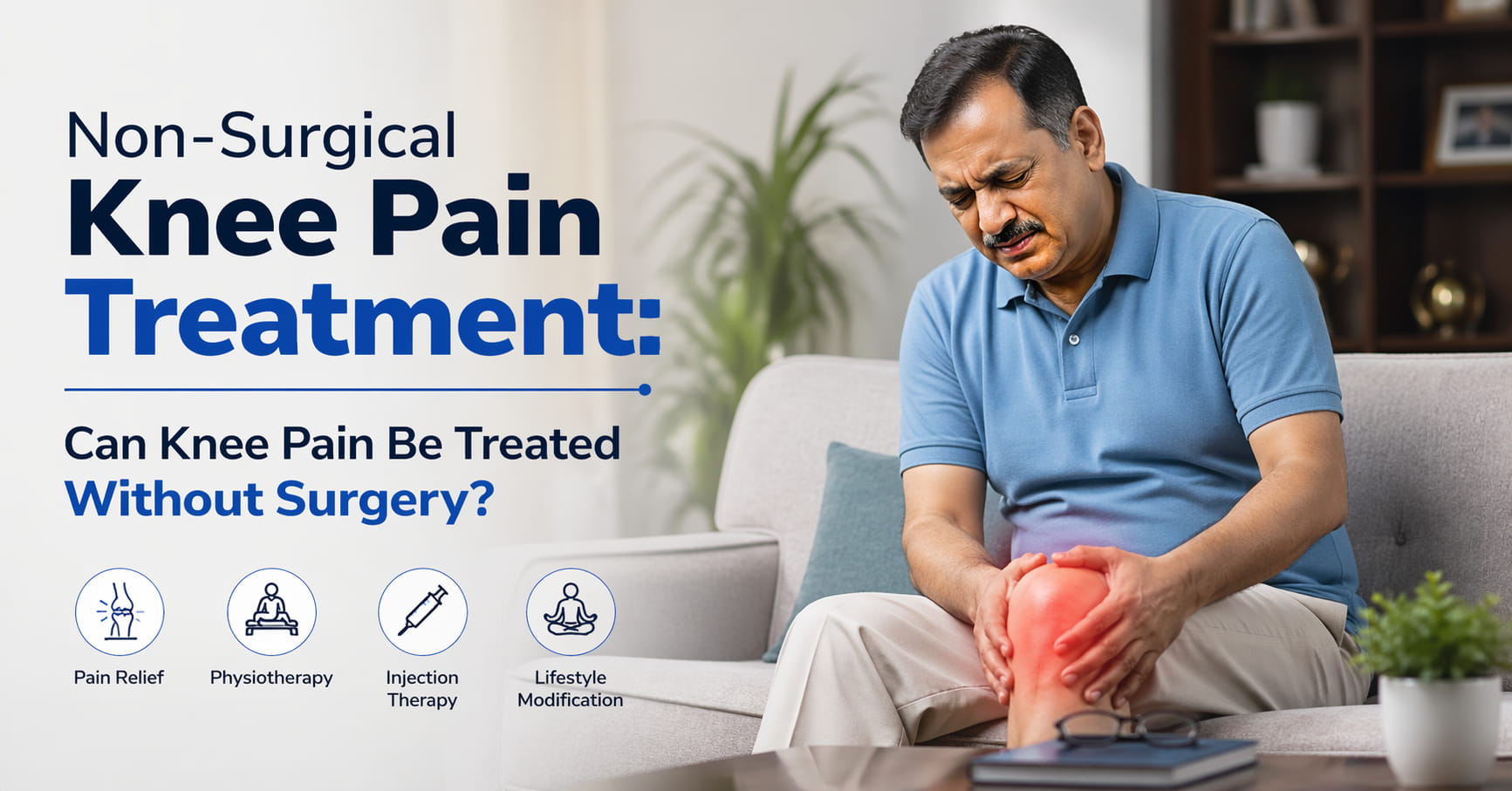
If you have been living with persistent knee pain and someone has told you that surgery is your only option, this article is for you. You are not alone. Millions of people in India deal with debilitating knee pain every day, and many of them believe that knee replacement surgery is inevitable. The truth is, it is not always the case. Non-surgical knee pain treatment has advanced significantly over the last decade, and today, patients have real, effective alternatives that most doctors never mention.
Why Is Knee Pain So Common?
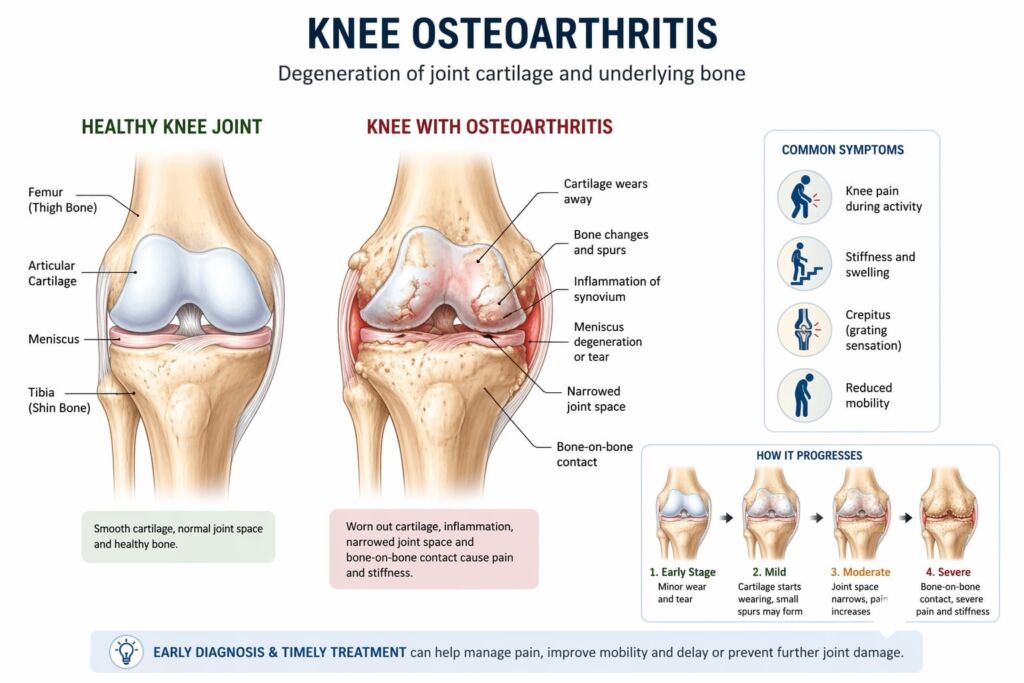
Knee pain is one of the most frequently reported conditions among adults over 40 in India. The most common cause is osteoarthritis – a condition where the cartilage in the knee joint gradually wears down, leading to bone rubbing against bone, swelling, and constant pain. Other causes include rheumatoid arthritis, sports injuries, and prolonged mechanical stress from standing or walking.
The pain can start as occasional stiffness in the morning and progress to a point where climbing stairs, walking short distances, or even sitting comfortably becomes difficult. When medications and physiotherapy stop working, most patients are referred for knee replacement surgery. But before you take that step, it is important to understand all available options.
Can Knee Pain Be Treated Without Surgery?
Yes, in many cases, knee pain can be effectively managed with non-surgical knee pain treatment methods. Especially in early to moderate stages of arthritis, patients can experience significant relief without undergoing invasive procedures.
The goal of non-surgical knee pain treatment is to:
- Reduce inflammation
- Improve joint movement
- Manage pain effectively
- Delay or avoid surgery
For many individuals, this approach offers a safer and more convenient path to recovery.
Why You Shouldn’t Jump Straight to Knee Surgery
Knee replacement surgery is a major procedure. Recovery takes three to six months. It involves general anesthesia, a hospital stay of five to seven days, and a lengthy rehabilitation period. Complications, though rare, include infection, blood clots, and implant failure. For many patients, especially those who are elderly, diabetic, or have heart conditions, surgery carries significant risk.
Chronic knee pain management does not have to begin and end with surgery. There are several evidence-based non-surgical knee pain treatments available today that provide long-lasting relief, faster recovery, and far fewer risks.
Non-Surgical Treatment Options for Knee Pain
Before recommending any procedure, Dr. Ram Kishore Gurajala evaluates each patient thoroughly. The goal is always to find the least invasive path to effective relief. Here is a summary of the most effective non invasive treatment options available for the knee:
1. Medications and Lifestyle Changes
Pain relievers and anti-inflammatory drugs are often the first step in managing symptoms. Weight management and activity modification also play a key role.
2. Physiotherapy
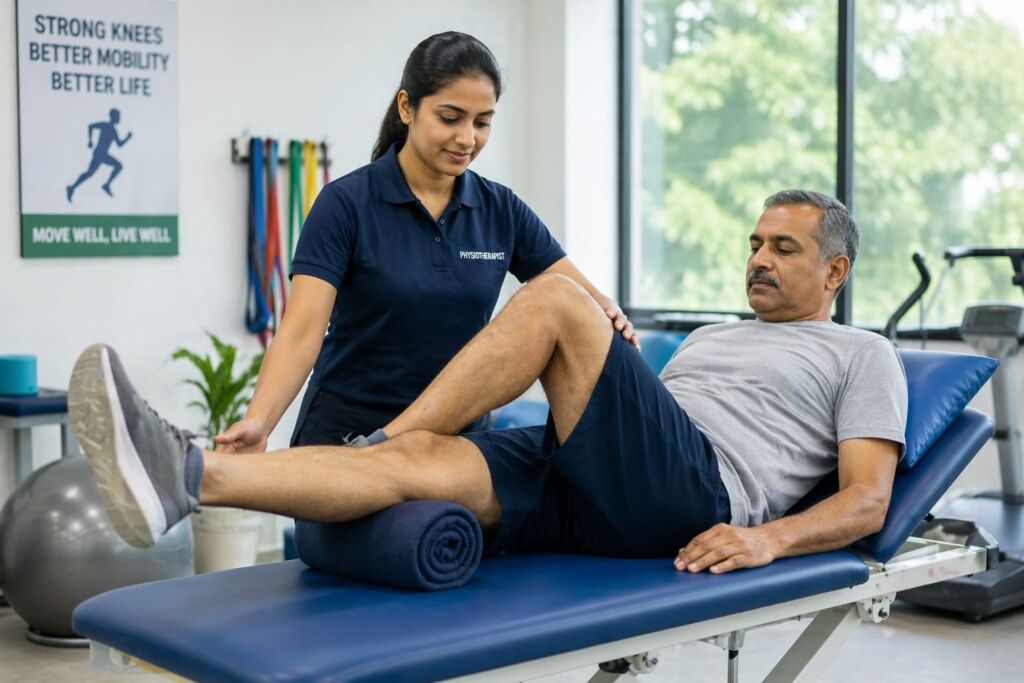
Targeted exercises help strengthen the muscles around the knee, improving stability and reducing stress on the joint.
3. Injections
Steroid or gel injections can provide temporary relief by reducing inflammation and improving joint lubrication.
4. Minimally Invasive Knee Treatment
Advanced techniques such as minimally invasive knee treatment offer longer-lasting relief by targeting the root cause of pain rather than just symptoms.
5. Genicular Nerve Ablation
It blocks pain signals from the knee nerves using image-guided radiofrequency, which is good for patients who’ve had knee replacement but still have pain
6. Genicular Artery Embolization (GAE)
The most advanced minimally invasive knee treatment available today, targeting the root cause of inflammation.
What Is Genicular Artery Embolization (GAE)?
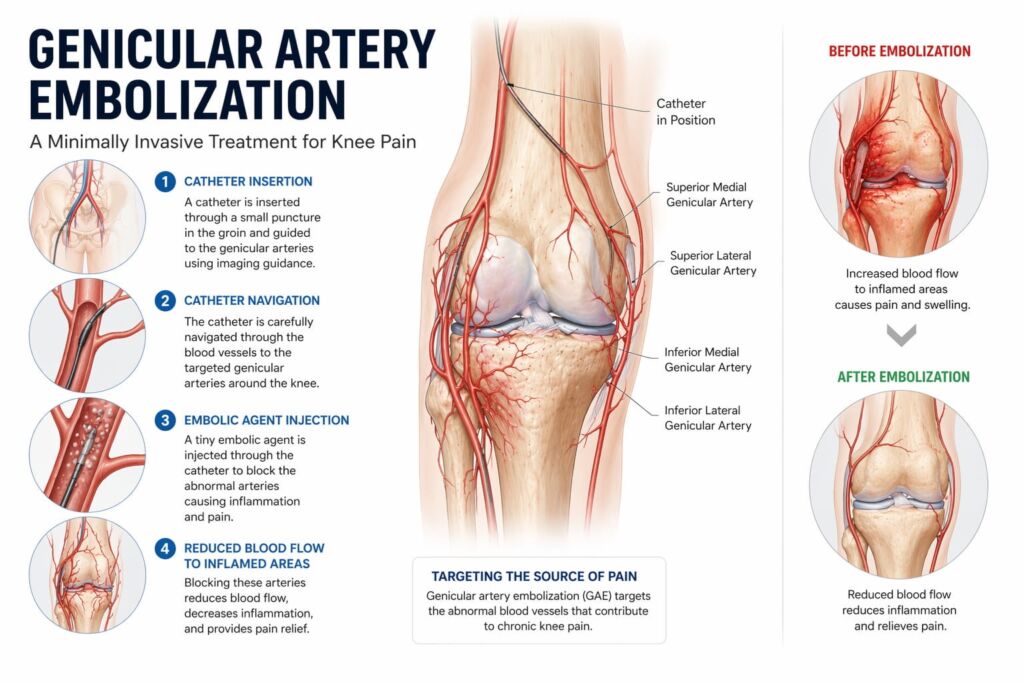
Genicular artery embolization is a breakthrough minimally invasive knee treatment performed by an interventional radiologist. It works by identifying and reducing blood flow to the abnormal blood vessels around the knee that are responsible for chronic inflammation. When that inflammation is reduced, pain decreases significantly, often within two to four weeks.
Here is what makes Genicular Artery Embolization different from anything else available:
- No surgery, no general anaesthesia.
- Performed through a pinhole, a tiny catheter is inserted through the wrist or groin
- Completed in 45 to 60 minutes as a day procedure
- Patient goes home the same day
- Back to light activity within 48 to 72 hours
- Studies show 70 to 80% of patients experience significant knee osteoarthritis pain relief
GAE vs Knee Replacement Surgery: A Direct Comparison
| Factor | GAE (Non-Surgical) | Knee Replacement Surgery |
| Anaesthesia | Local sedation only | General anaesthesia |
| Hospital stay | Same day — go home | 5–7 days |
| Recovery time | 2–3 days to light activity | 3–6 months |
| Procedure duration | 45–60 minutes | 2–3 hours |
| Scars | None — pinhole only | Large surgical scar |
| Suitable for high-risk patients | Yes—diabetics, heart patients | High risk for many |
| Repeat if needed | Yes, can be repeated | Revision surgery is complex |
Who Is a Candidate for GAE?
GAE is particularly effective for patients with Grade 2 or Grade 3 knee osteoarthritis who have already tried physiotherapy, injections, and medications without lasting relief. It is also an excellent option for patients who are not fit for surgery due to age, diabetes, heart conditions, or obesity.
If you have been diagnosed with knee arthritis treatment without surgery as a requirement, meaning your doctor wants to treat your knee without operating, GAE is the most advanced option available in India today.
Dr. Ram performs GAE at Lakshmi Hospital, Kondapur, Hyderabad and MGM Hospital, Chennai.
The key question to ask yourself is this: Have you genuinely exhausted all non-surgical knee pain treatment options before agreeing to go under the knife? If the answer is no then book a consultation first.
Benefits of Non-Surgical Knee Pain Treatment
Choosing non-surgical knee pain treatment offers several advantages:
No major surgery or stitches
- Faster recovery time
- Lower risk of complications
- Improved mobility and comfort
- Effective knee osteoarthritis pain relief
For many patients, these pain relief treatments provide a practical and less stressful alternative to surgery.
What to Expect During a GAE Consultation With Dr. Ram
During your first appointment, Dr. Ram will review your MRI or X-ray reports, assess your symptoms, and determine whether you are a suitable candidate for GAE or another pain relief treatment approach. There is no obligation. The goal of the consultation is simply to make sure you know all your options before making a decision about your knee.
Recovery and Results
Recovery from procedures like genicular artery embolization is typically quick. Most patients can resume normal activities within a short period and notice gradual improvement in pain levels.
With the right chronic knee pain management plan, patients can achieve long-term relief and improved quality of life.
When Should You Consider a Specialist?
If knee pain is affecting your daily activities or not improving with basic treatments, it’s time to explore advanced non-surgical knee pain treatment options.
Consulting an expert like Dr. Ram Kishore Gurajala, an interventional radiologist, can help you understand whether minimally invasive knee treatment options like GAE are suitable for you.
Knee pain doesn’t always mean surgery. With advancements in non-surgical knee pain treatment, patients now have access to safer, effective, and less invasive solutions.
Whether it’s early-stage arthritis or chronic discomfort, exploring options like knee arthritis treatment without surgery and innovative procedures such as genicular artery embolization can help you regain mobility and live pain-free.
 Have you been told knee replacement surgery is your only option?
Get a free second opinion from Dr. Ram Kishore Gurajala—Interventional Radiologist, Hyderabad & Chennai.
 Call or WhatsApp: 9063008887 |
  ir4ubyram.com