

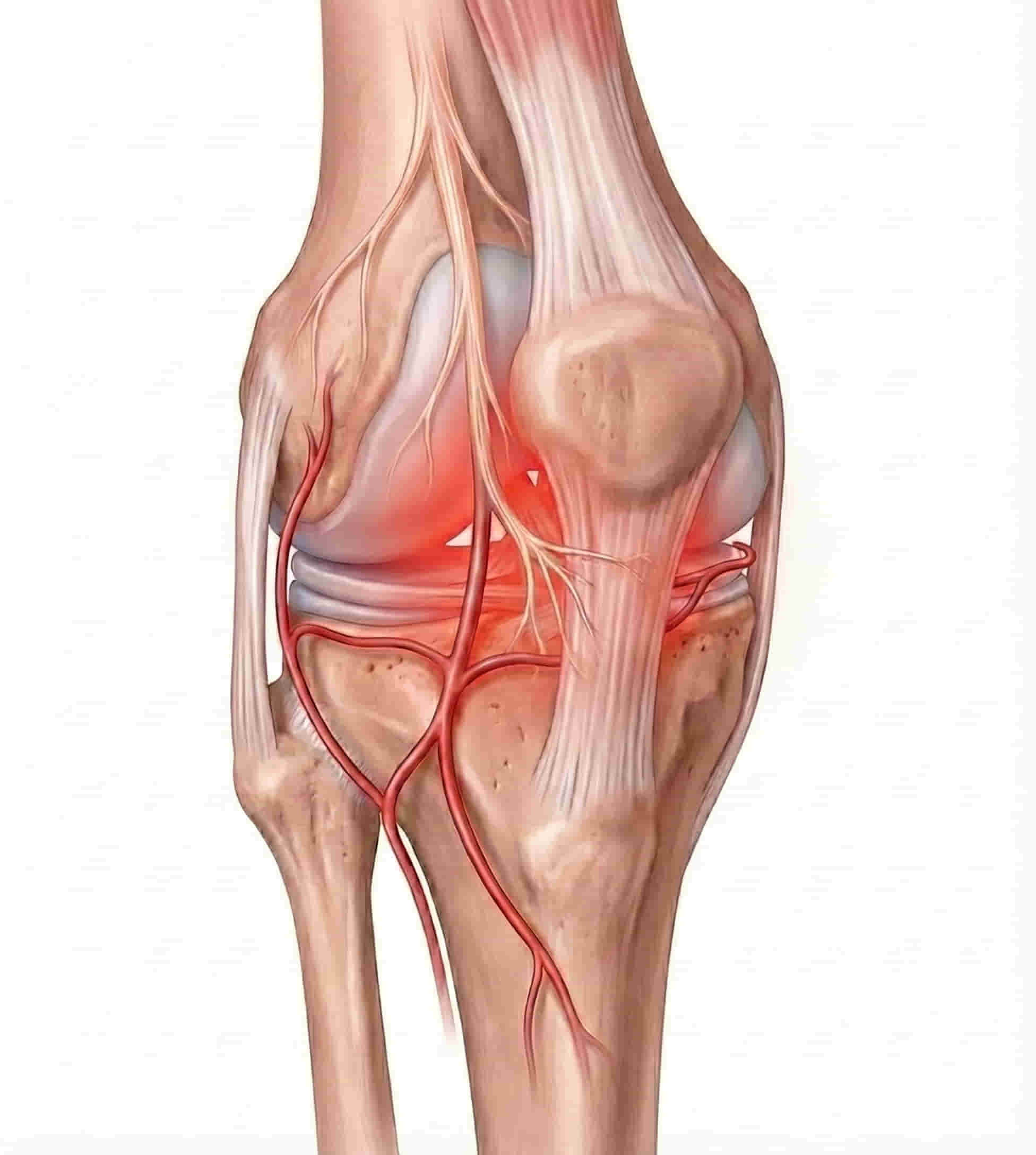
Genicular Nerve Ablation for Chronic Knee Pain Treatment in Hyderabad & Chennai

✓ Advanced Minimally Invasive Knee Pain Treatment
Genicular Nerve Ablation: A Minimally Invasive Treatment for Chronic Knee Pain
Genicular Nerve Ablation is a minimally invasive, image-guided procedure that targets and disables pain-causing nerves around the knee using radiofrequency energy. It is effective for patients with knee osteoarthritis or persistent pain after knee surgery, providing long-lasting relief without affecting normal joint function.
Compared to traditional surgical options, this treatment offers faster recovery, minimal discomfort, and improved mobility. It allows patients to manage chronic knee pain effectively without undergoing major surgery.
 Faster Recovery (Same Day / 1–3 Days)
Resume normal daily activities quickly with minimal downtime compared to surgical treatments.
No Major Surgery or Large Cuts
A non-surgical, minimally invasive procedure with reduced pain, no stitches, and minimal scarring.
Long-Lasting Knee Pain Relief
Effectively blocks pain signals from the knee nerves, providing relief for months or even longer.

✓ Advanced Minimally Invasive Knee Pain Treatment
Genicular Nerve Ablation: A Minimally Invasive Treatment for Chronic Knee Pain
Genicular Nerve Ablation is a minimally invasive, image-guided procedure that targets and disables pain-causing nerves around the knee using radiofrequency energy. It is effective for patients with knee osteoarthritis or persistent pain after knee surgery, providing long-lasting relief without affecting normal joint function.
Compared to traditional surgical options, this treatment offers faster recovery, minimal discomfort, and improved mobility. It allows patients to manage chronic knee pain effectively without undergoing major surgery.

Faster Recovery (Same Day / 1–3 Days)
Resume normal daily activities quickly with minimal downtime compared to surgical treatments.
No Major Surgery or Large Cuts
A non-surgical, minimally invasive procedure with reduced pain, no stitches, and minimal scarring.
Long-Lasting Knee Pain Relief
Effectively blocks pain signals from the knee nerves, providing relief for months or even longer.
Dr Ram will be consulting in Hyderabad from August 1st.
Early Symptoms of Chronic Knee Pain: Warning Signs You Should Not Ignore
 Persistent Knee Pain
Persistent knee pain is one of the most common symptoms of chronic knee conditions, often linked to osteoarthritis, cartilage wear, or joint stress. It is typically a dull, constant ache that may worsen during movement or weight-bearing activities.
Over time, the pain can interfere with walking, standing, or climbing stairs, and may even occur at rest or during sleep. Genicular Nerve Ablation helps block pain signals, providing long-lasting relief and improved quality of life without surgery.
“You may feel a constant discomfort in your knee that doesn’t fully go away, even after rest or medication.”
Common Signs Associated with Persistent Knee Pain
- Feeling a dull, continuous ache in the knee
- Pain that worsens with movement or prolonged activity
- Discomfort while resting or at night
- Increased pain after walking or standing
- Difficulty performing everyday activities
 Swelling in Knee “Synovitis”
Synovitis is the inflammation of the knee joint lining, causing swelling, stiffness, and discomfort. It is commonly associated with chronic conditions like osteoarthritis or repetitive joint stress.
As fluid builds up, the knee may feel swollen, tight, or heavy, making bending and straightening difficult. In persistent cases, Genicular Nerve Ablation can help reduce pain signals, improving comfort and mobility without surgery.
“You may notice your knee looks puffy or feels stiff, making it difficult to bend or move comfortably.”
Common Signs of Severe Swelling Knee
- Visible swelling or puffiness around the knee
- Tightness or stiffness in the joint
- Difficulty bending or straightening the knee
- Warmth or tenderness around the knee
- Discomfort after walking or prolonged activity
 Grinding or Clicking Sounds “Crepitus”
A grinding or clicking sensation in the knee (crepitus) is a common symptom of chronic knee pain, often linked to osteoarthritis. It occurs when cartilage wears down, causing bones to rub during movement.
As the condition progresses, it may be accompanied by pain, stiffness, or swelling, especially during bending, straightening, walking, or climbing stairs. For patients with persistent symptoms, Genicular Nerve Ablation can help reduce pain signals, improving mobility and daily function without surgery.
“You may hear or feel a grinding or clicking sound when moving your knee, especially during bending or walking.”
Common Signs of Grinding or Clicking Sounds
- Clicking or popping sounds during movement
- Grinding sensation while bending the knee
- Increased noise during physical activity
- Sensation of friction within the joint
- Discomfort along with joint movement
 Instability (Knee giving up)
Knee instability is a condition where the joint feels weak or unable to support body weight, often due to chronic knee conditions or joint degeneration. Patients may experience a sensation of the knee “giving way” or buckling during movement.
This can affect confidence, mobility, and daily activities, while increasing the risk of falls or injury. For patients with persistent symptoms, Genicular Nerve Ablation helps reduce pain signals, improving stability and function without surgery.
“You may hear or feel a cracking, popping, or grinding sound when moving your knee, especially during regular activities.”
Common Signs Associated with Instability
- Feeling of knee weakness or instability
- Knee buckling during walking or standing
- Difficulty maintaining balance
- Fear of movement due to instability
- Increased risk of falls
 Limited Range of Motion Stiffness
Limited range of motion occurs when the knee cannot fully bend or straighten due to pain, stiffness, or joint damage. It is a common symptom of chronic knee pain, especially in osteoarthritis, where joint space narrows and movement becomes restricted.
Patients may struggle with daily activities like sitting, standing, or climbing stairs. Over time, reduced mobility can lead to muscle stiffness, weakness, and declining joint function if not treated.
“You may find it difficult to fully bend or straighten your knee, making daily movements harder.”
Common Signs Associated with Stiffness and Reduced Mobility
- Difficulty bending or straightening the knee
- Stiffness after rest or inactivity
- Restricted movement during daily activities
- Pain while attempting full motion
- Gradual loss of flexibility over time
Early Symptoms of Chronic Knee Pain: Warning Signs You Should Not Ignore
Persistent Knee Pain
Persistent knee pain is one of the most common symptoms of chronic knee conditions, often linked to osteoarthritis, cartilage wear, or joint stress. It is typically a dull, constant ache that may worsen during movement or weight-bearing activities.
Over time, the pain can interfere with walking, standing, or climbing stairs, and may even occur at rest or during sleep. Genicular Nerve Ablation helps block pain signals, providing long-lasting relief and improved quality of life without surgery.
“You may feel a constant discomfort in your knee that doesn’t fully go away, even after rest or medication.”
Common Signs Associated with Presistent Knee Pain
- Feeling a dull, continuous ache in the knee
- Pain that worsens with movement or prolonged activity
- Discomfort while resting or at night
- Increased pain after walking or standing
- Difficulty performing everyday activities
Swelling in Knee “Synovitis”
Synovitis is the inflammation of the knee joint lining, causing swelling, stiffness, and discomfort. It is commonly associated with chronic conditions like osteoarthritis or repetitive joint stress.
As fluid builds up, the knee may feel swollen, tight, or heavy, making bending and straightening difficult. In persistent cases, Genicular Nerve Ablation can help reduce pain signals, improving comfort and mobility without surgery.
“You may notice your knee looks puffy or feels stiff, making it difficult to bend or move comfortably.”
Common Signs of Swelling Knee
- Visible swelling or puffiness around the knee
- Tightness or stiffness in the joint
- Difficulty bending or straightening the knee
- Warmth or tenderness around the knee
- Discomfort after walking or prolonged activity
Grinding or Clicking Sounds “Crepitus”
A grinding or clicking sensation in the knee (crepitus) is a common symptom of chronic knee pain, often linked to osteoarthritis. It occurs when cartilage wears down, causing bones to rub during movement.
As the condition progresses, it may be accompanied by pain, stiffness, or swelling, especially during bending, straightening, walking, or climbing stairs. For patients with persistent symptoms, Genicular Nerve Ablation can help reduce pain signals, improving mobility and daily function without surgery.
“You may hear or feel a grinding or clicking sound when moving your knee, especially during bending or walking.”
Common Signs of Grinding or Clicking Sounds
- Clicking or popping sounds during movement
- Grinding sensation while bending the knee
- Increased noise during physical activity
- Sensation of friction within the joint
- Discomfort along with joint movement
Instability (Knee giving up)
Knee instability is a condition where the joint feels weak or unable to support body weight, often due to chronic knee conditions or joint degeneration. Patients may experience a sensation of the knee “giving way” or buckling during movement.
This can affect confidence, mobility, and daily activities, while increasing the risk of falls or injury. For patients with persistent symptoms, Genicular Nerve Ablation helps reduce pain signals, improving stability and function without surgery.
“You may feel like your knee is not stable or might suddenly give way while walking.”
Common Signs Associated with Instability
- Feeling of knee weakness or instability
- Knee buckling during walking or standing
- Difficulty maintaining balance
- Fear of movement due to instability
- Increased risk of falls
Limited Range of Motion (Stiffness)
Limited range of motion occurs when the knee cannot fully bend or straighten due to pain, stiffness, or joint damage. It is a common symptom of chronic knee pain, especially in osteoarthritis, where joint space narrows and movement becomes restricted.
Patients may struggle with daily activities like sitting, standing, or climbing stairs. Over time, reduced mobility can lead to muscle stiffness, weakness, and declining joint function if not treated.
“You may find it difficult to fully bend or straighten your knee, making daily movements harder.”
Common Signs Associated with Stiffness and Reduced Mobility
- Difficulty bending or straightening the knee
- Stiffness after rest or inactivity
- Restricted movement during daily activities
- Pain while attempting full motion
- Gradual loss of flexibility over time
Board-Certified Expertise
Internationally trained with credentials from leading medical institutions
FRCR
Fellow, Royal College of Radiologists
DABIR
Diplomate, American Board of Interventional Radiology
MRCSEd
Member, Royal College of Surgeons Edinburg
40+ Publications
Peer-reviewed scientific research
Why Dr. Ram Kishore Stands Out
 Cleveland Clinic Training
Advanced interventional radiology fellowship from one of the world’s top medical institutions.
✅ Research Pioneer
40+ Peer-reviewed publications advancing the field of interventional radiology
✅ 14+ Years Experience
Thousands of successful treatments, with exceptional patient outcomes
✅ Patient-Centered Care
Evidence-based approach with focus on patient education and informed decision making
Board-Certified Expertise
Internationally trained with credentials from leading medical institutions
FRCR
Fellow, Royal College of Radiologists
DABIR
Diplomate, American Board of Interventional Radiology
MRCSEd
Member, Royal College of Surgeons Edinburgh
40+ Publications
Peer-reviewed scientific research
Why Dr. Ram Kishore Stands Out
✅ Cleveland Clinic Training
Advanced interventional radiology fellowship from one of the world’s top medical institutions.
✅ Research Pioneer
40+ Peer-reviewed publications advancing the field of interventional radiology
✅ 14+ Years Experience
Thousands of successful treatments, with exceptional patient outcomes
✅ Patien-Centered Care
Evidence-based approach with focus on patient education and informed decision making
Advanced Genicular Nerve Ablation Treatment for Chronic Knee Pain in India
A Safe and Effective Non-Surgical Solution for Knee Pain Relief
Genicular nerve ablation is a minimally invasive, image-guided treatment designed to provide long-lasting relief from chronic knee pain caused by osteoarthritis or joint degeneration. By targeting the genicular nerves responsible for transmitting pain signals, this advanced procedure helps patients regain mobility without undergoing major surgery.
Using radiofrequency ablation technology, a thin needle is precisely guided to the nerves around the knee to block pain signals. This targeted approach reduces discomfort, improves function, and allows patients to return to daily activities with minimal downtime. It is an ideal option for individuals who want to avoid or delay knee replacement surgery.
Why Knee Pain Should Not Be Ignored
💔Reduced Mobility and Joint Function
Chronic knee pain can limit movement, making it difficult to walk, climb stairs, or perform everyday activities, ultimately affecting independence.
💔 Persistent Pain and Inflammation
Ongoing knee pain due to osteoarthritis or injury can worsen over time, leading to continuous discomfort and reduced quality of life.
 Dependence on Pain Medications
Long-term use of painkillers may provide temporary relief but can lead to side effects and does not address the root cause of the pain.
Emotional and Mental Stress
Living with chronic knee pain can lead to frustration, anxiety, reduced activity levels, and overall decline in mental well-being.

Advanced Genicular Nerve Ablation Treatment for Chronic Knee Pain in India
A Safe and Effective Non-Surgical Solution for Knee Pain Relief
Genicular nerve ablation is a minimally invasive, image-guided treatment designed to provide long-lasting relief from chronic knee pain caused by osteoarthritis or joint degeneration. By targeting the genicular nerves responsible for transmitting pain signals, this advanced procedure helps patients regain mobility without undergoing major surgery.
Using radiofrequency ablation technology, a thin needle is precisely guided to the nerves around the knee to block pain signals. This targeted approach reduces discomfort, improves function, and allows patients to return to daily activities with minimal downtime. It is an ideal option for individuals who want to avoid or delay knee replacement surgery.
Impact of Untreated Chronic Knee Pain
💔 Reduced Mobility and Joint Function
Chronic knee pain can limit movement, making it difficult to walk, climb stairs, or perform everyday activities, ultimately affecting independence.
💔 Persistent Pain and Inflammation
Ongoing knee pain due to osteoarthritis or injury can worsen over time, leading to continuous discomfort and reduced quality of life.
💔Dependence on Pain Medications
Long-term use of painkillers may provide temporary relief but can lead to side effects and does not address the root cause of the pain.
💔Emotional and Mental Stress
Living with chronic knee pain can lead to frustration, anxiety, reduced activity levels, and overall decline in mental well-being.


How Genicular Nerve Ablation Works for Knee Pain Relief
A minimally invasive, targeted treatment that blocks knee pain at its source
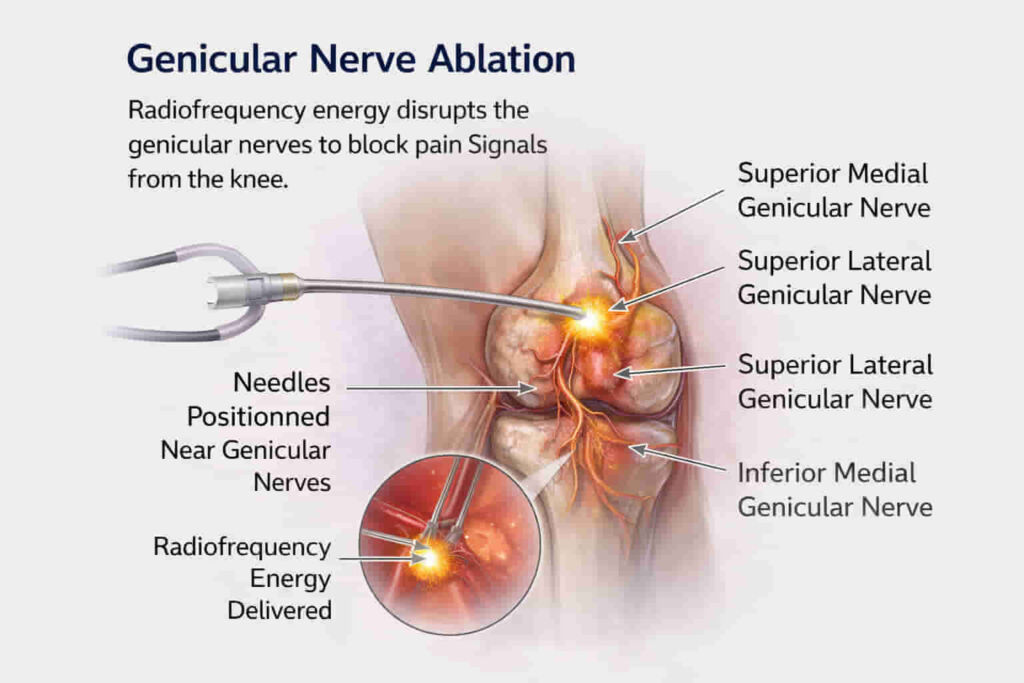
Precise Targeting of Genicular Nerves
Using fluoroscopy or ultrasound, a thin needle is carefully guided to the genicular nerves around the knee. This ensures precise targeting of pain-transmitting nerves while minimizing any impact on surrounding tissues.A thin microcatheter is inserted through a small puncture in the groin or wrist and guided to the genicular arteries using real-time imaging such as fluoroscopy. This ensures precise and safe access to the blood vessels supplying the knee joint.
Radiofrequency Energy Application
Radiofrequency energy is delivered through the needle to generate controlled heat, which disrupts the nerve’s ability to transmit pain signals. This process does not affect muscles or joint function, allowing patients to retain normal knee movement.
Blocking Pain Signals
Once treated, the genicular nerves are no longer able to effectively send pain signals to the brain, resulting in significant reduction of chronic knee pain, especially in patients with knee osteoarthritis.
Gradual Pain Relief and Recovery
Pain relief typically develops over days to weeks as inflammation decreases and nerve signaling is reduced. Patients experience improved mobility, reduced dependence on pain medications, and better overall function.
Improved Mobility and Long-Term Relief
With reduced pain, patients can return to daily activities such as walking, climbing stairs, and light exercise. Genicular nerve ablation helps restore mobility and enhances quality of life without the need for surgery.
Get a complete, detailed explanation of Genicular Nerve Ablation by Dr Ram Kishore
How Genicular Nerve Ablation Works for Knee Pain Relief
A minimally invasive, targeted treatment that blocks knee pain at its source
Precise Targeting of Genicular Nerves
Using fluoroscopy or ultrasound, a thin needle is carefully guided to the genicular nerves around the knee. This ensures precise targeting of pain-transmitting nerves while minimizing any impact on surrounding tissues.
Radiofrequency Energy Application
Radiofrequency energy is delivered through the needle to generate controlled heat, which disrupts the nerve’s ability to transmit pain signals. This process does not affect muscles or joint function, allowing patients to retain normal knee movement.
Blocking Pain Signals
Once treated, the genicular nerves are no longer able to effectively send pain signals to the brain, resulting in significant reduction of chronic knee pain, especially in patients with knee osteoarthritis.
Gradual Pain Relief and Recovery
Pain relief typically develops over days to weeks as inflammation decreases and nerve signaling is reduced. Patients experience improved mobility, reduced dependence on pain medications, and better overall function.
Improved Mobility and Long-Term Relief
With reduced pain, patients can return to daily activities such as walking, climbing stairs, and light exercise. Genicular nerve ablation helps restore mobility and enhances quality of life without the need for surgery.
Genicular Nerve Ablation vs Knee Surgery: Which Is Better for Knee Pain Relief?
A detailed comparison of genicular nerve ablation and traditional knee surgery based on effectiveness, recovery, and patient outcomes. Discover a minimally invasive knee pain treatment with faster recovery, less blood loss, and lower risk compared to traditional surgery.
🛡️Benefits of Genicular Nerve Ablation
- Minimally invasive – No major cuts, stitches, or scars
- Preserves knee joint – Targets pain nerves without altering joint structure
- Quick recovery – Return to normal activities within 1–3 days
- Outpatient procedure – No hospital stay required
- Long-lasting pain relief – Effectively blocks knee pain signals
- Lower risk – Fewer complications compared to surgery
- Ideal alternative – Suitable for patients avoiding knee replacement
⚡ Limitations of Traditional Knee Surgery
- Requires surgery – Involves incisions and stitches
- Long recovery time – Weeks to months for full healing
- Hospitalization needed – Requires admission and post-op care
- Post-surgical pain – Swelling and discomfort are common
- Higher risk – Infection, blood clots, and anaesthesia risks
- Joint alteration – May involve artificial implants
- Not for everyone – Risky for elderly or medically unfit patients
Genicular Nerve Ablation vs Knee Surgery: Which Is Better for Knee Pain Relief?
A detailed comparison of genicular nerve ablation and traditional knee surgery based on effectiveness, recovery, and patient outcomes
🛡️Benefits of Genicular Nerve Ablation Treatment
- Minimally invasive – No major cuts, stitches, or scars
- Preserves knee joint – Targets pain nerves without altering joint structure
- Quick recovery – Return to normal activities within 1–3 days
- Outpatient procedure – No hospital stay required
- Long-lasting pain relief – Effectively blocks knee pain signals
- Lower risk – Fewer complications compared to surgery
- Ideal alternative – Suitable for patients avoiding knee replacement
⚡ Traditional Knee Surgery Drawbacks
- Requires surgery – Involves incisions and stitches
- Long recovery time – Weeks to months for full healing
- Hospitalization needed – Requires admission and post-op care
- Post-surgical pain – Swelling and discomfort are common
- Higher risk – Infection, blood clots, and anesthesia risks
- Joint alteration – May involve artificial implants
- Not for everyone – Risky for elderly or medically unfit patients
★★★★★
“I was suffering from chronic knee pain and was worried about undergoing surgery. My doctor suggested Genicular Artery Embolization as a safer option. The procedure was quick and minimally invasive with very little discomfort. Within days, my pain reduced significantly, and I could walk comfortably again. There was no long recovery or hospital stay involved. I’m now back to my normal life without the constant knee pain.”

Padmanvibhushan
Chennai, India
Age 61 | 1 years Post – Genicular Nerve Ablation
★★★★★
“My knee pain was affecting my daily life, and I wanted to avoid major surgery. I chose Genicular Artery Embolization based on my doctor’s advice. The procedure was simple, and I felt minimal discomfort throughout. Recovery was quick, and I noticed a clear reduction in pain within a few days. I can now move freely without the stiffness I had before. It was the best decision for my knee health.”

Krishna Kumar
Hyderabad, India
Age 57 | 2 years Post – Genicular Nerve Ablation
Patient Experiences with Genicular Nerve Ablation Treatment
★★★★★
“After struggling with severe knee pain due to arthritis for years, I was finding it difficult to even walk short distances. At 68, I wanted to avoid knee replacement surgery. Genicular nerve ablation was suggested to me, and it truly changed my life. The procedure was quick, and within a couple of weeks, my pain reduced significantly. I can now walk comfortably and perform my daily activities without constant discomfort. I’m very grateful for this non-surgical knee pain treatment.”

Rakesh Kumar
Hyderabad, India
Age 68 | 2 years Post – Genicular Nerve Ablation
★★★★★
“I am 72 years old and had chronic knee pain that made climbing stairs and standing for long periods extremely difficult. Medications were no longer helping, and surgery was not an option for me. After undergoing genicular nerve ablation, I experienced remarkable pain relief within a few weeks. My mobility has improved, and I feel much more independent. It’s a safe and effective treatment for anyone looking to avoid surgery.”

Lakshmi Devi
Chennai, India
Age 72 | 1.5 years Post – Genicular Nerve Ablation
Frequently Asked Questions About Genicular Nerve Ablation
What is genicular nerve ablation and how does it work?
Genicular nerve ablation is a minimally invasive, non-surgical procedure used to treat chronic knee pain by targeting the genicular nerves that carry pain signals from the knee to the brain. Using radiofrequency energy, these nerves are carefully heated to interrupt pain transmission without affecting movement. This advanced, image-guided technique provides long-lasting knee pain relief while preserving the natural structure of the joint. It is commonly recommended for patients with osteoarthritis or persistent knee pain who want to avoid surgery.
Who is a suitable candidate for genicular nerve ablation?
Genicular nerve ablation is ideal for patients suffering from chronic knee pain due to osteoarthritis, injury, or degeneration who have not responded to medications, physiotherapy, or injections. It is especially beneficial for elderly patients or those who are not suitable candidates for knee replacement surgery due to medical conditions. Patients looking for a non-surgical knee pain treatment or wanting to delay knee surgery can also benefit from this procedure. A diagnostic nerve block is usually performed first to confirm eligibility.
How long does pain relief last after genicular nerve ablation?
Pain relief from genicular nerve ablation typically lasts between 6 to 18 months, depending on the individual and severity of the condition. The treated nerves may gradually regenerate over time, but many patients experience significant improvement in pain and mobility during this period. The procedure can be safely repeated if the pain returns. It is considered one of the most effective long-term non-surgical treatments for chronic knee pain.
Is genicular nerve ablation a safe procedure?
Yes, genicular nerve ablation is considered a safe and well-tolerated procedure when performed by experienced specialists. It is minimally invasive and uses image guidance to ensure precise targeting of the nerves, reducing the risk of complications. Most side effects are mild and temporary, such as slight soreness or swelling at the treatment site. Compared to traditional knee surgery, it carries significantly lower risks and does not require general anesthesia.
How long does the procedure take and is hospitalization required?
The genicular nerve ablation procedure typically takes about 30 to 60 minutes and is performed on an outpatient basis. Patients can go home the same day without the need for hospital admission. Since it is a minimally invasive treatment, recovery is quick, and most patients can resume normal activities within a day or two. This makes it a convenient option for those seeking effective knee pain relief without the downtime of surgery.
When will I start feeling relief after genicular nerve ablation?
Pain relief after genicular nerve ablation is usually gradual and may begin within a few days to a few weeks after the procedure. Some patients may experience immediate relief due to the local anesthetic used during the treatment, but the full effect develops as the nerve signals are disrupted. Over time, patients notice reduced pain, improved mobility, and better overall knee function.
Can genicular nerve ablation replace knee replacement surgery?
Genicular nerve ablation is not a direct replacement for knee replacement surgery, but it is an excellent alternative for many patients. It is especially useful for those who want to delay surgery, are not fit for surgery, or prefer a non-invasive option. While it does not repair joint damage, it effectively manages pain and improves quality of life. Many patients choose this treatment to stay active without undergoing major surgery.
What are the advantages of genicular nerve ablation over knee surgery?
Genicular nerve ablation offers several advantages, including being minimally invasive, requiring no major incisions, and having a much shorter recovery time. Unlike knee surgery, it does not involve hospitalization or long rehabilitation periods. The risk of complications is significantly lower, and patients can return to daily activities quickly. It is a preferred option for those seeking safe, effective, and non-surgical knee pain relief.
Frequently Asked Questions About Genicular Nerve Ablation
What is genicular nerve ablation and how does it work?
Genicular nerve ablation is a minimally invasive, non-surgical procedure used to treat chronic knee pain by targeting the genicular nerves that carry pain signals from the knee to the brain. Using radiofrequency energy, these nerves are carefully heated to interrupt pain transmission without affecting movement. This advanced, image-guided technique provides long-lasting knee pain relief while preserving the natural structure of the joint. It is commonly recommended for patients with osteoarthritis or persistent knee pain who want to avoid surgery.
Who is a suitable candidate for genicular nerve ablation?
Genicular nerve ablation is ideal for patients suffering from chronic knee pain due to osteoarthritis, injury, or degeneration who have not responded to medications, physiotherapy, or injections. It is especially beneficial for elderly patients or those who are not suitable candidates for knee replacement surgery due to medical conditions. Patients looking for a non-surgical knee pain treatment or wanting to delay knee surgery can also benefit from this procedure. A diagnostic nerve block is usually performed first to confirm eligibility.
How long does pain relief last after genicular nerve ablation?
Pain relief from genicular nerve ablation typically lasts between 6 to 18 months, depending on the individual and severity of the condition. The treated nerves may gradually regenerate over time, but many patients experience significant improvement in pain and mobility during this period. The procedure can be safely repeated if the pain returns. It is considered one of the most effective long-term non-surgical treatments for chronic knee pain.
Is genicular nerve ablation a safe procedure?
Yes, genicular nerve ablation is considered a safe and well-tolerated procedure when performed by experienced specialists. It is minimally invasive and uses image guidance to ensure precise targeting of the nerves, reducing the risk of complications. Most side effects are mild and temporary, such as slight soreness or swelling at the treatment site. Compared to traditional knee surgery, it carries significantly lower risks and does not require general anesthesia.
How long does the procedure take and is hospitalization required?
The genicular nerve ablation procedure typically takes about 30 to 60 minutes and is performed on an outpatient basis. Patients can go home the same day without the need for hospital admission. Since it is a minimally invasive treatment, recovery is quick, and most patients can resume normal activities within a day or two. This makes it a convenient option for those seeking effective knee pain relief without the downtime of surgery.
When will I start feeling relief after genicular nerve ablation?
Pain relief after genicular nerve ablation is usually gradual and may begin within a few days to a few weeks after the procedure. Some patients may experience immediate relief due to the local anesthetic used during the treatment, but the full effect develops as the nerve signals are disrupted. Over time, patients notice reduced pain, improved mobility, and better overall knee function.
Can genicular nerve ablation replace knee replacement surgery?
Genicular nerve ablation is not a direct replacement for knee replacement surgery, but it is an excellent alternative for many patients. It is especially useful for those who want to delay surgery, are not fit for surgery, or prefer a non-invasive option. While it does not repair joint damage, it effectively manages pain and improves quality of life. Many patients choose this treatment to stay active without undergoing major surgery.
. What are the advantages of genicular nerve ablation over knee surgery?
Genicular nerve ablation offers several advantages, including being minimally invasive, requiring no major incisions, and having a much shorter recovery time. Unlike knee surgery, it does not involve hospitalization or long rehabilitation periods. The risk of complications is significantly lower, and patients can return to daily activities quickly. It is a preferred option for those seeking safe, effective, and non-surgical knee pain relief.
Your Life Doesn't Have to Be Controlled by a Tumour
Thousands of women have reclaimed their freedom through UFE, a safe and minimally invasive treatment for uterine fibroids. You don’t have to live with constant pain, heavy bleeding, or exhaustion. You deserve relief without major surgery or long recovery. Take control of your health and take the first step toward a life free from fibroid symptoms today.
Available in Hyderabad & Chennai | Cleveland Clinic Trained | 14+ Years Experience | 90% Success Rate
First Consultation is Risk-Free: Meet with Dr. Kishore, discuss your symptoms, and explore all treatment options. No pressure, no obligation. We’re here to help you make the best decision for your health.
Your Life Doesn't Have to Be Controlled by a Tumour
Thousands of women have reclaimed their freedom through UFE, a safe and minimally invasive treatment for uterine fibroids. You don’t have to live with constant pain, heavy bleeding, or exhaustion. You deserve relief without major surgery or long recovery. Take control of your health and take the first step toward a life free from fibroid symptoms today.
Available in Hyderabad & Chennai | Cleveland Clinic Trained | 14+ Years Experience | 90% Success Rate
First Consultation is Risk-Free: Meet with Dr. Kishore, discuss your symptoms, and explore all treatment options. No pressure, no obligation. We’re here to help you make the best decision for your health.