

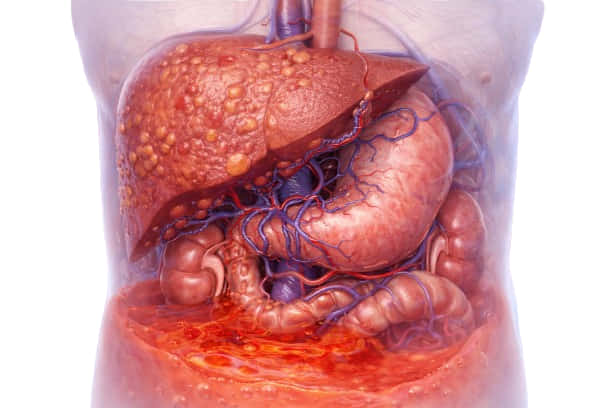
Transjugular Intrahepatic Portosystemic Shunt (TIPS) treatment for portal hypertension in Hyderabad and Chennai.”
✓ Minimally Invasive TIPS for Portal Hypertension
Regain control of your health with TIPS treatment
A minimally invasive procedure designed to reduce portal vein pressure, control internal bleeding, and relieve severe ascites without open surgery.
Transjugular Intrahepatic Portosystemic Shunt (TIPS) is an advanced image-guided treatment that creates a channel inside the liver to restore blood flow and reduce dangerous pressure in the portal vein. It helps prevent recurrent esophageal variceal bleeding, refractory ascites, and complications of liver cirrhosis.
 Fast Recovery in 2–5 Days
Recover faster with minimal hospitalization.
Controls Life-Threatening Variceal Bleeding
Rapidly reduces portal pressure to prevent repeated bleeding episodes.
Effective Relief from Refractory Ascites
Helps reduce fluid buildup in the abdomen and lowers the need for repeated paracentesis.

✓ Minimally Invasive TIPS for Portal Hypertension
Regain control of your health with TIPS treatment
A minimally invasive procedure designed to reduce portal vein pressure, control internal bleeding, and relieve severe ascites without open surgery.
Transjugular Intrahepatic Portosystemic Shunt (TIPS) is an advanced image-guided treatment that creates a channel inside the liver to restore blood flow and reduce dangerous pressure in the portal vein. It helps prevent recurrent esophageal variceal bleeding, refractory ascites, and complications of liver cirrhosis.

Fast Recovery in 2–5 Days
Recover faster with minimal hospitalization.
Controls Life-Threatening Variceal Bleeding
Rapidly reduces portal pressure to prevent repeated bleeding episodes.
Effective Relief from Refractory Ascites
Helps reduce fluid buildup in the abdomen and lowers the need for repeated paracentesis.
Dr Ram will be consulting in Hyderabad from August 1st.
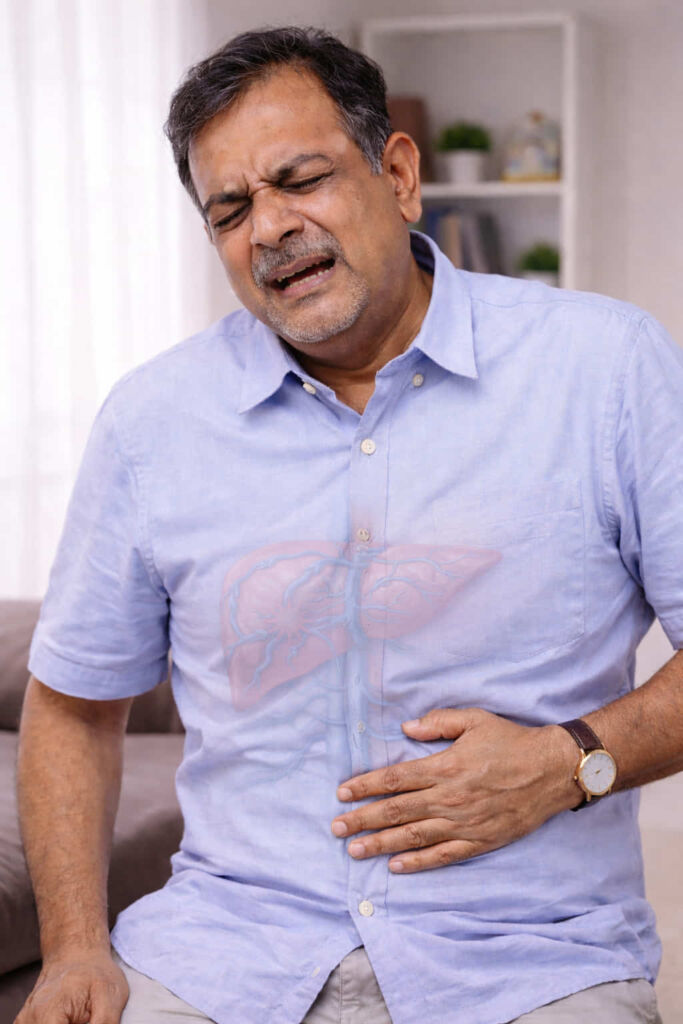
Early Symptoms of Portal Hypertension: Warning Signs You Should Not Ignore
 Vomiting Blood or Black Stools
Vomiting blood or passing black stools is a serious sign of bleeding varices caused by portal hypertension. Increased pressure in the liver leads to enlarged veins in the food pipe or stomach, which can rupture and bleed. TIPS helps reduce this pressure and prevent life-threatening bleeding.
“You might experience unexpected bleeding, such as vomiting blood or dark-colored stools.”
Common Signs Associated with Blood Vomiting or Black Stools
- Vomiting fresh blood or clots
- Passing black, tarry stools
- Feeling dizzy or weak due to blood loss
- Sudden drop in energy levels
- Repeated emergency hospital visits
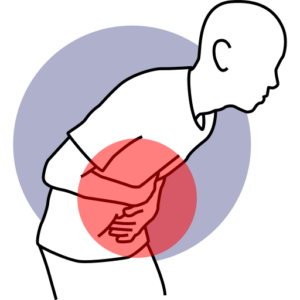 Severe Abdominal Swelling (Ascites)
Severe abdominal swelling occurs due to fluid buildup (ascites) caused by high pressure in the liver. This condition often does not improve with medications alone and may require repeated fluid removal. TIPS helps control fluid accumulation by reducing portal pressure.
“Your stomach may feel swollen and heavy, making movement and breathing more difficult.”
Common Signs Associated with Abdominal Swelling
- Visible swelling or bloating of the abdomen
- Feeling tightness or heaviness
- Shortness of breath due to pressure
- Need for frequent fluid drainage (paracentesis)
- Difficulty in daily activities and movement
 Loss of Appetite
Loss of appetite is a common symptom in patients with portal hypertension and liver disease. Increased abdominal pressure and poor liver function can make patients feel full quickly and reduce interest in food.
“You may notice that even small meals make you feel full, and your desire to eat gradually decreases.”
Common Signs Associated with Loss Of Appetite
- Feeling full after eating small amounts
- Reduced interest in food or skipping meals
- Unintentional weight loss
- Feeling weak or low on energy
- Discomfort after eating
 Shortness of Breath
Shortness of breath can happen when severe ascites or fluid around the lungs puts pressure on the diaphragm and reduces lung expansion. This makes breathing difficult, especially while lying down or after mild activity. TIPS helps reduce portal pressure and control fluid buildup causing breathlessness.
“You may feel breathless even with simple activities, or notice difficulty breathing when the abdominal swelling increases.”
Common Signs Associated with Shortness Of Breath
- Difficulty breathing while lying down
- Feeling breathless after mild walking
- Chest or abdominal tightness
- Trouble taking deep breaths
- Worsening discomfort with severe abdominal swelling
Early Symptoms of Portal Hypertension: Warning Signs You Should Not Ignore
Vomiting Blood or Black Stools
Vomiting blood or passing black stools is a serious sign of bleeding varices caused by portal hypertension. Increased pressure in the liver leads to enlarged veins in the food pipe or stomach, which can rupture and bleed. TIPS helps reduce this pressure and prevent life-threatening bleeding.
“You might experience unexpected bleeding, such as vomiting blood or dark-colored stools.”
Common Signs Associated with Blood Vomiting or Black Stools
- Vomiting fresh blood or clots
- Passing black, tarry stools
- Feeling dizzy or weak due to blood loss
- Sudden drop in energy levels
- Repeated emergency hospital visits
Severe Abdominal Swelling (Ascites)
Severe abdominal swelling occurs due to fluid buildup (ascites) caused by high pressure in the liver. This condition often does not improve with medications alone and may require repeated fluid removal. TIPS helps control fluid accumulation by reducing portal pressure.
“Your stomach may feel swollen and heavy, making movement and breathing more difficult.”
Common Signs Associated with Abdominal Swelling
- Visible swelling or bloating of the abdomen
- Feeling tightness or heaviness
- Shortness of breath due to pressure
- Need for frequent fluid drainage (paracentesis)
- Difficulty in daily activities and movement
Loss of Appetite
Loss of appetite is a common symptom in patients with portal hypertension and liver disease. Increased abdominal pressure and poor liver function can make patients feel full quickly and reduce interest in food.
“You may notice that even small meals make you feel full, and your desire to eat gradually decreases.”
Common Signs Associated with Loss Of Appetite
- Feeling full after eating small amounts
- Reduced interest in food or skipping meals
- Unintentional weight loss
- Feeling weak or low on energy
- Discomfort after eating
Shortness of Breath
Shortness of breath can happen when severe ascites or fluid around the lungs puts pressure on the diaphragm and reduces lung expansion. This makes breathing difficult, especially while lying down or after mild activity. TIPS helps reduce portal pressure and control fluid buildup causing breathlessness.
“You may feel breathless even with simple activities, or notice difficulty breathing when the abdominal swelling increases.”
Common Signs Associated with Shortness Of Breath
- Difficulty breathing while lying down
- Feeling breathless after mild walking
- Chest or abdominal tightness
- Trouble taking deep breaths
- Worsening discomfort with severe abdominal swelling
Board-Certified Expertise
Internationally trained with credentials from leading medical institutions
FRCR
Fellow, Royal College of Radiologists
DABIR
Diplomate, American Board of Interventional Radiology
MRCSEd
Member, Royal College of Surgeons Edinburg
40+ Publications
Peer-reviewed scientific research
Why Dr. Ram Kishore Stands Out
 Cleveland Clinic Training
Advanced interventional radiology fellowship from one of the world’s top medical institutions.
✅ Research Pioneer
40+ Peer-reviewed publications advancing the field of interventional radiology
✅ 14+ Years Experience
Thousands of successful treatments, with exceptional patient outcomes
✅ Patient-Centered Care
Evidence-based approach with focus on patient education and informed decision making
Board-Certified Expertise
Internationally trained with credentials from leading medical institutions
FRCR
Fellow, Royal College of Radiologists
DABIR
Diplomate, American Board of Interventional Radiology
MRCSEd
Member, Royal College of Surgeons Edinburgh
40+ Publications
Peer-reviewed scientific research
Why Dr. Ram Kishore Stands Out
✅ Cleveland Clinic Training
Advanced interventional radiology fellowship from one of the world’s top medical institutions.
✅ Research Pioneer
40+ Peer-reviewed publications advancing the field of interventional radiology
✅ 14+ Years Experience
Thousands of successful treatments, with exceptional patient outcomes
✅ Patien-Centered Care
Evidence-based approach with focus on patient education and informed decision making
Advanced TIPS Procedure for Portal Hypertension in India
Treat Complications of Liver Disease Early with Minimally Invasive TIPS Therapy
Transjugular Intrahepatic Portosystemic Shunt (TIPS) is an advanced, minimally invasive procedure used to treat complications of portal hypertension, such as variceal bleeding and ascites. Unlike traditional surgery, this procedure creates a pathway within the liver to redirect blood flow and reduce pressure in the portal vein.
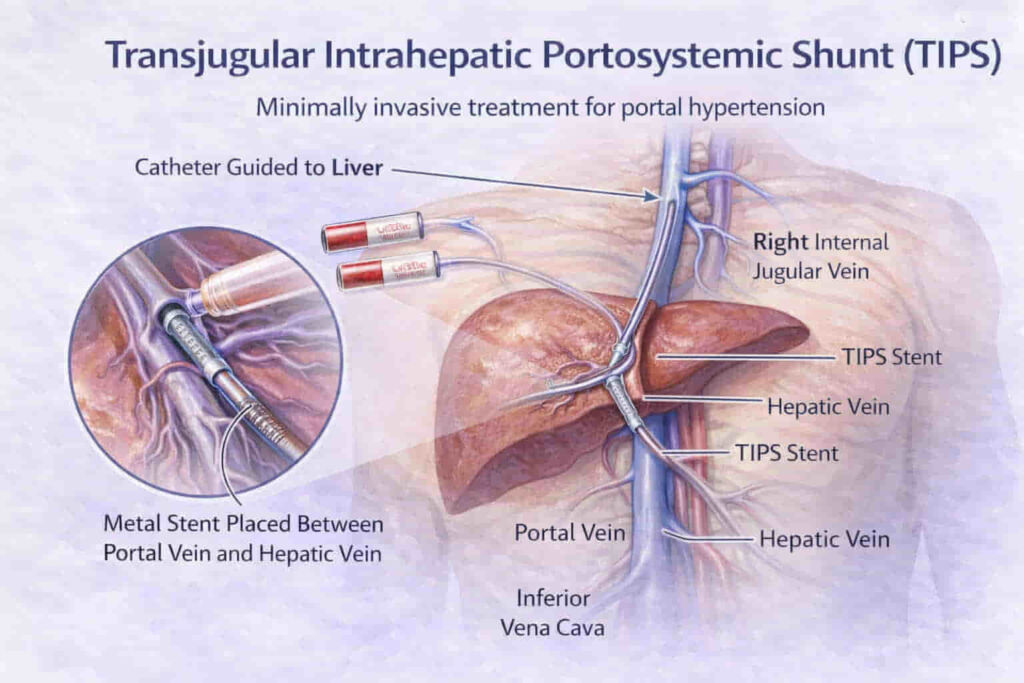
By placing a small stent through a catheter inserted via the neck vein, TIPS connects the portal vein to the hepatic vein. This allows blood to bypass the diseased liver tissue, effectively lowering portal pressure. The result is reduced risk of bleeding, improved symptom control, faster recovery, and better quality of life for patients.
Impact of Untreated Portal Hypertension on Daily Life
💔 Work Instability and Career Disruptions
Frequent health issues and hospital visits can disrupt work schedules, leading to job insecurity and income loss.
💔 Dietary Restrictions and Lifestyle Limitations
Low-salt diets, fluid limits, and medications can make daily routines and social eating difficult.
 Reduced Social Confidence
Abdominal swelling and weakness can affect self-esteem, leading to reduced social interaction.
Dependence on Caregivers
Fatigue and complications may require help with daily activities, reducing independence.
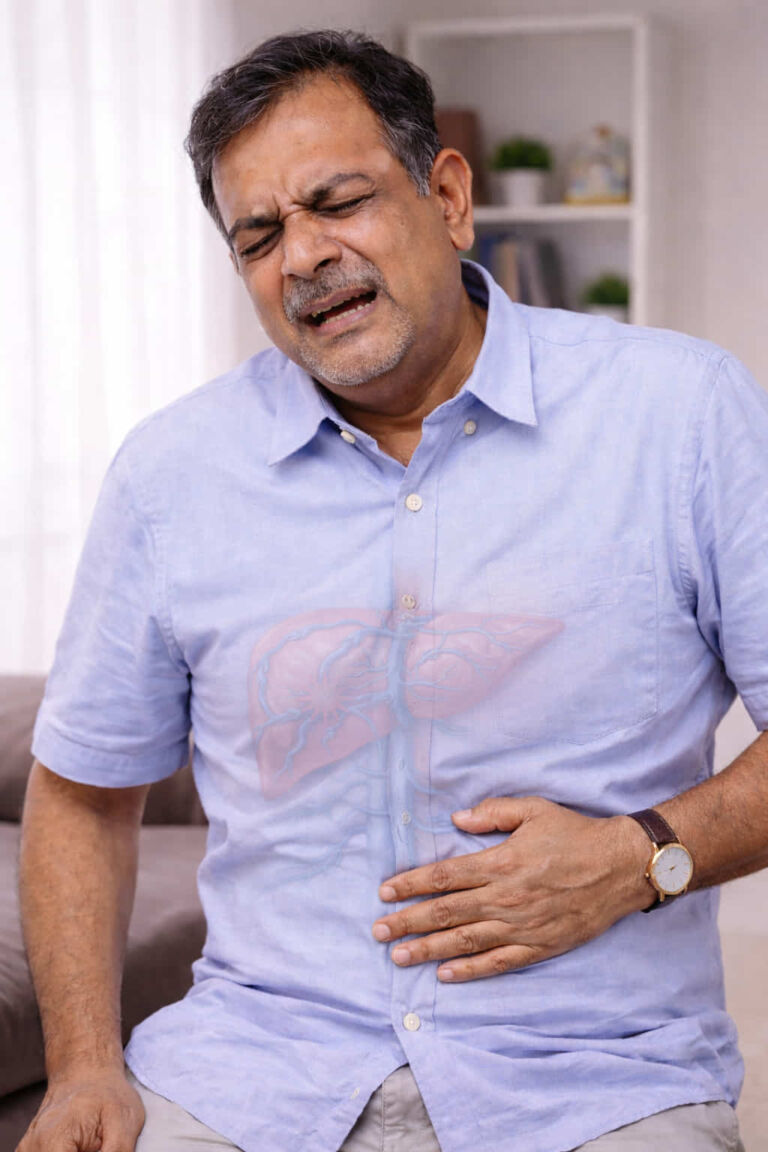
Advanced TIPS Procedure for Portal Hypertension in India
Treat Complications of Liver Disease Early with Minimally Invasive TIPS Therapy
Transjugular Intrahepatic Portosystemic Shunt (TIPS) is an advanced, minimally invasive procedure used to treat complications of portal hypertension, such as variceal bleeding and ascites. Unlike traditional surgery, this procedure creates a pathway within the liver to redirect blood flow and reduce pressure in the portal vein.
By placing a small stent through a catheter inserted via the neck vein, TIPS connects the portal vein to the hepatic vein. This allows blood to bypass the diseased liver tissue, effectively lowering portal pressure. The result is reduced risk of bleeding, improved symptom control, faster recovery, and better quality of life for patients.
Impact of Untreated Portal Hypertension on Daily Life
💔 Work Instability and Career Disruptions
Frequent health issues and hospital visits can disrupt work schedules, leading to job insecurity and income loss.
💔 Dietary Restrictions and Lifestyle Limitations
Low-salt diets, fluid limits, and medications can make daily routines and social eating difficult.
💔 Reduced Social Confidence
Abdominal swelling and weakness can affect self-esteem, leading to reduced social interaction.
💔 Dependence on Caregivers
Fatigue and complications may require help with daily activities, reducing independence.

How TIPS Procedure Works for Portal Hypertension Treatment
A minimally invasive, targeted procedure that reduces portal vein pressure and prevents complications
Catheter-Based Access Through the Jugular Vein
A thin, flexible catheter is carefully inserted through a vein in the neck (jugular vein) and guided into the liver using advanced imaging techniques. This allows doctors to precisely access the liver’s blood vessels.
Creation of Intrahepatic Shunt (Portal to Hepatic Vein Connection)
A small channel is created within the liver to connect the portal vein to the hepatic vein. A stent is then placed to keep this pathway open, allowing blood to flow more easily.
Reducing Portal Pressure and Redirecting Blood Flow
The newly created shunt diverts blood away from the high-pressure portal vein system, reducing strain on fragile veins and lowering the risk of complications like variceal bleeding.
Relief from Symptoms Over Time
As pressure decreases, symptoms such as ascites (fluid buildup) and swelling gradually improve. Many patients experience relief within days to weeks after the procedure.
Improved Quality of Life and Fewer Complications
With better blood flow and reduced pressure, patients often experience fewer hospital visits, improved comfort, and enhanced overall quality of life.
Get a complete, detailed explanation of TIPS by Dr Ram Kishore
How TIPS Procedure Works for Portal Hypertension Treatment
A minimally invasive, targeted procedure that reduces portal vein pressure and prevents complications
Catheter-Based Access Through the Jugular Vein
A thin, flexible catheter is carefully inserted through a vein in the neck (jugular vein) and guided into the liver using advanced imaging techniques. This allows doctors to precisely access the liver’s blood vessels.
Creation of Intrahepatic Shunt (Portal to Hepatic Vein Connection)
A small channel is created within the liver to connect the portal vein to the hepatic vein. A stent is then placed to keep this pathway open, allowing blood to flow more easily.
Reducing Portal Pressure and Redirecting Blood Flow
The newly created shunt diverts blood away from the high-pressure portal vein system, reducing strain on fragile veins and lowering the risk of complications like variceal bleeding.
Relief from Symptoms Over Time
As pressure decreases, symptoms such as ascites (fluid buildup) and swelling gradually improve. Many patients experience relief within days to weeks after the procedure.
Improved Quality of Life and Fewer Complications
With better blood flow and reduced pressure, patients often experience fewer hospital visits, improved comfort, and enhanced overall quality of life.
Non-Surgical Thyroid Nodule Treatment vs Traditional Thyroid Surgery
Effective Thyroid Nodule Management Without Major Surgery
 Benefits of Non-Surgical Thyroid Treatment
- Minimally Invasive – No open surgery, image-guided procedure
- Preserves Thyroid – Maintains normal thyroid function
- Quick Recovery – Faster return to daily activities
- Low Risk – Fewer complications than surgery
- No General Anaesthesia – Safer for most patients
- Outpatient Procedure – Same-day discharge
- Repeatable – Can be done again if needed
- No Scars – Better cosmetic results
⚡ Limitations of Traditional Thyroid Surgery
- Highly Invasive – Requires open neck surgery
- Longer Recovery – Extended healing and downtime
- Visible Scar – Permanent scar on the neck
- Higher Risk – Possibility of bleeding, infection, nerve injury
- General Anaesthesia – Not suitable for all patients
- Thyroid Function Loss – May require lifelong medication
- Post-Surgical Complications – Risk of voice changes or calcium imbalance
- Reduced Comfort – Pain and longer recovery period
Non-Surgical Thyroid Nodule Treatment vs Traditional Thyroid Surgery
Effective Thyroid Nodule Management Without Major Surgery
🛡️Benefits of Transjugular Intrahepatic Portosystemic Shunt
- Minimally Invasive – No open surgery, catheter-based image-guided procedure
- Reduces Portal Pressure – Effectively lowers high pressure in the portal vein
- Controls Internal Bleeding – Prevents and manages variceal bleeding
- Manages Ascites – Reduces fluid buildup in the abdomen
- Quick Recovery – Faster return to normal activities compared to surgery
- Avoids Major Surgery – Safer option for high-risk liver patients Improves
- Quality of Life – Fewer symptoms and hospital visits
- Long-Term Relief – Provides sustained control of portal hypertension
⚡ Limitations of Conventional Surgery for Portal Hypertension
- Highly Invasive – Requires major abdominal surgery with higher physical stress
- Longer Recovery – Extended hospital stay and delayed return to normal activities
- Visible Scarring – Large surgical incisions may leave permanent scars
- Higher Risk – Increased chances of bleeding, infection, and complications
- General Anaesthesia – Not suitable for all patients
- Not Ideal for Weak Patients – Advanced liver disease increases surgical risk
- Post-Surgical Complications – Risk of liver failure or worsening condition
- Reduced Comfort – More pain and longer recovery compared to minimally invasive options
★★★★★
“I was suffering from repeated internal bleeding due to portal hypertension, and my condition was getting worse. After undergoing the TIPS procedure, the bleeding stopped completely. The recovery was much faster than I expected, and I was back to my normal routine within a couple of weeks. It truly changed my life.”

Vijay Kumar
Hyderabad, India
Age 49| 1.2 years Post -Transjugular Intrahepatic Proto-System Shunt Treatment
★★★★★
“I had severe abdominal swelling due to fluid buildup, which made even simple daily activities difficult. After the TIPS procedure, the fluid reduced significantly, and I feel much more comfortable now. I no longer need frequent hospital visits, and my quality of life has improved a lot.”

Sarojini
Chennai, India
Age 43| 1.8 years Post -Transjugular Intrahepatic Proto-System Shunt Treatment
Patient Experiences with Transjugular Intrahepatic Proto-System Shunt Treatment
★★★★★
“I was suffering from repeated internal bleeding due to portal hypertension, and my condition was getting worse. After undergoing the TIPS procedure, the bleeding stopped completely. The recovery was much faster than I expected, and I was back to my normal routine within a couple of weeks. It truly changed my life.”

Vijay Kumar
Hyderabad, India
Age 49| 1.2 years Post -Transjugular Intrahepatic Proto-System Shunt Treatment
★★★★★
“I had severe abdominal swelling due to fluid buildup, which made even simple daily activities difficult. After the TIPS procedure, the fluid reduced significantly, and I feel much more comfortable now. I no longer need frequent hospital visits, and my quality of life has improved a lot.”

Sarojini
Chennai, India
Age 43| 1.8 years Post -Transjugular Intrahepatic Proto-System Shunt Treatment
Frequently Asked Questions About Non Surgical Thyroid Nodule Treatment
What is a TIPS procedure?
TIPS (Transjugular Intrahepatic Portosystemic Shunt) is a minimally invasive, image-guided procedure used to treat portal hypertension. It creates a channel inside the liver to connect the portal vein with the hepatic vein. This helps reduce pressure and prevent serious complications.
Why is TIPS treatment performed?
TIPS is performed to manage complications of portal hypertension, such as variceal bleeding and severe ascites. It is usually recommended when medications and other treatments are not effective. The procedure helps control symptoms and prevent life-threatening events.
How is the TIPS procedure done?
The procedure is performed by inserting a catheter through the jugular vein in the neck under imaging guidance. A pathway is created within the liver to connect two major veins. A stent is then placed to keep the channel open and maintain proper blood flow.
Is TIPS a safe procedure?
TIPS is generally considered safe when performed by experienced interventional radiologists. It is less invasive compared to open surgery and has a shorter recovery time. However, like any procedure, it carries some risks that are carefully monitored.
How long does it take to recover from TIPS?
Most patients stay in the hospital for a short period after the procedure for observation. Recovery is usually quick, with many patients resuming normal activities within 1 to 2 weeks. The exact recovery time depends on overall liver health.
What are the benefits of TIPS treatment?
TIPS effectively reduces portal vein pressure and controls complications like bleeding and fluid buildup. It improves blood flow and reduces the need for repeated hospital visits. Many patients experience a better quality of life after the procedure.
Are there any risks or complications of TIPS?
Some patients may experience complications such as infection, bleeding, or hepatic encephalopathy. These risks are generally manageable with proper medical care and follow-up. Doctors carefully evaluate each patient before recommending the procedure.
Who is a good candidate for TIPS?
Patients with severe portal hypertension who do not respond to medications are often considered for TIPS. It is especially useful for those with recurrent bleeding or difficult-to-control ascites. A detailed medical evaluation is required to determine suitability.
Frequently Asked Questions About Non Surgical Thyroid Nodule Treatment
What is a TIPS procedure?
TIPS (Transjugular Intrahepatic Portosystemic Shunt) is a minimally invasive, image-guided procedure used to treat portal hypertension. It creates a channel inside the liver to connect the portal vein with the hepatic vein. This helps reduce pressure and prevent serious complications.
Why is TIPS treatment performed?
TIPS is performed to manage complications of portal hypertension, such as variceal bleeding and severe ascites. It is usually recommended when medications and other treatments are not effective. The procedure helps control symptoms and prevent life-threatening events.
How is the TIPS procedure done?
The procedure is performed by inserting a catheter through the jugular vein in the neck under imaging guidance. A pathway is created within the liver to connect two major veins. A stent is then placed to keep the channel open and maintain proper blood flow.
Is TIPS a safe procedure?
TIPS is generally considered safe when performed by experienced interventional radiologists. It is less invasive compared to open surgery and has a shorter recovery time. However, like any procedure, it carries some risks that are carefully monitored.
How long does it take to recover from TIPS?
Most patients stay in the hospital for a short period after the procedure for observation. Recovery is usually quick, with many patients resuming normal activities within 1 to 2 weeks. The exact recovery time depends on overall liver health.
What are the benefits of TIPS treatment?
TIPS effectively reduces portal vein pressure and controls complications like bleeding and fluid buildup. It improves blood flow and reduces the need for repeated hospital visits. Many patients experience a better quality of life after the procedure.
Are there any risks or complications of TIPS?
Some patients may experience complications such as infection, bleeding, or hepatic encephalopathy. These risks are generally manageable with proper medical care and follow-up. Doctors carefully evaluate each patient before recommending the procedure.
Who is a good candidate for TIPS?
Patients with severe portal hypertension who do not respond to medications are often considered for TIPS. It is especially useful for those with recurrent bleeding or difficult-to-control ascites. A detailed medical evaluation is required to determine suitability.
Your Life Doesn't Have to Be Controlled by a Tumour
Thousands of women have reclaimed their freedom through UFE, a safe and minimally invasive treatment for uterine fibroids. You don’t have to live with constant pain, heavy bleeding, or exhaustion. You deserve relief without major surgery or long recovery. Take control of your health and take the first step toward a life free from fibroid symptoms today.
Available in Hyderabad & Chennai | Cleveland Clinic Trained | 14+ Years Experience | 90% Success Rate
First Consultation is Risk-Free: Meet with Dr. Kishore, discuss your symptoms, and explore all treatment options. No pressure, no obligation. We’re here to help you make the best decision for your health.
Your Life Doesn't Have to Be Controlled by a Tumour
Thousands of women have reclaimed their freedom through UFE, a safe and minimally invasive treatment for uterine fibroids. You don’t have to live with constant pain, heavy bleeding, or exhaustion. You deserve relief without major surgery or long recovery. Take control of your health and take the first step toward a life free from fibroid symptoms today.
Available in Hyderabad & Chennai | Cleveland Clinic Trained | 14+ Years Experience | 90% Success Rate
First Consultation is Risk-Free: Meet with Dr. Kishore, discuss your symptoms, and explore all treatment options. No pressure, no obligation. We’re here to help you make the best decision for your health.