

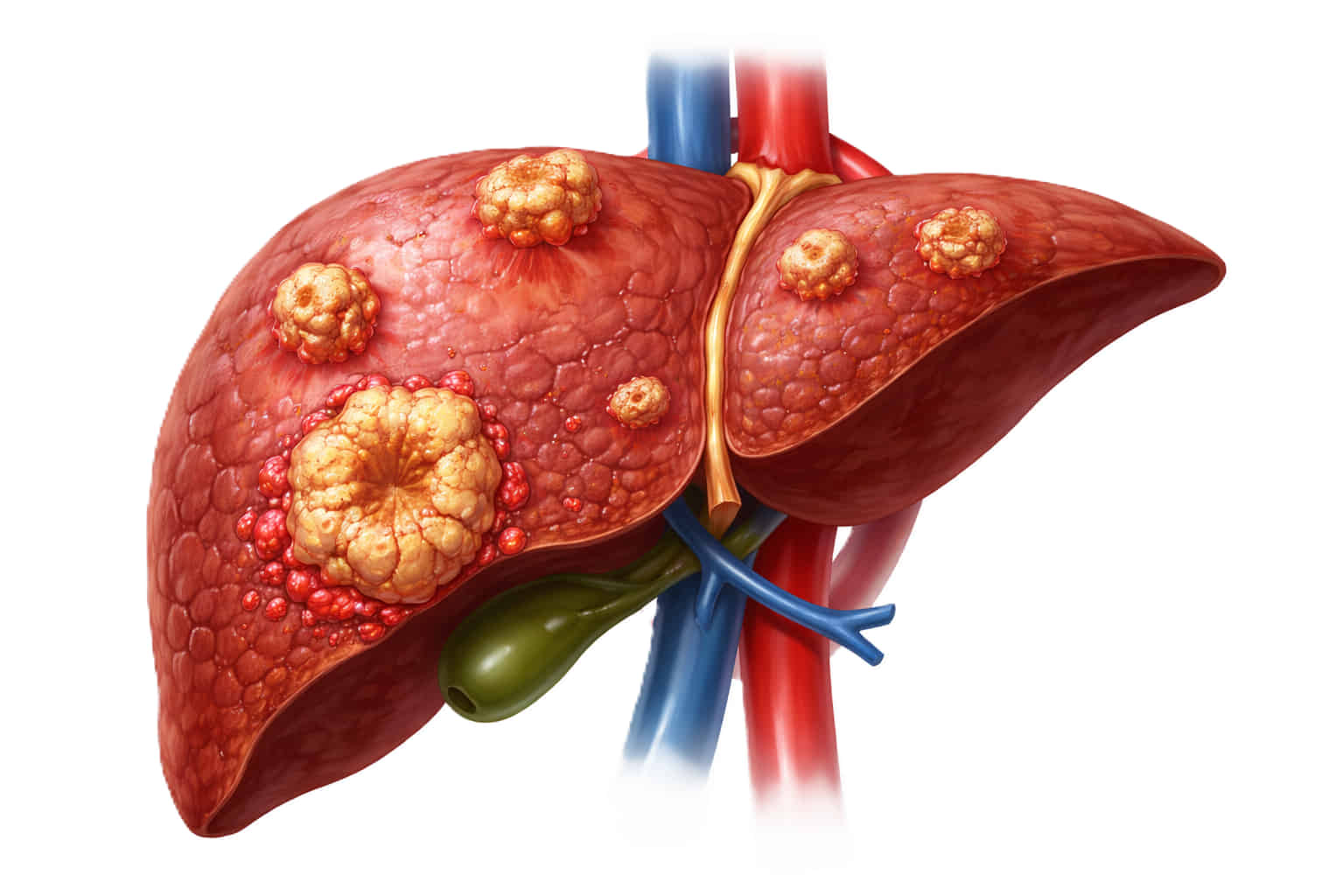
Y90 Radioembolization Treatment for Liver Cancer in Hyderabad & Chennai

✓ Proven Alternative to Hepatectomy
Regain control
of your life with
Y90 radioembolization...
A minimally invasive liver cancer treatment that targets tumors precisely while preserving healthy tissue.
Y90 radioembolization is an advanced, non-surgical procedure designed to treat liver tumors effectively. This targeted therapy delivers radiation directly to cancer cells, reducing damage to surrounding liver tissue and improving recovery outcomes.
 Fast Recovery in 5–7 Days
Recover quicker compared to 4–6 weeks required for traditional liver surgery.
No Major Surgery or Cuts
A minimally invasive catheter-based treatment with less pain and faster healing.
Preserves Healthy Liver Tissue
Targets only cancer cells while keeping the liver function safe

✓ Proven Alternative to Hepatectomy
Regain control of your life with Y90 radioembolization
A minimally invasive liver cancer treatment that targets tumors precisely while preserving healthy tissue.
Y90 radioembolization is an advanced, non-surgical procedure designed to treat liver tumors effectively. This targeted therapy delivers radiation directly to cancer cells, reducing damage to surrounding liver tissue and improving recovery outcomes.

Fast Recovery in 5–7 Days
Recover quicker compared to 4–6 weeks required for traditional liver surgery.
No Major Surgery or Cuts
A minimally invasive catheter-based treatment with less pain and faster healing.
Preserves Healthy Liver Tissue
Targets only cancer cells while keeping the liver function safe.
Dr Ram will be consulting in Hyderabad from August 1st.
Early Symptoms of Liver Cancer: Warning Signs You Should Not Ignore
 Unexplained Weight Loss
Unexplained weight loss is one of the most common early symptoms of liver cancer. As tumours develop in the liver, they can affect metabolism, appetite, and nutrient absorption, leading to sudden weight loss without any changes in diet or physical activity.
Recognising this symptom early can help in timely diagnosis and effective treatment, including advanced options like Y90 radioembolization.
“Many patients notice their clothes becoming loose or sudden weight loss without changes in diet or exercise.”
Common Signs Associated with Unexplained Weight Loss
-
Losing more than 5–10% of body weight within a few months without dieting.
-
Reduced appetite or feeling full quickly after small meals.
-
Weakness and fatigue due to the body not absorbing nutrients properly.
-
Muscle loss along with overall body weight reduction.
-
Clothes fitting looser than usual despite no lifestyle change.
 Loss of Appetite
A persistent loss of appetite is a common early symptom of liver cancer. When the liver is affected by tumours, it can slow down digestion and disrupt metabolism, causing patients to feel full quickly or lose interest in food.
This symptom often goes unnoticed but can indicate underlying liver disease or cancer. Early recognition can help in timely diagnosis and advanced treatments like Y90 radioembolization.
“You may notice that even your favourite meals no longer seem appealing, and you feel full after eating only a small amount.”
Common Signs of Appetite Loss in Liver Cancer
- Feeling full very quickly even after small meals.
- Reduced interest in food or skipping meals frequently.
- Unintentional weight loss due to decreased food intake.
- Nausea or discomfort after eating.
- Persistent weakness or low energy levels.
 Abdominal Pain
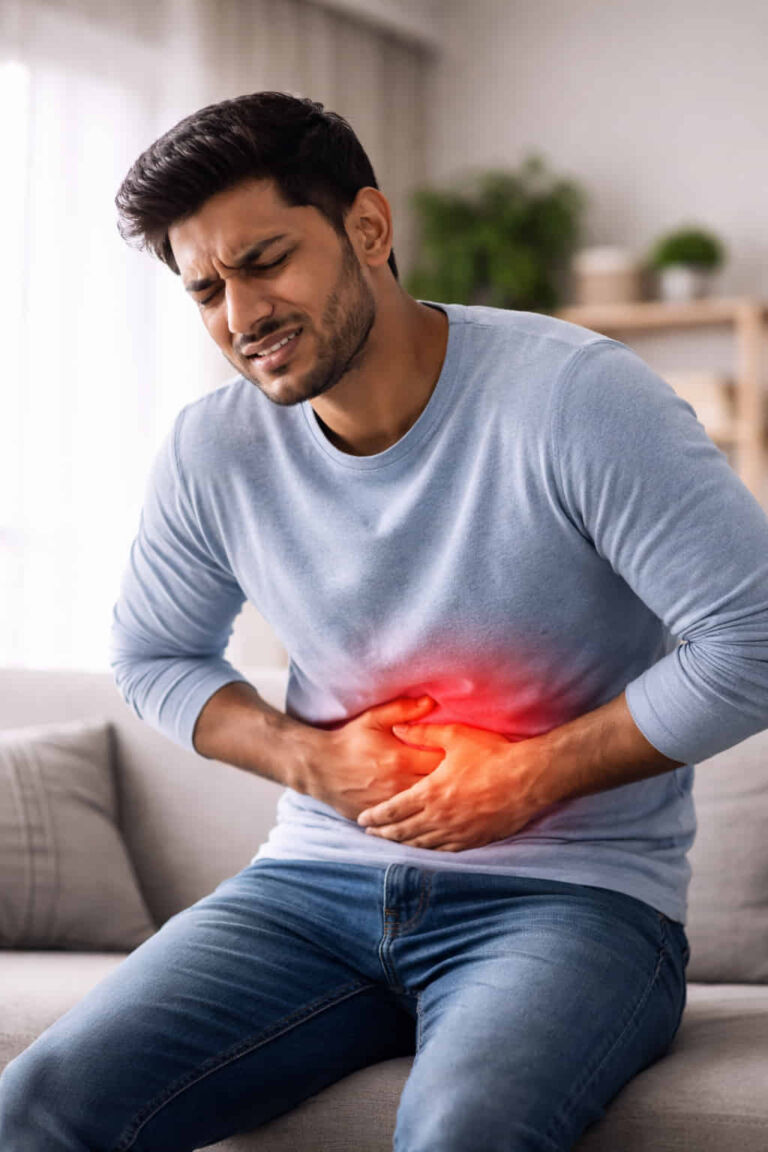
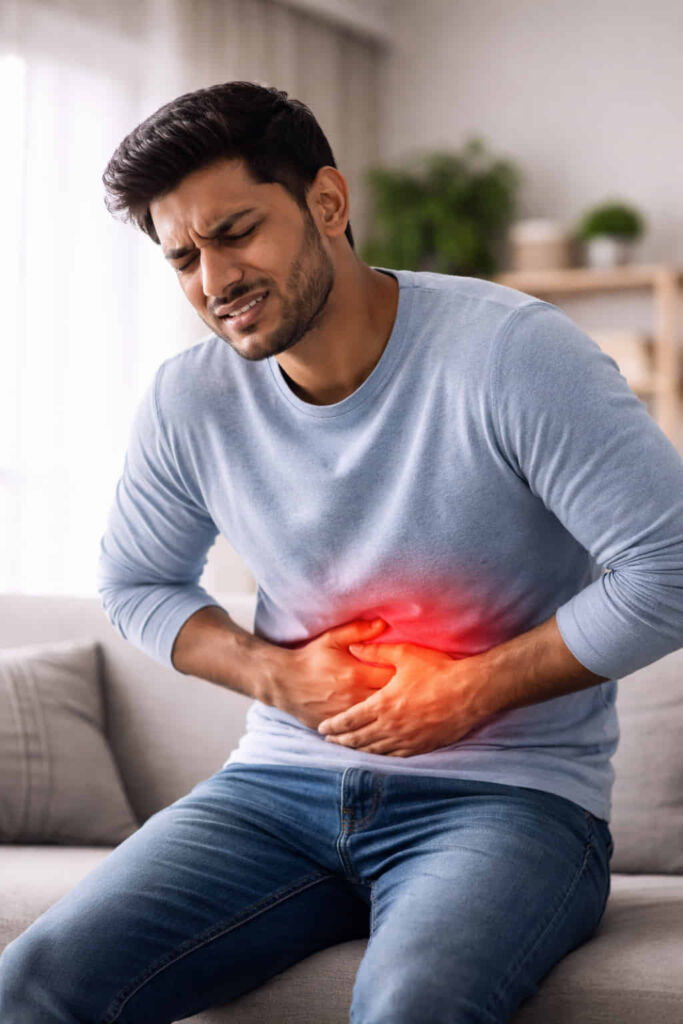
Persistent abdominal pain, especially in the upper right side of the abdomen, is a common symptom of liver cancer. As tumours grow in the liver, they can put pressure on nearby organs and tissues, leading to discomfort, pain, or a feeling of heaviness.
This type of pain may start mildly but can gradually increase over time. Identifying this symptom early can help in timely diagnosis and effective treatment options such as Y90 radioembolization.
“You may feel a dull ache or constant pressure in the upper abdomen that doesn’t go away.”
Common Signs of Abdominal Pain in Liver Cancer
- Pain or discomfort in the upper right abdomen.
- A dull, persistent ache that worsens over time.
- Pain spreading to the right shoulder or back.
- Feeling pressure or heaviness in the stomach area.
- Pain that increases after eating or physical activity.
 Jaundice
Jaundice is one of the most noticeable symptoms of liver cancer, causing yellowing of the skin and the whites of the eyes. It occurs due to a buildup of bilirubin in the body when the liver is unable to process and eliminate it effectively.
In liver cancer patients, tumours can block bile ducts or affect liver function, leading to this visible discolouration. Early detection of jaundice can play a crucial role in diagnosing liver disease and starting appropriate treatment, including advanced options like Y90 radioembolization.
“Many patients first notice a yellow tint in their eyes or skin, often accompanied by itching and dark-colored urine.”
Common Signs of Jaundice in Liver Cancer
- Yellowing of the skin and eyes.
- Dark-colored urine, even when there is proper hydration.
- Pale or clay-colored stools.
- Persistent itching (pruritus) across different parts of the body.
- Feeling fatigued or weak, along with the yellow discolouration.
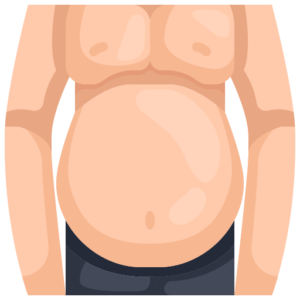 Abdominal Swelling (Ascites)
Abdominal swelling (ascites) is a common symptom of advanced liver cancer. It occurs when fluid accumulates in the abdominal cavity due to impaired liver function or increased pressure in the liver’s blood vessels caused by tumours.
This condition can lead to visible enlargement of the abdomen and discomfort. Recognising abdominal swelling early can help in diagnosing liver disease and initiating appropriate treatments such as Y90 radioembolization.
“Many patients notice their abdomen becoming larger, tighter, or uncomfortable even without significant weight gain.”
Common Signs of Abdominal Swelling (Ascites)
- Visible swelling or enlargement of the abdomen.
- Feeling tightness or pressure in the stomach area.
- Rapid increase in abdominal size over a short period.
- Difficulty bending, sitting comfortably, or breathing deeply.
- Feeling full quickly after eating small meals.
 Nausea and Vomiting
Frequent nausea and vomiting can be early warning signs of liver cancer, especially when the liver’s ability to process toxins and aid digestion is affected. As tumors develop in the liver, they may disrupt normal digestive functions, leading to a constant feeling of nausea and occasional vomiting.
These symptoms often appear gradually and may worsen over time, making early recognition important for timely diagnosis and advanced treatments like Y90 radioembolization.
“Many patients report a persistent uneasy feeling in the stomach, often leading to nausea or vomiting even without heavy meals.”
Common Symptoms Associated with Nausea and Vomiting
- Persistent nausea that does not go away easily.
- Occasional or frequent vomiting, especially after meals.
- Feeling uneasy or sick in the stomach throughout the day
- Loss of appetite due to ongoing nausea.
- Weakness and dehydration when vomiting occurs repeatedly.
Early Symptoms of Liver Cancer: Warning Signs You Should Not Ignore
Unexplained Weight Loss
Unexplained weight loss is one of the most common early symptoms of liver cancer. As tumours develop in the liver, they can affect metabolism, appetite, and nutrient absorption, leading to sudden weight loss without any changes in diet or physical activity.
Recognising this symptom early can help in timely diagnosis and effective treatment, including advanced options like Y90 radioembolization.
“Many patients notice their clothes becoming loose or sudden weight loss without changes in diet or exercise.”
Common Signs Associated with Unexplained Weight Loss
- Losing more than 5–10% of body weight within a few months
- Reduced appetite or feeling full quickly
- Persistent Weakness and fatigue due to the body not absorbing nutrients properly
- Muscle loss along with overall body weight reduction
- Clothes fitting looser than usual despite no lifestyle changes
Loss of Appetite
A persistent loss of appetite is a common early symptom of liver cancer. When the liver is affected by tumours, it can slow down digestion and disrupt metabolism, causing patients to feel full quickly or lose interest in food.
This symptom often goes unnoticed but can indicate underlying liver disease or cancer. Early recognition can help in timely diagnosis and advanced treatments like Y90 radioembolization.
“You may notice that even your favourite meals no longer seem appealing, and you feel full after eating only a small amount.”
Common Signs of Appetite Loss
- Feeling full very quickly even after small meals
- Reduced interest in food or skipping meals frequently
- Unintentional weight loss due to decreased food intake
- Nausea or discomfort after eating
- Persistent weakness or low energy leve
Abdominal Pain
Persistent abdominal pain, especially in the upper right side of the abdomen, is a common symptom of liver cancer. As tumours grow in the liver, they can put pressure on nearby organs and tissues, leading to discomfort, pain, or a feeling of heaviness.
This type of pain may start mildly but can gradually increase over time. Identifying this symptom early can help in timely diagnosis and effective treatment options such as Y90 radioembolization.
“You may feel a dull ache or constant pressure in the upper abdomen that doesn’t go away.”
Common Signs of Abdominal Pain
- Pain or discomfort in the upper right abdomen
- A dull, persistent ache that worsens over time
- Pain spreading to the right shoulder or back
- Feeling pressure or heaviness in the stomach area
- Pain that increases after eating or physical activity
Jaundice
Jaundice is one of the most noticeable symptoms of liver cancer, causing yellowing of the skin and the whites of the eyes. It occurs due to a buildup of bilirubin in the body when the liver is unable to process and eliminate it effectively.
In liver cancer patients, tumours can block bile ducts or affect liver function, leading to this visible discolouration. Early detection of jaundice can play a crucial role in diagnosing liver disease and starting appropriate treatment, including advanced options like Y90 radioembolization.
“Many patients first notice a yellow tint in their eyes or skin, often accompanied by itching and dark-colored urine.”
Common Signs of Jaundice
- Yellowing of the skin and eyes
- Dark-Coloured urine even with proper hydration
- Pale of clay coloured stools
- Persistent itching (pruritus) across different parts of the body
- Feeling fatigued or weak, along with the yellow discolouration
Abdominal Swelling (Ascites)
Abdominal swelling (ascites) is a common symptom of advanced liver cancer. It occurs when fluid accumulates in the abdominal cavity due to impaired liver function or increased pressure in the liver’s blood vessels caused by tumours.
This condition can lead to visible enlargement of the abdomen and discomfort. Recognising abdominal swelling early can help in diagnosing liver disease and initiating appropriate treatments such as Y90 radioembolization.
“Many patients notice their abdomen becoming larger, tighter, or uncomfortable even without significant weight gain.”
Common Signs of Abdominal Swelling (Ascites)
- Visible swelling or enlargement of the abdomen
- Feeling tightness or pressure in the stomach areas
- Rapid increase in abdominal size over a short period
- Difficulty bending, sitting comfortably, or breathing deeply
- Feeling full quickly after eating small meals
Nausea and Vomiting
Frequent nausea and vomiting can be early warning signs of liver cancer, especially when the liver’s ability to process toxins and aid digestion is affected. As tumors develop in the liver, they may disrupt normal digestive functions, leading to a constant feeling of nausea and occasional vomiting.
These symptoms often appear gradually and may worsen over time, making early recognition important for timely diagnosis and advanced treatments like Y90 radioembolization.
“Many patients report a persistent uneasy feeling in the stomach, often leading to nausea or vomiting even without heavy meals.”
Common Symptoms Associated with Nausea and Vomiting
- Persistent nausea that does not go away easily
- Occasional or frequent vomiting, especially after meals
- Feeling uneasy or sick in the stomach throughout the day
- Loss of appetite due to ongoing nausea
- Weakness and dehydration when vomiting occurs repeatedly
Board-Certified Expertise
Internationally trained with credentials from leading medical institutions
FRCR
Fellow, Royal College of Radiologists
DABIR
Diplomate, American Board of Interventional Radiology
MRCSEd
Member, Royal College of Surgeons Edinburg
40+ Publications
Peer-reviewed scientific research
Why Dr. Ram Kishore Stands Out
 Cleveland Clinic Training
Advanced interventional radiology fellowship from one of the world’s top medical institutions.
✅ Research Pioneer
40+ Peer-reviewed publications advancing the field of interventional radiology
✅ 14+ Years Experience
Thousands of successful treatments, with exceptional patient outcomes
✅ Patient-Centered Care
Evidence-based approach with focus on patient education and informed decision making
Board-Certified Expertise
Internationally trained with credentials from leading medical institutions
FRCR
Fellow, Royal College of Radiologists
DABIR
Diplomate, American Board of Interventional Radiology
MRCSEd
Member, Royal College of Surgeons Edinburgh
40+ Publications
Peer-reviewed scientific research
Why Dr. Ram Kishore Stands Out
✅ Cleveland Clinic Training
Advanced interventional radiology fellowship from one of the world’s top medical institutions.
✅ Research Pioneer
40+ Peer-reviewed publications advancing the field of interventional radiology
✅ 14+ Years Experience
Thousands of successful treatments, with exceptional patient outcomes
✅ Patien-Centered Care
Evidence-based approach with focus on patient education and informed decision making
Advanced Y90 Radioembolization Treatment for Liver Tumors in India
Treat Liver Cancer Early with Minimally Invasive Y90 Therapy
Y90 radioembolization, also known as Selective Internal Radiation Therapy (SIRT), is an advanced and minimally invasive treatment used to target liver tumors with precision. Unlike traditional surgery, this procedure delivers radiation directly to cancer cells through the blood vessels, minimizing damage to surrounding healthy liver tissue.
By using tiny radioactive beads injected through a catheter, Y90 therapy blocks the tumor’s blood supply while delivering high-dose radiation exactly where it is needed. This results in effective tumor control, faster recovery, and improved quality of life for patients.
Impact of Untreated Liver Tumors on Daily Life
💔 Career and Productivity Impact
Chronic symptoms can lead to missed workdays, reduced productivity, and limited ability to perform daily tasks.
💔 Relationship and Social Life
Liver cancer symptoms may affect emotional well-being, reducing social interaction and personal relationships.
 Mental Health Challenges
Patients may experience anxiety, depression, and emotional stress due to ongoing health issues.
Financial Burden of Treatment
Medical expenses, ongoing care, and loss of income can create significant financial stress over time.
Advanced Y90 Radioembolization Treatment for Liver Tumours in India
Treat Liver Cancer Early with Minimally Invasive Y90 Therapy
People with chronic liver diseases such as hepatitis B, hepatitis C, cirrhosis, or long-term liver damage are at higher risk of liver cancer. Patients with primary or metastatic liver tumours are often evaluated for advanced treatments like Y90 radioembolization (Selective Internal Radiation Therapy – SIRT).
Lifestyle factors like heavy alcohol use, obesity, fatty liver disease (NAFLD), diabetes, and smoking also increase risk. Those with inoperable liver cancer may benefit from minimally invasive Y90 therapy for targeted tumour control and better outcomes.
Impact of Untreated Liver Tumours on Daily Life
💔 Career and Productivity Impact
Chronic symptoms can lead to missed workdays, reduced productivity, and limited ability to perform daily tasks.
💔 Relationship and Social Life
Liver cancer symptoms may affect emotional well-being, reducing social interaction and personal relationships.
💔 Mental Health Challenges
Patients may experience anxiety, depression, and emotional stress due to ongoing health issues.
💔 Financial Burden of Treatment
Medical expenses, ongoing care, and loss of income can create significant financial stress over time.

How Y90 Radioembolization Works for Liver Cancer Treatment
A minimally invasive, targeted therapy that treats liver tumors at the source
Catheter-Based Targeting of Liver Tumours
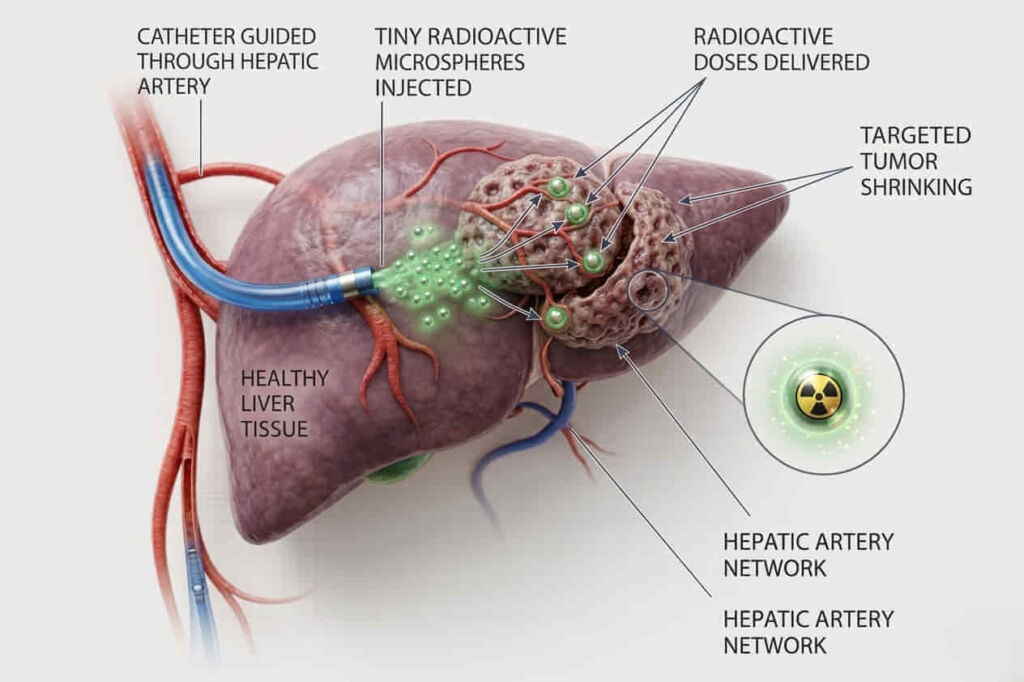
A thin, flexible catheter is carefully inserted through the groin and guided into the hepatic artery using advanced imaging techniques. This allows doctors to precisely reach the blood vessels supplying the liver tumor.
Injection of Y90 Radioactive Microspheres
Tiny Y90 radioactive beads (microspheres) are injected through the catheter directly into the tumor’s blood supply. These particles lodge in the tumor’s vessels, delivering targeted radiation while minimizing damage to surrounding healthy liver tissue.
Blocking Blood Supply and Delivering Radiation
A thin, flexible catheter is carefully inserted through the groin and guided into the hepatic artery using advanced imaging techniques. This allows doctors to precisely reach the blood vessels supplying the liver tumor.
Tumour Shrinkage Over Time
As the tumor shrinks, symptoms improve progressively. Most patients experience meaningful relief from pain and other related symptoms within weeks to months following treatment, with continued improvement over time.
Symptom Relief and Improved Quality of Life
As the tumor shrinks, symptoms such as pain, nausea, and fatigue improve. Patients often experience better overall health and quality of life following Y90 radioembolization.
Get a complete, detailed explanation of Y90-Radio Embolization by Dr Ram Kishore
How Y90 Radioembolization Works for Liver Cancer Treatment
A minimally invasive, targeted therapy that treats liver tumors at the source
Catheter-Based Targeting of Liver Tumours
A thin, flexible catheter is carefully inserted through the groin and guided into the hepatic artery using advanced imaging techniques. This allows doctors to precisely reach the blood vessels supplying the liver tumor.
Injection of Y90 Radioactive Microspheres
Tiny Y90 radioactive beads (microspheres) are injected through the catheter directly into the tumor’s blood supply. These particles lodge in the tumor’s vessels, delivering targeted radiation while minimizing damage to surrounding healthy liver tissue.
Blocking Blood Supply and Delivering Radiation
Once inside the tumor, the microspheres block the blood flow and release controlled radiation. This dual action helps destroy cancer cells effectively and prevents further tumor growth.
Tumour Shrinkage Over Time
As the tumor shrinks, symptoms improve progressively. Most patients experience meaningful relief from pain and other related symptoms within weeks to months following treatment, with continued improvement over time.
Symptom Relief and Improved Quality of Life
As the tumor shrinks, symptoms such as pain, nausea, and fatigue improve. Patients often experience better overall health and quality of life following Y90 radioembolization.
Y90 Radioembolization vs Liver Surgery: Which Is Better for Liver Cancer Treatment?
A detailed comparison of Y90 radioembolization and traditional liver resection based on effectiveness, recovery, and patient outcomes
🛡️ Benefits of Y90 Radioembolization Treatment
- No major incisions – Minimally invasive catheter-based procedures
- Preserves healthy liver tissue – Targets only cancer cells
- Short hospital stay – Same-day or next-day discharge in most cases
- Faster recovery – Resume normal activities within a few days
- Targeted radiation therapy – Direct delivery to the tumor
- Lower risk of complications – Suitable even for high-risk patients
- Effective for multiple tumours – Works even when cancer is
⚡ Limitations of Traditional Liver Surgery (Resection)
- Large surgical incision – Open or laparoscopic surgery required
- Loss of healthy liver tissue – Part of the liver is removed
- Longer hospital stay – Several days of hospitalization needed
- Extended recovery time – 4–8 weeks for full recovery
- Higher risk of complications – Infection, bleeding, bile leak
- Not suitable for all patients – Especially advanced or multiple tumours
- General anesthesia risks – Not ideal for elderly or weak patients
Y90 Radioembolization vs Liver Surgery: Which Is Better for Liver Cancer Treatment?
A detailed comparison of Y90 radioembolization and traditional liver resection based on effectiveness, recovery, and patient outcomes
🛡️ Benefits of Y90 Radioembolization Treatment
- No major incisions – Minimally invasive catheter-based procedures
- Preserves healthy liver tissue – Targets only cancer cells
- Short hospital stay – Same-day or next-day discharge in most cases
- Faster recovery – Resume normal activities within a few days
- Targeted radiation therapy – Direct delivery to the tumour
- Lower risk of complications – Suitable even for high-risk patients
- Effective for multiple tumours – Works even when cancer is
⚡ Limitations of Traditional Liver Surgery (Resection)
- Large surgical incision – Open or laparoscopic surgery required
- Loss of healthy liver tissue – Part of the liver is removed
- Longer hospital stay – Several days of hospitalization needed
- Extended recovery time – 4–8 weeks for full recovery
- Higher risk of complications – Infection, bleeding, bile leak
- Not suitable for all patients – Especially advanced or multiple tumours
- General anesthesia risks – Not ideal for elderly or weak patients
★★★★★
“When I was diagnosed with a liver tumor, I was worried about undergoing major surgery or chemotherapy. Y90 radioembolization offered a minimally invasive liver cancer treatment that targeted the tumor directly while preserving healthy liver tissue. The procedure helped me avoid long recovery times, and follow-up scans showed clear tumor shrinkage. I was able to regain my quality of life and, most importantly, hope.”

Priyanka S
Chennai, India
Age 42 | 2 years Post – Y90 Radioembolization
★★★★★
“When I was diagnosed with a liver tumor, I was worried about undergoing major surgery or chemotherapy. Y90 radioembolization offered a minimally invasive liver cancer treatment that targeted the tumor directly while preserving healthy liver tissue. The procedure helped me avoid long recovery times, and follow-up scans showed clear tumor shrinkage. I was able to regain my quality of life and, most importantly, hope.”

Laxman Kumar
Hyderabad, India
Age 39 | 1 years Post – Y90 Radioembolization
Real Patient Experiences with Y90 Liver Cancer Treatment
★★★★★
“After being diagnosed with a liver tumor, I was worried about undergoing major surgery. Y90 radioembolization offered a minimally invasive liver cancer treatment that gave me hope. The procedure used a catheter to deliver targeted radiation directly to the tumor while preserving healthy liver tissue. My recovery was quick, and follow-up scans showed significant tumor shrinkage. I’m grateful to have found an effective liver cancer treatment without the risks of traditional surgery.”

Priyanka S
Chennai, India
Age 42 | 2 years Post – Y90 Radioembolization
★★★★★
“When I was diagnosed with a liver tumor, I was worried about undergoing major surgery or chemotherapy. Y90 radioembolization offered a minimally invasive liver cancer treatment that targeted the tumor directly while preserving healthy liver tissue. The procedure helped me avoid long recovery times, and follow-up scans showed clear tumor shrinkage. I was able to regain my quality of life and, most importantly, hope.”

Laxman Kumar
Hyderabad, India
Age 39 | 1 years Post – Y90 Radioembolization
Frequently Asked Questions About Y90 Radioembolization
What exactly is Y90 Radioembolization?
Y90 radioembolization is a minimally invasive liver cancer treatment that uses tiny radioactive beads to deliver targeted radiation directly to liver tumors. This procedure helps destroy cancer cells while preserving healthy liver tissue, making it an effective alternative to traditional surgery in many cases.
Is Y90 radioembolization a type of surgery?
No, Y90 radioembolization is not a traditional surgery. It is a catheter-based procedure performed through a small incision, usually in the groin. This makes it a minimally invasive treatment with less pain, lower risk, and faster recovery compared to open liver surgery.
How is Y90 different from standard radiation therapy?
Unlike external beam radiation therapy, Y90 radioembolization delivers radiation internally and directly to the tumor. This targeted approach allows higher radiation doses to the cancer while reducing exposure to surrounding healthy tissues.
Will I be radioactive after Y90 treatment?
No, patients are not considered dangerous or “radioactive” to others after Y90 radioembolization.
Y90 (Yttrium-90) works by delivering radiation directly inside the tumor through tiny microspheres placed in the liver’s blood vessels. This means:
- The radiation is highly localized (targets only the tumor area)
- It has a very short penetration range in the body
- Most of the radiation effect stays within the liver
What are the common side effects of Y90 radioembolization?
Most patients experience “Post-Y90-Radioembolization Syndrome,” which can include:
Fatigue (the most common symptom).
Mild nausea or low-grade fever.
A dull ache in the upper right abdomen.
Is Y90 radioembolization covered by insurance?
Insurance coverage for Y90 radioembolization treatment for liver cancer varies by plan and provider. It is often covered if the treatment is medically necessary and approved by your doctor.
However, coverage depends on your policy, hospital network, and pre-authorization requirements. Check with your insurance provider to confirm coverage and out-of-pocket costs.
I am diabetic — how does Y90 radioembolization help me?
For patients with liver cancer, Y90 radioembolization treatment delivers radiation directly to tumours, helping to:
Shrink or control tumour growth
Preserve healthy liver tissue
Improve eligibility for further treatments or surgery
Always inform your doctor about your diabetes, so they can plan treatment safely and coordinate blood sugar management.
Frequently Asked Questions About Y90 Radioembolization
What exactly is Y90 Radioembolization?
Y90 radioembolization is a minimally invasive liver cancer treatment that uses tiny radioactive beads to deliver targeted radiation directly to liver tumors. This procedure helps destroy cancer cells while preserving healthy liver tissue, making it an effective alternative to traditional surgery in many cases.
Is Y90 radioembolization a type of surgery?
No, Y90 radioembolization is not a traditional surgery. It is a catheter-based procedure performed through a small incision, usually in the groin. This makes it a minimally invasive treatment with less pain, lower risk, and faster recovery compared to open liver surgery.
How is Y90 different from standard radiation therapy?
Unlike external beam radiation therapy, Y90 radioembolization delivers radiation internally and directly to the tumor. This targeted approach allows higher radiation doses to the cancer while reducing exposure to surrounding healthy tissues.
Will I be radioactive after Y90 treatment?
No, patients are not considered radioactive after Y90 radioembolization. The radiation is localized within the liver tumor and does not pose a risk to others. Doctors may provide simple precautions, but normal interactions are generally safe.
What are the common side effects of Y90 radioembolization?
Most patients experience “Post-Y90-Radioembolization Syndrome,” which can include:
Fatigue (the most common symptom).
Mild nausea or low-grade fever.
A dull ache in the upper right abdomen.
Is Y90 radioembolization covered by insurance?
Insurance coverage for Y90 radioembolization treatment for liver cancer varies by plan and provider. It is often covered if the treatment is medically necessary and approved by your doctor.
However, coverage depends on your policy, hospital network, and pre-authorization requirements. Check with your insurance provider to confirm coverage and out-of-pocket costs.
I am diabetic — how does Y90 radioembolization help me?
For patients with liver cancer, Y90 radioembolization treatment delivers radiation directly to tumours, helping to:
Shrink or control tumour growth
Preserve healthy liver tissue
Improve eligibility for further treatments or surgery
Always inform your doctor about your diabetes, so they can plan treatment safely and coordinate blood sugar management.
Your Life Doesn't Have to Be Controlled by a Tumour
Thousands of women have reclaimed their freedom through UFE, a safe and minimally invasive treatment for uterine fibroids. You don’t have to live with constant pain, heavy bleeding, or exhaustion. You deserve relief without major surgery or long recovery. Take control of your health and take the first step toward a life free from fibroid symptoms today.
Available in Hyderabad & Chennai | Cleveland Clinic Trained | 14+ Years Experience | 90% Success Rate
First Consultation is Risk-Free: Meet with Dr. Kishore, discuss your symptoms, and explore all treatment options. No pressure, no obligation. We’re here to help you make the best decision for your health.
Your Life Doesn't Have to Be Controlled by a Tumour
Thousands of women have reclaimed their freedom through UFE, a safe and minimally invasive treatment for uterine fibroids. You don’t have to live with constant pain, heavy bleeding, or exhaustion. You deserve relief without major surgery or long recovery. Take control of your health and take the first step toward a life free from fibroid symptoms today.
Available in Hyderabad & Chennai | Cleveland Clinic Trained | 14+ Years Experience | 90% Success Rate
First Consultation is Risk-Free: Meet with Dr. Kishore, discuss your symptoms, and explore all treatment options. No pressure, no obligation. We’re here to help you make the best decision for your health.