

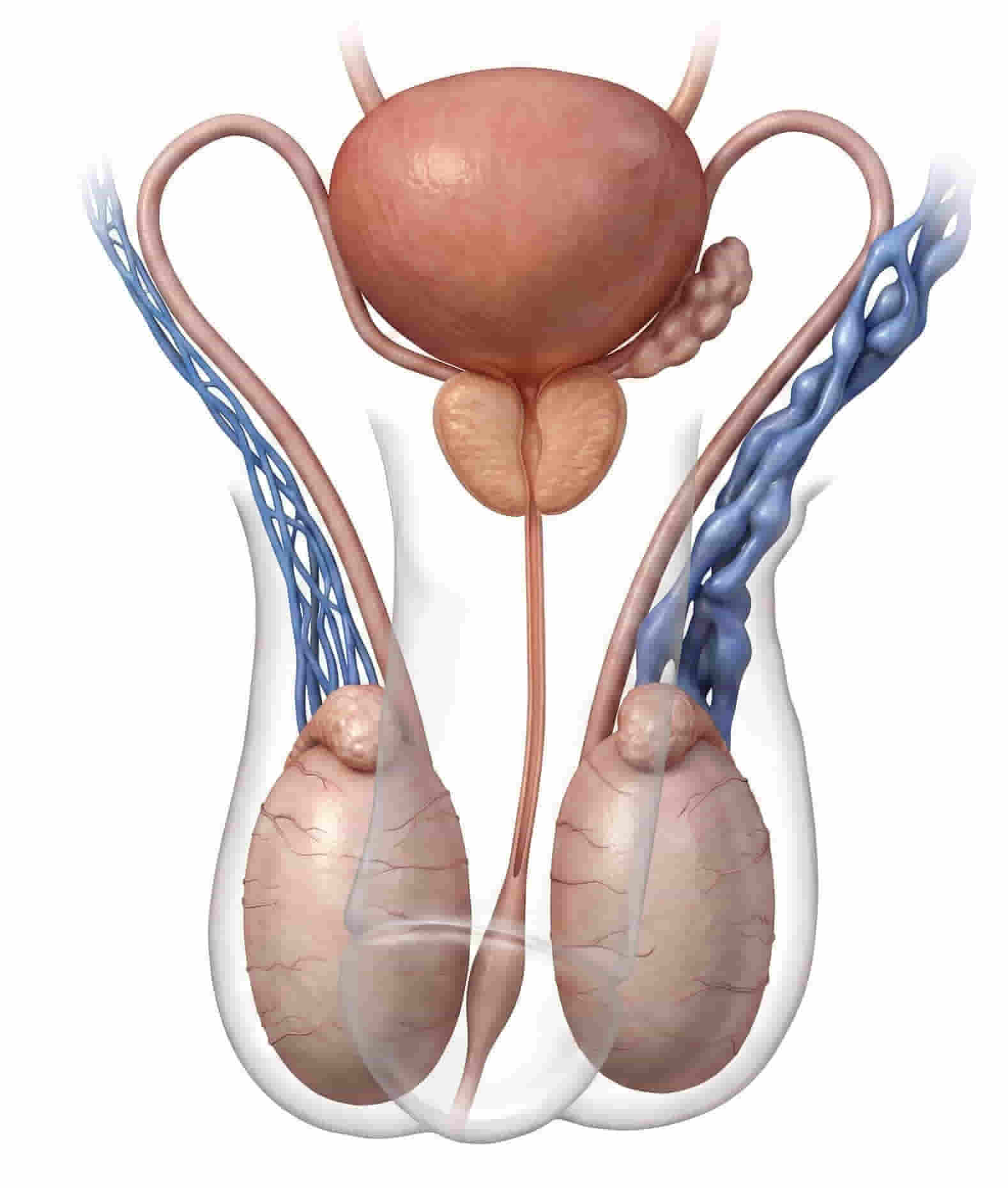
Varicocele Embolization Treatment for Varicocele in Hyderabad and Chennai
✓ Image-Guided Varicocele Treatment
Varicocele Embolization: A Minimally Invasive Treatment for Varicocele
Varicocele embolization is a minimally invasive procedure that treats enlarged veins in the scrotum (varicocele) by blocking abnormal blood flow while preserving healthy veins and testicular function.
Varicocele embolization is an advanced, image-guided treatment designed to target faulty veins using tiny coils or embolic agents. This precise technique reduces vein enlargement, improves blood circulation, and helps relieve pain and infertility issues. Compared to traditional surgery, it offers faster recovery, minimal discomfort, and fewer complications.
 Faster Recovery (1–2 Days)
Resume normal daily activities quickly with minimal downtime compared to surgery.
Improves Fertility Outcomes
Enhances sperm quality and testicular function by correcting abnormal blood flow.
Lower Risk of Recurrence
Targets all affected veins precisely, reducing chances of varicocele recurrence..
✓ Image-Guided Varicocele Treatment
Varicocele Embolization: A Minimally Invasive Treatment for Varicocele

Faster Recovery (1–2 Days)
Resume normal daily activities quickly with minimal downtime compared to surgery.
Improves Fertility Outcomes
Enhances sperm quality and testicular function by correcting abnormal blood flow.
Lower Risk of Recurrence
Targets all affected veins precisely, reducing chances of varicocele recurrence.
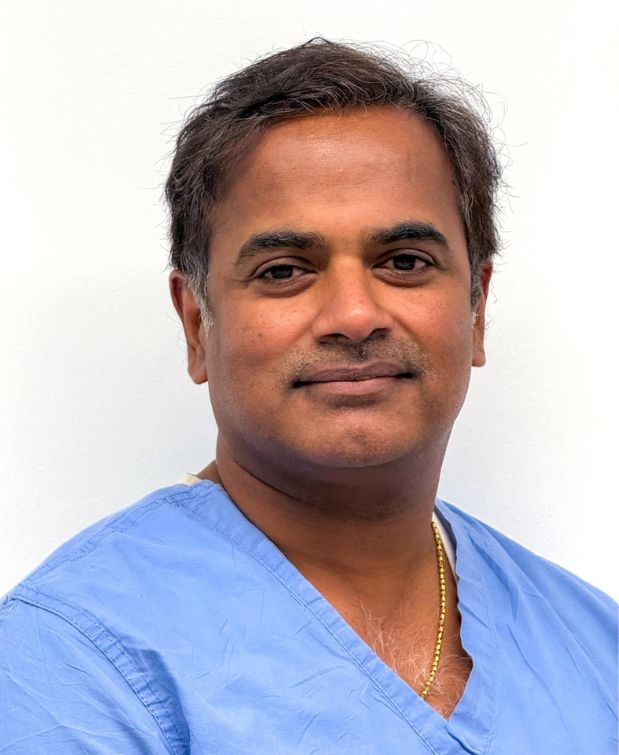
Dr Ram will be consulting in Hyderabad from August 1st.
Common Symptoms of Varicocele: Early Warning Signs in Men
 Dull Aching Scrotal Pain
Dull, aching pain in the scrotum is one of the most common symptoms of varicocele and often develops gradually over time. This discomfort is caused by the pooling of blood in enlarged veins, which increases pressure within the scrotum. The pain is typically mild in the morning but may worsen throughout the day, especially after prolonged standing or physical activity. In many cases, the discomfort can interfere with daily routines and reduce overall quality of life.
“Many patients describe a persistent, heavy ache in the scrotum that becomes more noticeable by the end of the day.”
Common Signs Associated with Dull Aching
- Persistent dull or aching pain in the scrotum
- Pain that worsens with standing or physical activity
- Relief when lying down or resting
- Discomfort increasing towards evening
- Mild pain that gradually becomes more noticeable
 Heaviness in the Scrotum
A feeling of heaviness or a dragging sensation in the scrotum is another key symptom of varicocele. This occurs due to the enlarged and swollen veins putting extra weight and pressure on the surrounding tissues. The sensation may not always be painful but can feel uncomfortable and unusual, especially during long periods of standing or walking. Over time, this heaviness can become more persistent and bothersome.
“Patients often feel a dragging sensation in the scrotum, as if there is extra weight pulling downward.”
Common Signs of Heaviness in Scrotum
- Sensation of heaviness or pressure in the scrotum
- Increased discomfort during prolonged standing
- Feeling of dragging or pulling in the testicular area
- Relief when lying flat
- Gradual increase in heaviness over time
 Visible Enlarged or Twisted Veins
One of the most recognisable signs of varicocele is the appearance of enlarged, twisted veins in the scrotum, often described as a “bag of worms.” These veins become more visible due to abnormal blood flow and pooling. This symptom may be more noticeable when standing or straining and less visible when lying down. It is a clear physical indicator that medical evaluation may be needed.
“You may notice visibly enlarged or twisted veins in the scrotum that feel unusual to touch.”
Common Signs of Enlarged and Twisted Veins
- Bulging or twisted veins in the scrotum
- “Bag of worms” appearance
- Veins are more visible when standing
- Reduced visibility when lying down
- Noticeable changes in scrotal appearance
 Testicular Shrinkage (Atrophy)
Varicocele can affect the normal growth and function of the testicles, leading to shrinkage or reduced size, known as testicular atrophy. This happens due to impaired blood flow and increased temperature around the testicles, which can damage healthy tissue. Over time, this may impact hormone production and fertility if left untreated.
“One testicle may appear smaller than the other due to reduced blood supply and long-term damage.”
Common Signs Associated with Testicular Srinkage
- One testicle is smaller than the other
- Gradual reduction in testicular size
- Loss of firmness in the testicle
- Changes noticed over time
- Associated with long-standing varicocele
 Fertility Issues (Low Sperm Quality)
Varicocele is a leading cause of male infertility, as it affects sperm production and quality. The increased temperature and poor blood circulation around the testicles can lead to reduced sperm count, motility, and abnormal sperm shape. Many men may not notice symptoms until they face difficulty conceiving, making this a silent but significant issue.
“Some men discover varicocele only when facing difficulty in achieving pregnancy.”
Common Signs Associated with Fertility Issues
- Low sperm count or poor sperm motility
- Difficulty conceiving
- Abnormal semen analysis results
- Reduced fertility potential
- Often detected during fertility evaluation
 Swelling in the Scrotum
Swelling or enlargement of the scrotum may occur due to the buildup of blood in the affected veins. This swelling can vary in size and may become more noticeable after standing for long periods. While it may not always cause pain, it can lead to discomfort and visible changes in the scrotum.
“You may notice swelling or enlargement in the scrotum that changes throughout the day.”
Common Signs Associated with Swelling in Scrotum
- Visible swelling in the scrotum
- Enlargement that increases with activity
- Mild discomfort or pressure
- Swelling reduces when lying down
- Changes in scrotal size over time
Common Symptoms of Varicocele: Early Warning Signs in Men
Dull Aching Scrotal Pain
Dull, aching pain in the scrotum is one of the most common symptoms of varicocele and often develops gradually over time. This discomfort is caused by the pooling of blood in enlarged veins, which increases pressure within the scrotum. The pain is typically mild in the morning but may worsen throughout the day, especially after prolonged standing or physical activity. In many cases, the discomfort can interfere with daily routines and reduce overall quality of life.
“Many patients describe a persistent, heavy ache in the scrotum that becomes more noticeable by the end of the day.”
Common Signs Associated with Frequent Urination
- Persistent dull or aching pain in the scrotum
- Pain that worsens with standing or physical activity
- Relief when lying down or resting
- Discomfort is increasing towards evening
- Mild pain that gradually becomes more noticeable
Heaviness in the Scrotum
A feeling of heaviness or a dragging sensation in the scrotum is another key symptom of varicocele. This occurs due to the enlarged and swollen veins putting extra weight and pressure on the surrounding tissues. The sensation may not always be painful but can feel uncomfortable and unusual, especially during long periods of standing or walking. Over time, this heaviness can become more persistent and bothersome.
“Patients often feel a dragging sensation in the scrotum, as if there is extra weight pulling downward.”
Common Signs Associated with Dull Aching
- Sensation of heaviness or pressure in the scrotum
- Increased discomfort during prolonged standing
- Feeling of dragging or pulling in the testicular area
- Relief when lying flat
- Gradual increase in heaviness over time
Visible Enlarged or Twisted Veins
One of the most recognisable signs of varicocele is the appearance of enlarged, twisted veins in the scrotum, often described as a “bag of worms.” These veins become more visible due to abnormal blood flow and pooling. This symptom may be more noticeable when standing or straining and less visible when lying down. It is a clear physical indicator that medical evaluation may be needed.
“You may notice visibly enlarged or twisted veins in the scrotum that feel unusual to touch.”
Common Signs of Enlarged and Twisted Veins
- Bulging or twisted veins in the scrotum
- “Bag of worms” appearance
- Veins more visible when standing
- Reduced visibility when lying down
- Noticeable changes in scrotal appearance
Testicular Shrinkage (Atrophy)
Varicocele can affect the normal growth and function of the testicles, leading to shrinkage or reduced size, known as testicular atrophy. This happens due to impaired blood flow and increased temperature around the testicles, which can damage healthy tissue. Over time, this may impact hormone production and fertility if left untreated.
“One testicle may appear smaller than the other due to reduced blood supply and long-term damage.”
Common Signs Associated with Testicular Srinkage
- One testicle is smaller than the other
- Gradual reduction in testicular size
- Loss of firmness in the testicle
- Changes noticed over time
- Associated with long-standing varicocele
Fertility Issues (Low Sperm Quality)
Varicocele is a leading cause of male infertility, as it affects sperm production and quality. The increased temperature and poor blood circulation around the testicles can lead to reduced sperm count, motility, and abnormal sperm shape. Many men may not notice symptoms until they face difficulty conceiving, making this a silent but significant issue.
“Some men discover varicocele only when facing difficulty in achieving pregnancy.”
Common Signs Associated with Fertility Issues
- Low sperm count or poor sperm motility
- Difficulty conceiving
- Abnormal semen analysis results
- Reduced fertility potential
- Often detected during fertility evaluation
Swelling in the Scrotum
Swelling or enlargement of the scrotum may occur due to the buildup of blood in the affected veins. This swelling can vary in size and may become more noticeable after standing for long periods. While it may not always cause pain, it can lead to discomfort and visible changes in the scrotum.
“You may notice swelling or enlargement in the scrotum that changes throughout the day.”
Common Signs Associated with Swelling in Scrotum
- Visible swelling in the scrotum
- Enlargement that increases with activity
- Mild discomfort or pressure
- Swelling reduces when lying down
- Changes in scrotal size over time
Board-Certified Expertise
Internationally trained with credentials from leading medical institutions
FRCR
Fellow, Royal College of Radiologists
DABIR
Diplomate, American Board of Interventional Radiology
MRCSEd
Member, Royal College of Surgeons Edinburg
40+ Publications
Peer-reviewed scientific research
Why Dr. Ram Kishore Stands Out
 Cleveland Clinic Training
Advanced interventional radiology fellowship from one of the world’s top medical institutions.
✅ Research Pioneer
40+ Peer-reviewed publications advancing the field of interventional radiology
✅ 14+ Years Experience
Thousands of successful treatments, with exceptional patient outcomes
✅ Patient-Centered Care
Evidence-based approach with focus on patient education and informed decision making
Board-Certified Expertise
Internationally trained with credentials from leading medical institutions
FRCR
Fellow, Royal College of Radiologists
DABIR
Diplomate, American Board of Interventional Radiology
MRCSEd
Member, Royal College of Surgeons Edinburgh
40+ Publications
Peer-reviewed scientific research
Why Dr. Ram Kishore Stands Out
✅ Cleveland Clinic Training
Advanced interventional radiology fellowship from one of the world’s top medical institutions.
✅ Research Pioneer
40+ Peer-reviewed publications advancing the field of interventional radiology
✅ 14+ Years Experience
Thousands of successful treatments, with exceptional patient outcomes
✅ Patien-Centered Care
Evidence-based approach with focus on patient education and informed decision making
Why Choose Advanced Varicocele Embolization Treatment in India?
A Safe and Effective Treatment for Varicocele Without Surgery
Varicocele embolization is a minimally invasive, non-surgical treatment designed to treat varicocele (enlarged veins in the scrotum) by blocking abnormal blood flow and relieving pressure in the affected veins. This advanced procedure helps improve symptoms like pain, swelling, and infertility while preserving healthy surrounding structures. It is highly recommended for men seeking a safer alternative to open surgery.
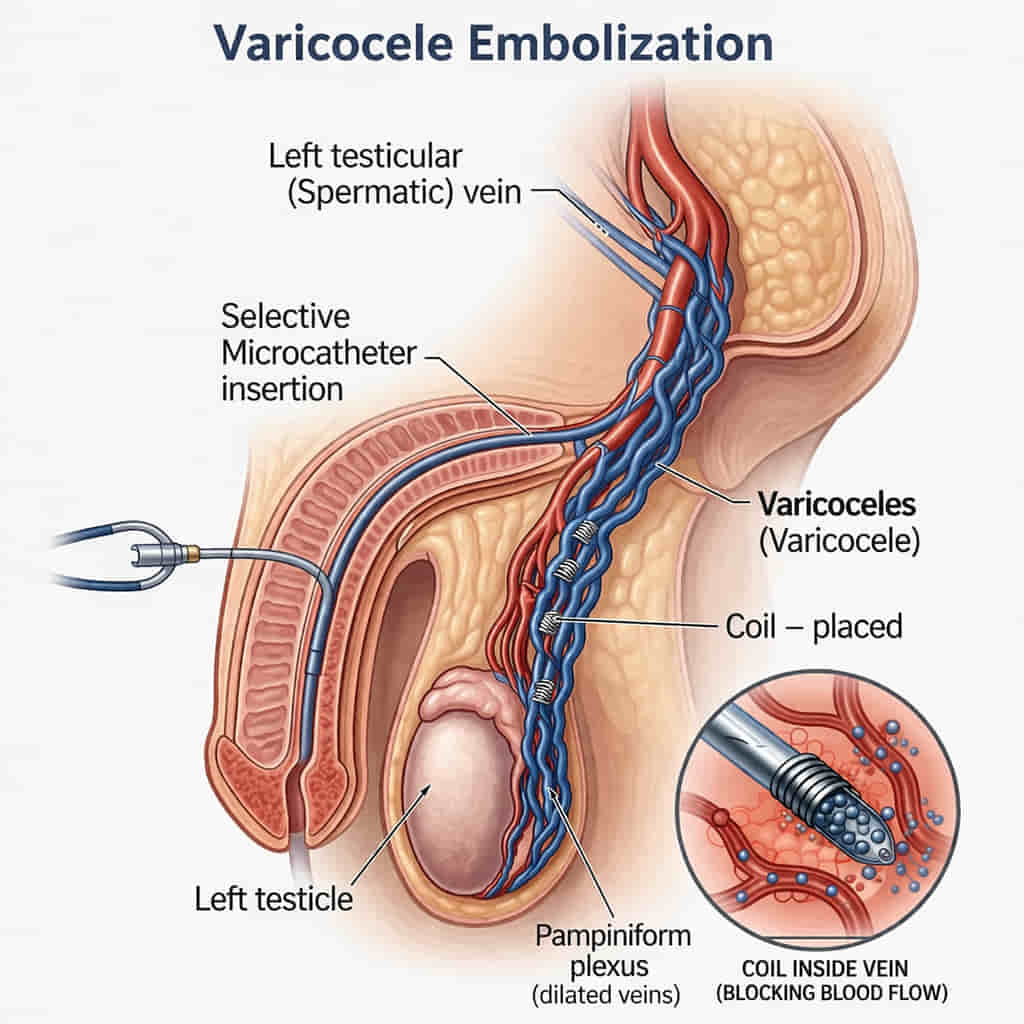
Using advanced imaging guidance, a thin catheter is inserted through a small puncture (usually in the groin or neck) and guided to the affected veins. Tiny coils or embolic agents are then used to seal the problematic veins. This targeted approach minimizes complications, ensures faster recovery, and provides long-lasting relief compared to traditional surgical methods.
Impact of Untreated Varicocele
💔 Reduced Fertility and Sperm Quality
An untreated varicocele can negatively affect sperm production and quality, leading to reduced fertility and difficulty in conceiving.
💔 Persistent Scrotal Pain and Discomfort
Patients may experience ongoing dull or sharp pain in the scrotum, which can worsen after standing for long periods or physical activity.
 Testicular Shrinkage (Atrophy)
Varicocele can lead to shrinking of the affected testicle due to impaired blood flow and increased temperature in the scrotum.
Hormonal Imbalance and Testosterone Issues
Chronic varicocele may impact testosterone production, leading to hormonal imbalances that affect overall health and well-being.

Why Choose Advanced Varicocele Embolization Treatment in India?
A Safe and Effective Treatment for Varicocele Without Surgery
Varicocele embolization is a minimally invasive, non-surgical treatment designed to treat varicocele (enlarged veins in the scrotum) by blocking abnormal blood flow and relieving pressure in the affected veins. This advanced procedure helps improve symptoms like pain, swelling, and infertility while preserving healthy surrounding structures. It is highly recommended for men seeking a safer alternative to open surgery.
Using advanced imaging guidance, a thin catheter is inserted through a small puncture (usually in the groin or neck) and guided to the affected veins. Tiny coils or embolic agents are then used to seal the problematic veins. This targeted approach minimizes complications, ensures faster recovery, and provides long-lasting relief compared to traditional surgical methods.
Impact of Untreated Varicocele
💔 Reduced Fertility and Sperm Quality
Untreated varicocele can negatively affect sperm production and quality, leading to reduced fertility and difficulty in conceiving.
💔 Persistent Scrotal Pain and Discomfort
Patients may experience ongoing dull or sharp pain in the scrotum, which can worsen after standing for long periods or physical activity.
💔 Testicular Shrinkage (Atrophy)
Varicocele can lead to shrinking of the affected testicle due to impaired blood flow and increased temperature in the scrotum.
💔 Hormonal Imbalance and Testosterone Issues
Chronic varicocele may impact testosterone production, leading to hormonal imbalances that affect overall health and well-being.


How Varicocele Embolization Works for Varicocele Treatment in India
A minimally invasive, image-guided treatment for varicocele that relieves pain and improves fertility.
Image-Guided Identification of Varicocele Veins
Using advanced fluoroscopy imaging, expert interventional radiologists accurately identify the enlarged testicular veins responsible for the varicocele. This allows precise, targeted varicocele embolization treatment while protecting surrounding healthy tissues and nearby structures.
Insertion of Microcatheter Through Wrist or Groin
A thin microcatheter is inserted through a tiny puncture in the wrist or groin and guided to the affected veins. This non-surgical varicocele treatment avoids stitches, scars, and long hospital stays, making it a preferred choice for patients looking for safe and effective solutions.
Injection of Embolic Agents to Block Abnormal Veins
Specialized coils or embolic agents are delivered into the enlarged veins to block abnormal blood flow. This advanced varicocele embolization procedure directly treats the root cause of the condition.
Reduction of Venous Pressure and Vein Shrinkage
By cutting off the faulty blood flow, the affected veins gradually shrink. This reduces pressure in the scrotum and restores normal circulation, offering long-term relief.
Relief from Pain and Improvement in Fertility
Patients experience significant improvement in symptoms such as scrotal pain, swelling, and discomfort. Additionally, varicocele embolization for infertility helps improve sperm quality and increases chances of conception.
Get a complete, detailed explanation of Varicocele Embolization by Dr Ram Kishore
How Varicocele Embolization Works for Varicocele Treatment in India
A minimally invasive, image-guided treatment for varicocele that relieves pain and improves fertility.
Image-Guided Identification of Varicocele Veins
Using advanced fluoroscopy imaging, expert interventional radiologists precisely identify the enlarged testicular veins responsible for varicocele. This ensures accurate, targeted varicocele embolization treatment in India while protecting surrounding healthy tissues.
Insertion of Microcatheter Through Wrist or Groin
A thin microcatheter is inserted through a tiny puncture in the wrist or groin and guided to the affected veins. This non-surgical varicocele treatment avoids stitches, scars, and long hospital stays, making it a preferred choice for patients looking for safe and effective solutions.
Injection of Embolic Agents to Block Abnormal Veins
Specialized coils or embolic agents are delivered into the enlarged veins to block abnormal blood flow. This advanced varicocele embolization procedure directly treats the root cause of the condition.
Reduction of Venous Pressure and Vein Shrinkage
By cutting off the faulty blood flow, the affected veins gradually shrink. This reduces pressure in the scrotum and restores normal circulation, offering long-term relief.
Relief from Pain and Improvement in Fertility
Patients experience significant improvement in symptoms such as scrotal pain, swelling, and discomfort. Additionally, varicocele embolization for infertility helps improve sperm quality and increases chances of conception.
Varicocele Embolization vs Varicocelectomy: Which Treatment is Right for You?
Compare varicocele embolization vs varicocelectomy—faster recovery, less pain, and minimally invasive treatment.
🛡️Benefits of Varicocele Embolization
- Minimally Invasive Treatment – No surgical incisions or stitches required
- Faster Recovery Time – Return to normal activities within 1–2 days
- Relieves Pain & Discomfort – Reduces scrotal pain and heaviness
- Improves Fertility – Enhances sperm quality and count in many cases
- Preserves Testicular Function – Protects hormone production and testicular health
- Lower Risk of Complications – Fewer risks compared to open surgery
- No General Anesthesia Needed – Usually performed under local anesthesia
- Effective Vein Closure – Blocks abnormal veins to restore normal blood flow
⚡ Limitations of Varicocelectomy
- Invasive Surgical Procedure – Requires incisions and tissue dissection
- Longer Recovery Time – May take 1–2 weeks or more to resume normal activities
- Postoperative Pain & Discomfort – Common due to surgical incision
- Risk of Complications – Includes infection, bleeding, or wound-related issues l
- Hydrocele Formation – Fluid accumulation around the testicle may occur
- Risk of Recurrence – Varicocele can return in some cases
- Anesthesia Required – Typically performed under general or spinal anesthesia
- Visible Scarring – Small but permanent surgical scar possible
Varicocele Embolization vs Varicocelectomy: Which Treatment is Right for You?
Compare varicocele embolization vs varicocelectomy—faster recovery, less pain, and minimally invasive treatment.
🛡️Benefits of Varicocele Embolization
- Minimally Invasive Treatment – No surgical incisions or stitches required
- Faster Recovery Time – Return to normal activities within 1–2 days
- Relieves Pain & Discomfort – Reduces scrotal pain and heaviness
- Improves Fertility – Enhances sperm quality and count in many cases
- Preserves Testicular Function – Protects hormone production and testicular health
- Quick Procedure Time – Typically completed within an hour
- No General Anesthesia Needed – Usually performed under local anesthesia
- Effective Vein Closure – Blocks abnormal veins to restore normal blood flow
⚡ Limitations of Varicocelectomy
- Invasive Surgical Procedure – Requires incisions and tissue dissection
- Longer Recovery Time – May take 1–2 weeks or more to resume normal activities
- Postoperative Pain & Discomfort – Common due to surgical incision
- Risk of Complications – Includes infection, bleeding, or wound-related issues
- Hydrocele Formation – Fluid accumulation around the testicle may occur
- Risk of Recurrence – Varicocele can return in some cases
- Anesthesia Required – Typically performed under general or spinal anesthesia
- Visible Scarring – Small but permanent surgical scar possible
★★★★★
“I had been dealing with a dull, dragging pain for nearly a year, especially after long hours of standing. It started affecting my daily life, and I was advised surgery, which concerned me.I chose varicocele embolization, and the procedure was simple, painless, and required no cuts or stitches. I was discharged the same day and returned to normal activities within 1–2 days.The discomfort and heaviness I had for months completely disappeared. I’m really thankful for this minimally invasive treatment—it truly improved my quality of life.”

Arjun Reddy
Hyderabad, India
Age 32 | 1.2 years Post- Varicocele Embolization
★★★★★
“My wife and I were trying to conceive for over a year when I was diagnosed with varicocele affecting my sperm quality. I wanted an option with less downtime, so I chose varicocele embolization.The procedure was quick, required no hospitalization, and involved minimal discomfort. I was back to normal activities within a couple of days.Within a few months, my reports showed significant improvement in sperm count and motility. I’m really glad I chose this safe and effective treatment.”

Sundaram Charry
Chennai, India
Age 27 | 1 years Post – Varicocele Embolization
Patient Experiences with Varicocele Embolization Treatment
★★★★★
“I had been dealing with a dull, dragging pain for nearly a year, especially after long hours of standing. It started affecting my daily life, and I was advised surgery, which concerned me.I chose varicocele embolization, and the procedure was simple, painless, and required no cuts or stitches. I was discharged the same day and returned to normal activities within 1–2 days.The discomfort and heaviness I had for months completely disappeared. I’m really thankful for this minimally invasive treatment—it truly improved my quality of life.”

Arjun Reddy
Hyderabad, India
Age 32 | 1.2 years Post-Varicocele Embolisation
★★★★★
“My wife and I were trying to conceive for over a year when I was diagnosed with varicocele affecting my sperm quality. I wanted an option with less downtime, so I chose varicocele embolization.The procedure was quick, required no hospitalization, and involved minimal discomfort. I was back to normal activities within a couple of days.Within a few months, my reports showed significant improvement in sperm count and motility. I’m really glad I chose this safe and effective treatment.”

Sundaram Charry
Chennai, India
Age 27 | 1 years Post – Post-Varicocele Embolisation
Frequently Asked Questions About Varicocele Embolization
What is varicocele embolization?
Varicocele embolization is a minimally invasive, image-guided procedure used to treat Varicocele. It works by blocking the abnormal veins in the scrotum that cause blood to pool. A tiny catheter is inserted through a small puncture (usually in the groin or wrist), and special coils or agents are used to close off the affected veins, allowing blood to flow through healthy pathways. This reduces pressure, relieves symptoms, and improves testicular function.
How is embolization different from surgery (varicocelectomy)?
Varicocele embolization differs significantly from Varicocelectomy:
- No surgical cuts or stitches are required
- Performed under local anesthesia, avoiding risks of general anesthesia
- Faster recovery (1–2 days vs weeks for surgery)
- Lower risk of complications such as infection or hydrocele
- No visible scars
Overall, embolization is a less invasive and more patient-friendly alternative.
Is Varicocele Embolization painful painful?
The procedure is generally not painful. Local anesthesia is used at the entry site, so patients may feel only mild pressure or slight discomfort during catheter insertion. After the procedure, some patients may experience mild soreness or a dull ache for a short period, which usually resolves quickly with basic medication.
How long does the procedure take?
Varicocele embolization typically takes 30 to 60 minutes. Since it is an outpatient procedure, patients are usually observed briefly and discharged on the same day, without the need for overnight hospitalization.
What is the recovery time?
Recovery is quick compared to surgery:
- Light activities can be resumed within 24–48 hours
- Most patients return to normal routine within a few days
- Strenuous activities and heavy lifting may be avoided for about a week
There is minimal downtime, making it ideal for working professionals.
Does varicocele embolization improve fertility?
Yes, many studies and clinical outcomes show that embolization can improve sperm count, motility, and quality. By reducing the abnormal heat and pressure caused by varicocele, testicular function improves over time. Results are typically seen within 3–6 months after the procedure.
Are there any risks or complications?
Varicocele embolization is considered very safe, with a low complication rate. Possible but rare side effects include:
- Mild pain or discomfort
- Minor bruising at the catheter site
- Temporary swelling
Serious complications are uncommon, especially when performed by experienced specialists.
Who is a good candidate for varicocele embolization?
This procedure is suitable for men who:
- Experience pain or discomfort due to varicocele
- Have fertility issues linked to varicocele
- Want a non-surgical treatment option
- Have recurrence after previous surgery
A specialist will evaluate imaging and symptoms before recommending the procedure.
Frequently Asked Questions About Varicocele Embolization
What is varicocele embolization?
Varicocele embolization is a minimally invasive, image-guided procedure used to treat Varicocele. It works by blocking the abnormal veins in the scrotum that cause blood to pool. A tiny catheter is inserted through a small puncture (usually in the groin or wrist), and special coils or agents are used to close off the affected veins, allowing blood to flow through healthy pathways. This reduces pressure, relieves symptoms, and improves testicular function.
How is embolization different from surgery (varicocelectomy)?
Varicocele embolization differs significantly from Varicocelectomy:
- No surgical cuts or stitches are required
- Performed under local anesthesia, avoiding risks of general anesthesia
- Faster recovery (1–2 days vs weeks for surgery)
- Lower risk of complications such as infection or hydrocele
- No visible scars
Overall, embolization is a less invasive and more patient-friendly alternative.
Is Varicocele Embolization is painful procedure?
The procedure is generally not painful. Local anesthesia is used at the entry site, so patients may feel only mild pressure or slight discomfort during catheter insertion. After the procedure, some patients may experience mild soreness or a dull ache for a short period, which usually resolves quickly with basic medication.
How long does the procedure take?
Varicocele embolization typically takes 30 to 60 minutes. Since it is an outpatient procedure, patients are usually observed briefly and discharged on the same day, without the need for overnight hospitalization.
What is the recovery time?
Recovery is quick compared to surgery:
- Light activities can be resumed within 24–48 hours
- Most patients return to normal routine within a few days
- Strenuous activities and heavy lifting may be avoided for about a week
There is minimal downtime, making it ideal for working professionals.
Does varicocele embolization improve fertility?
Yes, many studies and clinical outcomes show that embolization can improve sperm count, motility, and quality. By reducing the abnormal heat and pressure caused by varicocele, testicular function improves over time. Results are typically seen within 3–6 months after the procedure.
Are there any risks or complications?
Varicocele embolization is considered very safe, with a low complication rate. Possible but rare side effects include:
- Mild pain or discomfort
- Minor bruising at the catheter site
- Temporary swelling
Serious complications are uncommon, especially when performed by experienced specialists.
Like any medical procedure, PAE carries some risks, but they are generally minimal compared to surgery. Common side effects include mild pain, temporary urinary discomfort, or low-grade fever, which usually resolve quickly. Rare complications may include infection or non-target embolization, but these are uncommon when performed by experienced specialists. Overall, PAE is considered a safe and well-tolerated treatment option.
Who is a good candidate for varicocele embolization?
This procedure is suitable for men who:
- Experience pain or discomfort due to varicocele
- Have fertility issues linked to varicocele
- Want a non-surgical treatment option
- Have recurrence after previous surgery
A specialist will evaluate imaging and symptoms before recommending the procedure.
Your Life Doesn't Have to Be Controlled by a Tumour
Thousands of women have reclaimed their freedom through UFE, a safe and minimally invasive treatment for uterine fibroids. You don’t have to live with constant pain, heavy bleeding, or exhaustion. You deserve relief without major surgery or long recovery. Take control of your health and take the first step toward a life free from fibroid symptoms today.
Available in Hyderabad & Chennai | Cleveland Clinic Trained | 14+ Years Experience | 90% Success Rate
First Consultation is Risk-Free: Meet with Dr. Kishore, discuss your symptoms, and explore all treatment options. No pressure, no obligation. We’re here to help you make the best decision for your health.
Your Life Doesn't Have to Be Controlled by a Tumour
Thousands of women have reclaimed their freedom through UFE, a safe and minimally invasive treatment for uterine fibroids. You don’t have to live with constant pain, heavy bleeding, or exhaustion. You deserve relief without major surgery or long recovery. Take control of your health and take the first step toward a life free from fibroid symptoms today.
Available in Hyderabad & Chennai | Cleveland Clinic Trained | 14+ Years Experience | 90% Success Rate
First Consultation is Risk-Free: Meet with Dr. Kishore, discuss your symptoms, and explore all treatment options. No pressure, no obligation. We’re here to help you make the best decision for your health.