

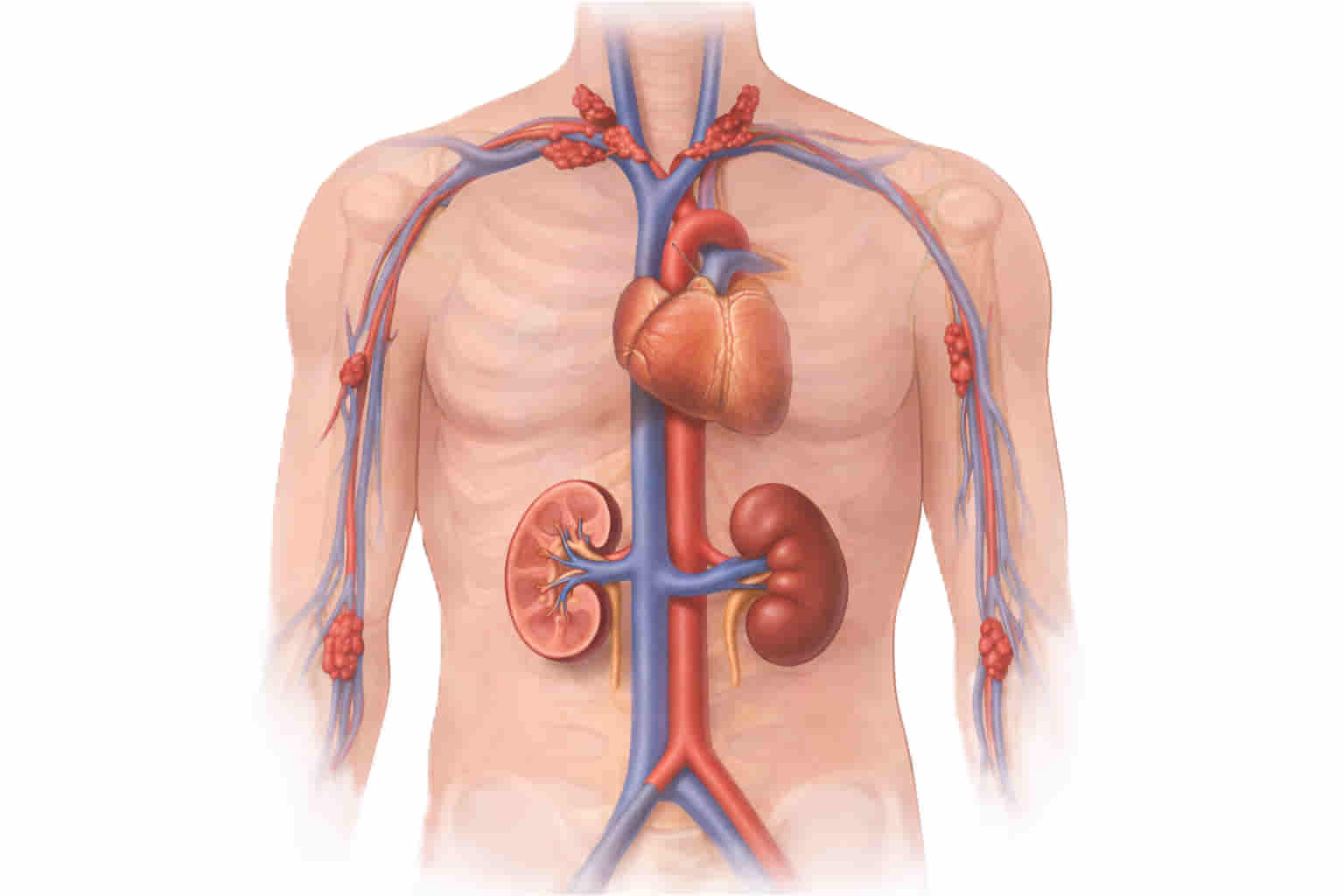
Translumbar Venous Catheters treatment for Vein Blockage in Hyderabad & Chennai

✓ Advanced Dialysis Access Solution
Translumbar Venous Catheter for Dialysis Access – Safe & Minimally Invasive Treatment
A minimally invasive solution for patients with blocked veins requiring reliable dialysis access through translumbar catheter placement.
Translumbar venous catheter placement is a specialized, image-guided procedure used when traditional dialysis access options fail due to central vein blockage. The catheter is inserted through the lower back into the inferior vena cava, ensuring reliable blood flow for dialysis. This technique is ideal for patients with limited vascular access and helps avoid major surgery.
 Quick Recovery After Dialysis Catheter Placement
Patients typically recover within a few days with minimal discomfort
Minimally Invasive Dialysis Access Procedure
No major surgery, making it safer for high-risk patients.
Reliable Long-Term Vascular Access for Dialysis
Ensures uninterrupted dialysis even in complex cases
✓ Advanced Dialysis Access Solution
Translumbar Venous Catheter for Dialysis Access – Safe & Minimally Invasive Treatment
A minimally invasive solution for patients with blocked veins requiring reliable dialysis access through translumbar catheter placement.
Translumbar venous catheter placement is a specialized, image-guided procedure used when traditional dialysis access options fail due to central vein blockage. The catheter is inserted through the lower back into the inferior vena cava, ensuring reliable blood flow for dialysis. This technique is ideal for patients with limited vascular access and helps avoid major surgery.

Quick Recovery After Dialysis Catheter Placement
Patients typically recover within a few days with minimal discomfort.
Minimally Invasive Dialysis Access Procedure
No major surgery, making it safer for high-risk patients.
Reliable Long-Term Vascular Access for Dialysis
Reliable Long-Term Vascular Access for Dialysis.
Dr Ram will be consulting in Hyderabad from August 1st.
Early Signs of Kidney Failure: Warning Symptoms That May Require Dialysis Access
 Fatigue & Weakness in Kidney Failure
Fatigue and weakness are common early symptoms of kidney failure and may indicate the need for dialysis treatment. When the kidneys cannot filter waste effectively, toxins build up in the blood, leading to constant tiredness. Patients with chronic kidney disease (CKD) often experience low energy levels and reduced stamina. This symptom becomes more severe as kidney function declines and may require advanced treatments like dialysis access procedures.
“You may feel constantly tired and lack the energy to perform even simple daily activities.”
Common Signs Associated with Fatigue & Weakness in Kidney Disease
- Persistent tiredness due to kidney failure
- Low energy levels in chronic kidney disease
- Difficulty concentrating and mental fatigue
- Weakness affecting daily activities
- Increased exhaustion requiring dialysis support
 Swelling (Edema) in Kidney Failure
Swelling, also known as edema, is a common symptom of kidney failure and advanced chronic kidney disease (CKD). When the kidneys cannot remove excess fluid and waste, it leads to fluid buildup in the body. This causes noticeable swelling in the legs, ankles, feet, or face. Persistent swelling may indicate the need for dialysis treatment or advanced dialysis access procedures.
“You may notice swelling in your legs, feet, or face due to fluid buildup in the body.”
Common Signs Associated with Swelling in Kidney Disease
- Swelling in legs, ankles, and feet due to kidney failure
- Fluid retention in chronic kidney disease (CKD)
- Puffiness around the eyes or face
- Tight or stretched skin from fluid buildup
- Rapid weight gain due to excess fluid
 Changes in Urination in Kidney Failure
Changes in urination are key symptoms of kidney failure and may indicate worsening chronic kidney disease (CKD). As kidney function declines, the body struggles to filter waste properly, leading to noticeable changes in urine frequency, color, and quantity. Patients may experience reduced or excessive urination, which can signal the need for dialysis treatment or advanced dialysis access procedures.
“You may notice changes in how often you urinate or differences in urine color and volume.”
Common Signs Associated with Urinary Changes in Kidney Disease
- Frequent urination, especially at night (nocturia)
- Reduced urine output in advanced kidney failure
- Dark, foamy, or bloody urine
- Difficulty urinating or weak urine flow
- Increased need for dialysis due to poor kidney function
 Shortness of Breath in Kidney Failure
Shortness of breath is a serious symptom of kidney failure and advanced chronic kidney disease (CKD). When the kidneys fail to remove excess fluid, it can build up in the lungs, making breathing difficult. Additionally, low oxygen levels and anemia associated with kidney disease can worsen breathlessness. This condition may indicate the need for urgent dialysis treatment and proper dialysis access procedures.
“You may feel breathless even with minimal activity or while lying down due to fluid buildup.”
Common Signs Associated with Breathlessness in Kidney Disease
- Difficulty breathing due to fluid in the lungs
- Breathlessness during rest or mild activity
- Worsening symptoms while lying flat
- Chest tightness linked to kidney failure
- Increased need for dialysis in advanced kidney disease
 Nausea & Loss of Appetite in Kidney Failure
Nausea and loss of appetite are common symptoms of kidney failure and advanced chronic kidney disease (CKD). When toxins accumulate in the blood due to poor kidney function, it can lead to a constant feeling of sickness and reduced desire to eat. Patients may also experience a metallic taste in the mouth, making food unappealing. These symptoms often indicate the need for dialysis treatment and proper dialysis access procedures.
“You may feel constantly nauseous and lose interest in food due to toxin buildup in the body.”
Common Signs Associated with Nausea in Kidney Disease
- Frequent nausea due to kidney failure
- Loss of appetite in chronic kidney disease (CKD)
- Vomiting or feeling sick after meals
- Metallic taste in the mouth
- Weight loss due to reduced food intake
Early Signs of Kidney Failure: Warning Symptoms That May Require Dialysis Access
Fatigue & Weakness in Kidney Failure
Fatigue and weakness are common early symptoms of kidney failure and may indicate the need for dialysis treatment. When the kidneys cannot filter waste effectively, toxins build up in the blood, leading to constant tiredness. Patients with chronic kidney disease (CKD) often experience low energy levels and reduced stamina. This symptom becomes more severe as kidney function declines and may require advanced treatments like dialysis access procedures.
“You may feel constantly tired and lack the energy to perform even simple daily activities.”
Common Signs Associated with Fatigue & Weakness in Kidney Disease
- Persistent tiredness due to kidney failure
- Low energy levels in chronic kidney disease
- Difficulty concentrating and mental fatigue
- Weakness affecting daily activities
- Increased exhaustion requiring dialysis support
Swelling (Edema) in Kidney Failure
Swelling, also known as edema, is a common symptom of kidney failure and advanced chronic kidney disease (CKD). When the kidneys cannot remove excess fluid and waste, it leads to fluid buildup in the body. This causes noticeable swelling in the legs, ankles, feet, or face. Persistent swelling may indicate the need for dialysis treatment or advanced dialysis access procedures.
“You may notice swelling in your legs, feet, or face due to fluid buildup in the body.”
Common Signs Associated with Swelling in Kidney Disease
- Swelling in legs, ankles, and feet due to kidney failure
- Fluid retention in chronic kidney disease (CKD)
- Puffiness around the eyes or face
- Tight or stretched skin from fluid buildup
- Rapid weight gain due to excess fluid
Changes in Urination in Kidney Failure
Changes in urination are key symptoms of kidney failure and may indicate worsening chronic kidney disease (CKD). As kidney function declines, the body struggles to filter waste properly, leading to noticeable changes in urine frequency, color, and quantity. Patients may experience reduced or excessive urination, which can signal the need for dialysis treatment or advanced dialysis access procedures.
“You may notice changes in how often you urinate or differences in urine color and volume.”
Common Signs Associated with Urinary Changes in Kidney Disease
- Frequent urination, especially at night (nocturia)
- Reduced urine output in advanced kidney failure
- Dark, foamy, or bloody urine
- Difficulty urinating or weak urine flow
- Increased need for dialysis due to poor kidney function
Shortness of Breath in Kidney Failure
Shortness of breath is a serious symptom of kidney failure and advanced chronic kidney disease (CKD). When the kidneys fail to remove excess fluid, it can build up in the lungs, making breathing difficult. Additionally, low oxygen levels and anemia associated with kidney disease can worsen breathlessness. This condition may indicate the need for urgent dialysis treatment and proper dialysis access procedures.
“You may feel breathless even with minimal activity or while lying down due to fluid buildup.”
Common Signs Associated with Breathlessness in Kidney Disease
- Difficulty breathing due to fluid in the lungs
- Breathlessness during rest or mild activity
- Worsening symptoms while lying flat
- Chest tightness linked to kidney failure
- Increased need for dialysis in advanced kidney disease
Nausea & Loss of Appetite in Kidney Failure
Nausea and loss of appetite are common symptoms of kidney failure and advanced chronic kidney disease (CKD). When toxins accumulate in the blood due to poor kidney function, it can lead to a constant feeling of sickness and reduced desire to eat. Patients may also experience a metallic taste in the mouth, making food unappealing. These symptoms often indicate the need for dialysis treatment and proper dialysis access procedures.
“You may feel constantly nauseous and lose interest in food due to toxin buildup in the body.”
Common Signs Associated with Nausea in Kidney Disease
- Frequent nausea due to kidney failure
- Loss of appetite in chronic kidney disease (CKD)
- Vomiting or feeling sick after meals
- Metallic taste in the mouth
- Weight loss due to reduced food intake
Board-Certified Expertise
Internationally trained with credentials from leading medical institutions
FRCR
Fellow, Royal College of Radiologists
DABIR
Diplomate, American Board of Interventional Radiology
MRCSEd
Member, Royal College of Surgeons Edinburg
40+ Publications
Peer-reviewed scientific research
Why Dr. Ram Kishore Stands Out
 Cleveland Clinic Training
Advanced interventional radiology fellowship from one of the world’s top medical institutions.
✅ Research Pioneer
40+ Peer-reviewed publications advancing the field of interventional radiology
✅ 14+ Years Experience
Thousands of successful treatments, with exceptional patient outcomes
✅ Patient-Centered Care
Evidence-based approach with focus on patient education and informed decision making
Board-Certified Expertise
Internationally trained with credentials from leading medical institutions
FRCR
Fellow, Royal College of Radiologists
DABIR
Diplomate, American Board of Interventional Radiology
MRCSEd
Member, Royal College of Surgeons Edinburgh
40+ Publications
Peer-reviewed scientific research
Why Dr. Ram Kishore Stands Out
✅ Cleveland Clinic Training
Advanced interventional radiology fellowship from one of the world’s top medical institutions.
✅ Research Pioneer
40+ Peer-reviewed publications advancing the field of interventional radiology
✅ 14+ Years Experience
Thousands of successful treatments, with exceptional patient outcomes
✅ Patien-Centered Care
Evidence-based approach with focus on patient education and informed decision making
Why Choose Translumbar Venous Catheter for Dialysis Access?
A Safe, Effective & Minimally Invasive Solution for Advanced Kidney Disease
Translumbar venous catheter placement is an advanced, image-guided procedure that provides reliable dialysis access for patients with chronic kidney disease (CKD) and kidney failure, especially when central veins are blocked or conventional access is no longer possible.
Unlike traditional surgery, this minimally invasive dialysis access procedure inserts a catheter through the lower back into a central vein, ensuring effective blood flow for dialysis treatment with lower surgical risk.
This non-surgical dialysis access option is ideal for high-risk patients or those with multiple failed access attempts, offering faster recovery, fewer complications, and uninterrupted dialysis support.
Impact of Untreated Blocked Veins
💔 Career Impact Due to Kidney Failure Symptoms
Fatigue and weakness from chronic kidney disease (CKD) reduce productivity and daily performance.
💔 Relationship Strain from Dialysis Dependency
Low energy from kidney failure symptoms affects relationships and quality time.
 Mental Health Effects of Chronic Kidney Disease
Advanced kidney disease can lead to stress, anxiety, and emotional strain.
Financial Burden of Dialysis Treatment
Ongoing dialysis treatment costs and reduced work ability create financial pressure.

Why Choose Translumbar Venous Catheter for Dialysis Access?
A Safe, Effective & Minimally Invasive Solution for Advanced Kidney Disease
Translumbar venous catheter placement is an advanced, image-guided procedure that provides reliable dialysis access for patients with chronic kidney disease (CKD) and kidney failure, especially when central veins are blocked or conventional access is no longer possible.
Unlike traditional surgery, this minimally invasive dialysis access procedure inserts a catheter through the lower back into a central vein, ensuring effective blood flow for dialysis treatment with lower surgical risk.
This non-surgical dialysis access option is ideal for high-risk patients or those with multiple failed access attempts, offering faster recovery, fewer complications, and uninterrupted dialysis support.
Impact of Untreated Blocked Veins
💔 Career Impact Due to Kidney Failure Symptoms
Fatigue and weakness from chronic kidney disease (CKD) reduce productivity and daily performance.
💔 Relationship Strain from Dialysis Dependency
Low energy from kidney failure symptoms affects relationships and quality time.
💔 Mental Health Effects of Chronic Kidney Diseaseions
Advanced kidney disease can lead to stress, anxiety, and emotional strain
💔 Financial Burden of Dialysis Treatment
Ongoing dialysis treatment costs and reduced work ability create financial pressure.


How Translumbar Venous Catheter Placement Works
A minimally invasive dialysis access procedure for reliable blood flow
Catheter Guidance
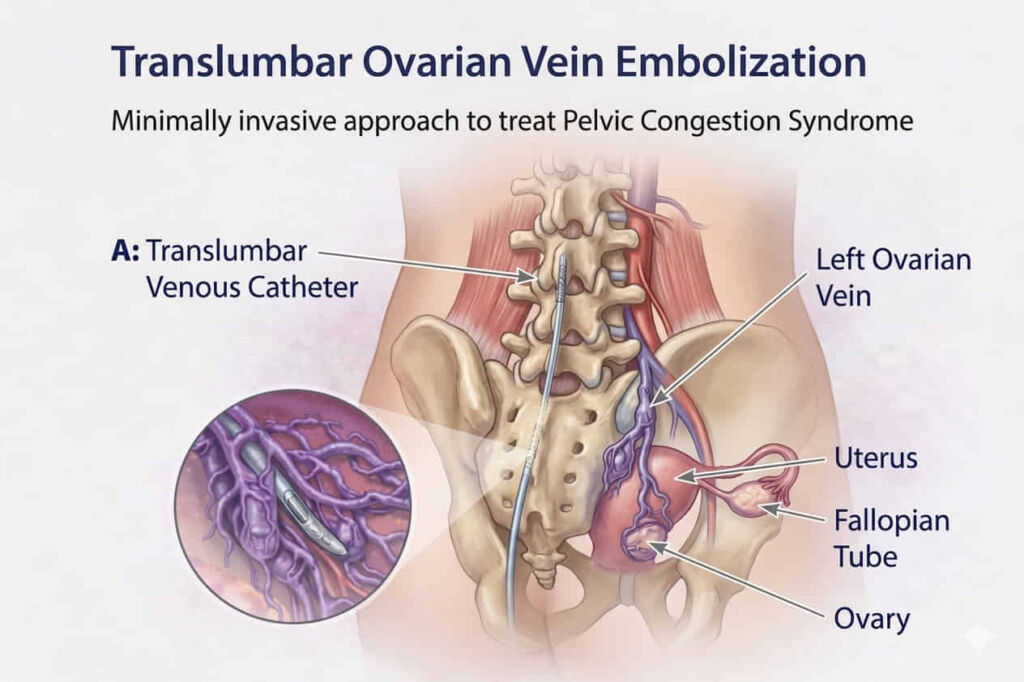
In translumbar venous catheter placement, a thin catheter is inserted through the lower back and guided into a central vein using advanced imaging. This ensures precise dialysis catheter placement for patients with chronic kidney disease (CKD) and kidney failure.
Dialysis Access Creation
The translumbar venous catheter is positioned in the inferior vena cava to provide reliable vascular access for dialysis treatment. This is especially useful in patients with central vein blockage where traditional access is not possible.
Immediate Dialysis Functionality
This dialysis access procedure allows patients to start dialysis treatment quickly, ensuring uninterrupted care in advanced kidney disease and reducing complications.
Long-Term Dialysis Support
The translumbar venous catheter for dialysis improves treatment continuity, offering stable access and better outcomes for patients with chronic kidney disease (CKD).
Get a complete, detailed explanation of Translumbar Venous Catheter by Dr Ram Kishore
How Translumbar Venous Catheter Placement Works
A minimally invasive dialysis access procedure for reliable blood flow
Catheter Guidance
In translumbar venous catheter placement, a thin catheter is inserted through the lower back and guided into a central vein using advanced imaging. This ensures precise dialysis catheter placement for patients with chronic kidney disease (CKD) and kidney failure.
Dialysis Access Creation
The translumbar venous catheter is positioned in the inferior vena cava to provide reliable vascular access for dialysis treatment. This is especially useful in patients with central vein blockage where traditional access is not possible.
Immediate Dialysis Functionality
This dialysis access procedure allows patients to start dialysis treatment quickly, ensuring uninterrupted care in advanced kidney disease and reducing complications.
Long-Term Dialysis Support
The translumbar venous catheter for dialysis improves treatment continuity, offering stable access and better outcomes for patients with chronic kidney disease (CKD).
Translumbar Venous Catheter vs Traditional Central Venous Surgery: Which Is Better?
“Translumbar Venous Catheter vs Traditional Surgery: Effectiveness, Recovery, and Safety”
🛡️Benefits of Translumbar Venous Catheter
- Minimally Invasive – Central venous access without major surgery.
- Alternative for Blocked Veins – Ideal when traditional access sites fail.
- Long-Term Use – Suitable for dialysis or chemotherapy.
- Outpatient-Friendly – Quick recovery under local anesthesia.
- Reliable Blood Flow – Stable access via IVC placement.
- Lower Infection Risk – Subcutaneous tunneling reduces complications.
- Preserves Other Veins – Keeps upper body veins for future use.
⚡ Limitations of Traditional Surgery
- Invasive – Needle puncture into the IVC.
- Observation Needed – Short monitoring after placement.
- Discomfort – Pain, bruising, or minor bleeding.
- Complications – Risk of bleeding or misplacement.
- Infection – Bloodstream infections possible.
- High-Risk Patients – Not ideal with bleeding issues or unusual anatomy.
- Maintenance – Regular catheter care required.
Translumbar Venous Catheter vs Traditional Central Venous Surgery: Which Is Better?
“Translumbar Venous Catheter vs Traditional Surgery: Effectiveness, Recovery, and Safety”
🛡️Benefits of Translumbar Venous Catheter
- Minimally Invasive – Central venous access without major surgery.
- Alternative for Blocked Veins – Ideal when traditional access sites fail.
- Long-Term Use – Suitable for dialysis or chemotherapy.
- Outpatient-Friendly – Quick recovery under local anesthesia.
- Reliable Blood Flow – Stable access via IVC placement.
- Lower Infection Risk – Subcutaneous tunneling reduces complications.
- Preserves Other Veins – Keeps upper body veins for future use.
⚡ Limitations of Traditional Surgery
- Invasive – Needle puncture into the IVC.
- Observation Needed – Short monitoring after placement.
- Discomfort – Pain, bruising, or minor bleeding.
- Complications – Risk of bleeding or misplacement.
- Infection – Bloodstream infections possible.
- High-Risk Patients – Not ideal with bleeding issues or unusual anatomy.
- Maintenance – Regular catheter care required.
★★★★★
“I had exhausted all my usual veins for dialysis, and my doctors suggested a translumbar venous catheter. The procedure was smooth, minimally invasive, and I was able to resume dialysis quickly. The entire team was professional and reassuring, and I experienced minimal discomfort. This catheter has made managing my kidney treatment so much easier and worry-free, allowing me to maintain my daily routine without interruptions.”

Dileep Kumar
Hyderabad, India
Age 52 | 1.5 years Post Translumbar Venous Catheter
★★★★★
“After multiple failed attempts with traditional central lines, the translumbar catheter was truly a game-changer. Recovery was surprisingly fast, and I haven’t faced any complications. It has made long-term dialysis so much easier, safer, and more comfortable for me. I feel more confident attending regular sessions, and it has significantly improved my overall quality of life, giving me peace of mind about my health and future.”

Ashok Raina
Chennai, India
Age 67| 1.5 years Post Translumbar Venous Catheter
Patient Experiences with Translumbar Venous Catheter Treatment
★★★★★
“I had exhausted all my usual veins for dialysis, and my doctors suggested a translumbar venous catheter. The procedure was smooth, minimally invasive, and I was able to resume dialysis quickly. The entire team was professional and reassuring, and I experienced minimal discomfort. This catheter has made managing my kidney treatment so much easier and worry-free, allowing me to maintain my daily routine without interruptions.”

Dileep Kumar
Hyderabad, India
Age 52 | 1.5 years Post – Translumbar Venous Catheter
★★★★★
“After multiple failed attempts with traditional central lines, the translumbar catheter was truly a game-changer. Recovery was surprisingly fast, and I haven’t faced any complications. It has made long-term dialysis so much easier, safer, and more comfortable for me. I feel more confident attending regular sessions, and it has significantly improved my overall quality of life, giving me peace of mind about my health and future.”

Ashok Raina
Chennai, India
Age 67 | 1.5 years Post – Translumbar Venous Catheter
Frequently Asked Questions About Translumbar Venous Catheter
What is a translumbar venous catheter?
A translumbar venous catheter is a specialized central venous access device placed through the lower back into the inferior vena cava (IVC). It is typically used when traditional access sites like the neck or chest veins are blocked. This allows reliable long-term access for treatments such as dialysis.
When is a translumbar catheter recommended?
It is recommended for patients with chronic kidney disease who have exhausted conventional venous access options. This includes cases with blocked or narrowed jugular, subclavian, or femoral veins. It serves as a safe alternative for continued dialysis.
Is the procedure painful?
The procedure is usually performed under local anesthesia with sedation, so pain is minimal. Patients may feel slight pressure or mild discomfort during insertion. Post-procedure soreness is generally mild and resolves quickly.
How long does the procedure take?
Translumbar catheter placement typically takes about 30 to 60 minutes. The duration may vary depending on the patient’s anatomy and complexity. Most patients can resume normal activities shortly after recovery.
What are the risks of a translumbar venous catheter?
Like any medical procedure, there are some risks such as bleeding, infection, or catheter misplacement. However, with experienced specialists and imaging guidance, complications are minimized. Proper aftercare further reduces risks.
How long can the catheter be used?
A translumbar catheter is designed for long-term use, especially in patients requiring ongoing dialysis. With proper care and maintenance, it can function effectively for months. Regular follow-ups help ensure its longevity.
How should the catheter be cared for?
The catheter requires routine cleaning, dressing changes, and flushing to prevent blockage or infection. Patients are advised to keep the area dry and avoid unnecessary handling. Healthcare providers will guide proper maintenance techniques.
How soon can I see results after Prostate Artery Embolization?
It is not the first choice but becomes the best option when other venous access routes are unavailable. It provides reliable blood flow and helps continue life-saving treatments like dialysis. The choice depends on individual patient conditions.
Frequently Asked Questions About Translumbar Venous Catheter
What is a translumbar venous catheter?
A translumbar venous catheter is a specialized central venous access device placed through the lower back into the inferior vena cava (IVC). It is typically used when traditional access sites like the neck or chest veins are blocked. This allows reliable long-term access for treatments such as dialysis.
When is a translumbar catheter recommended?
It is recommended for patients with chronic kidney disease who have exhausted conventional venous access options. This includes cases with blocked or narrowed jugular, subclavian, or femoral veins. It serves as a safe alternative for continued dialysis.
Is the procedure painful?
The procedure is usually performed under local anesthesia with sedation, so pain is minimal. Patients may feel slight pressure or mild discomfort during insertion. Post-procedure soreness is generally mild and resolves quickly.
How long does the procedure take?
Translumbar catheter placement typically takes about 30 to 60 minutes. The duration may vary depending on the patient’s anatomy and complexity. Most patients can resume normal activities shortly after recovery.
What are the risks of a translumbar venous catheter?
Like any medical procedure, there are some risks such as bleeding, infection, or catheter misplacement. However, with experienced specialists and imaging guidance, complications are minimized. Proper aftercare further reduces risks.
How long can the catheter be used?
A translumbar catheter is designed for long-term use, especially in patients requiring ongoing dialysis. With proper care and maintenance, it can function effectively for months. Regular follow-ups help ensure its longevity.
How should the catheter be cared for?
The catheter requires routine cleaning, dressing changes, and flushing to prevent blockage or infection. Patients are advised to keep the area dry and avoid unnecessary handling. Healthcare providers will guide proper maintenance techniques.
Is a translumbar catheter better than other access options?
It is not the first choice but becomes the best option when other venous access routes are unavailable. It provides reliable blood flow and helps continue life-saving treatments like dialysis. The choice depends on individual patient conditions.
Your Life Doesn't Have to Be Controlled by a Tumour
Thousands of women have reclaimed their freedom through UFE, a safe and minimally invasive treatment for uterine fibroids. You don’t have to live with constant pain, heavy bleeding, or exhaustion. You deserve relief without major surgery or long recovery. Take control of your health and take the first step toward a life free from fibroid symptoms today.
Available in Hyderabad & Chennai | Cleveland Clinic Trained | 14+ Years Experience | 90% Success Rate
First Consultation is Risk-Free: Meet with Dr. Kishore, discuss your symptoms, and explore all treatment options. No pressure, no obligation. We’re here to help you make the best decision for your health.
Your Life Doesn't Have to Be Controlled by a Tumour
Thousands of women have reclaimed their freedom through UFE, a safe and minimally invasive treatment for uterine fibroids. You don’t have to live with constant pain, heavy bleeding, or exhaustion. You deserve relief without major surgery or long recovery. Take control of your health and take the first step toward a life free from fibroid symptoms today.
Available in Hyderabad & Chennai | Cleveland Clinic Trained | 14+ Years Experience | 90% Success Rate
First Consultation is Risk-Free: Meet with Dr. Kishore, discuss your symptoms, and explore all treatment options. No pressure, no obligation. We’re here to help you make the best decision for your health.