

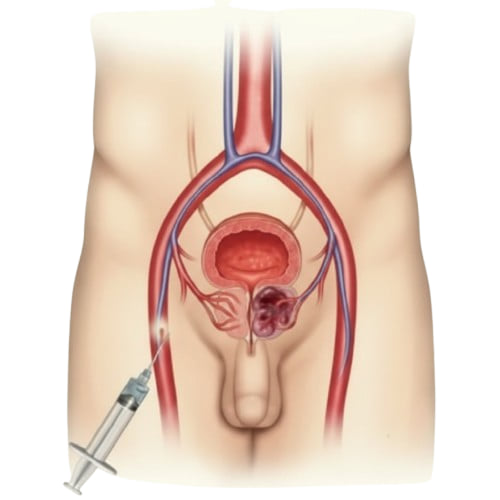
Prostate Artery Embolization (PAE) for Enlarged Prostate in Hyderabad & Chennai

✓ Minimally Invasive Treatment for Enlarged Prostate
Regain comfort and control with Prostate Artery Embolization (PAE)
A minimally invasive treatment for enlarged prostate (BPH) that reduces symptoms effectively without surgery.
Prostate Artery Embolization (PAE) is an advanced, non-surgical procedure designed to shrink the prostate by blocking its blood supply. This targeted approach helps relieve urinary symptoms, improves quality of life, and minimizes risks associated with traditional prostate surgery.
 Relief from Urinary Symptoms in Days
Experience improved urine flow and reduced frequency within a short recovery period.
No Major Surgery or Hospital Stay
A non-surgical, outpatient procedure with minimal discomfort and faster recovery.
Preserves Sexual Function
Lower risk of complications like erectile dysfunction compared to conventional treatments.

✓ Minimally Invasive Treatment for Enlarged Prostate
Regain comfort with Prostate Artery Embolization (PAE)
A minimally invasive treatment for enlarged prostate (BPH) that reduces symptoms effectively without surgery.
Prostate Artery Embolization (PAE) is an advanced, non-surgical procedure designed to shrink the prostate by blocking its blood supply. This targeted approach helps relieve urinary symptoms, improves quality of life, and minimizes risks associated with traditional prostate surgery.

Relief from Urinary Symptoms in Days
Experience improved urine flow and reduced frequency within a short recovery period.
No Major Surgery or Hospital Stay
A non-surgical, outpatient procedure with minimal discomfort and faster recovery.
Preserves Sexual Function
Lower risk of complications like erectile dysfunction compared to conventional treatments.
Dr Ram will be consulting in Hyderabad from August 1st.
Early Symptoms of Enlarged Prostate Gland: Warning Signs You Should Not Ignore
 Frequent Urination
Frequent urination is a common symptom of an enlarged prostate, especially at night (nocturia). As the prostate enlarges, it presses on the bladder, causing frequent urges to urinate. This can disrupt sleep and reduce overall quality of life, even when only a small amount of urine is passed.
“You may feel the need to urinate again and again, even shortly after using the restroom.”
Common Signs Associated with Frequent Urination
- Feeling the urge to urinate more than usual
- Waking up multiple times at night to urinate
- Passing small amounts of urine frequently
- Difficulty holding urine for long periods
- Disruption in sleep due to repeated urges
 Weak Urine Stream
A weak or slow urine stream is a key symptom of an enlarged prostate, caused by narrowing of the urethra. As pressure increases, it reduces the flow of urine, making urination slower and often feel incomplete.
“You may notice that your urine flow is not as strong or steady as it used to be.”
Common Signs of Weak Urine Stream
- Reduced strength of urine flow
- Interrupted or stop-start urination
- Longer time required to empty the bladder
- Need to strain while urinating
- Decreased pressure during urination
 Difficulty Starting Urination
Men with an enlarged prostate often experience difficulty starting urination. This happens when the gland blocks the urethra, making urine flow harder to begin. Even with a strong urge, delays can cause discomfort and may worsen over time.
“You may stand at the toilet waiting for urine to start, despite feeling a strong urge.”
Common Signs of Difficulty in Urination
- Delay in initiating urine flow
- Need to strain or push to start urination
- Interrupted beginning of urine stream
- Feeling of blockage while trying to urinate Increased time spent in the restroom
- Increased time spent in the restroom
 Incomplete Bladder Emptying
A constant feeling of incomplete bladder emptying is a common symptom of an enlarged prostate. This occurs when urine flow is obstructed, leaving residual urine in the bladder. It can cause discomfort, frequent bathroom visits, and increase the risk of infections.
“You may feel like your bladder is still full even after you have just urinated.”
Common Signs Associated with Incomplete Bladder
- Feeling of fullness after urination
- Need to urinate again shortly after finishing
- Passing urine in small amounts
- Persistent discomfort in the lower abdomen
- Frequent return trips to the bathroom
 Urgency to Urinate
Urinary urgency is a sudden, strong need to urinate that is difficult to control. It occurs when an enlarged prostate puts pressure on the bladder, increasing sensitivity. This can cause anxiety, inconvenience, and in some cases, accidental leakage.
“You may suddenly feel an urgent need to urinate and struggle to hold it.”
Common Signs Associated with Urgency to Urinate
- Sudden, intense urge to urinate
- Difficulty delaying urination
- Fear of leakage or accidents
- Frequent rushing to the restroom
- Reduced bladder control
Early Symptoms of Enlarged Prostate Gland: Warning Signs You Should Not Ignore
Frequent Urination
Frequent urination is a common symptom of an enlarged prostate, especially at night (nocturia). As the prostate enlarges, it presses on the bladder, causing frequent urges to urinate. This can disrupt sleep and reduce overall quality of life, even when only a small amount of urine is passed.
“You may feel the need to urinate again and again, even shortly after using the restroom.”
Common Signs Associated with Frequent Urination
- Feeling the urge to urinate more than usual
- Waking up multiple times at night to urinate
- Passing small amounts of urine frequently
- Difficulty holding urine for long periods
- Disruption in sleep due to repeated urges
Weak Urine Stream
A weak or slow urine stream is a common symptom of an enlarged prostate gland, caused by narrowing of the urethra. As pressure increases, it reduces urine flow, making urination slower and often feel incomplete. This may also lead to straining, frequent urination, especially at night, and a persistent feeling of incomplete bladder emptying.
“You may notice that your urine flow is not as strong or steady as it used to be.”
Common Signs of Weak Urine System
- Reduced strength of urine flow
- Interrupted or stop-start urination
- Longer time required to empty the bladder
- Need to strain while urinating
- Decreased pressure during urination
Difficulty Starting Urination
Men with an enlarged prostate often experience difficulty starting urination. This happens when the gland blocks the urethra, making urine flow harder to begin. Even with a strong urge, delays can cause discomfort and may worsen over time.
“You may stand at the toilet waiting for urine to start, despite feeling a strong urge.”
Common Signs of Difficulty in Urination
- Delay in initiating urine flow
- Need to strain or push to start urination
- Interrupted beginning of urine stream
- Feeling of blockage while trying to urinate
- Decreased pressure during urination
Incomplete Bladder Emptying
A constant feeling of incomplete bladder emptying is a common symptom of an enlarged prostate. This occurs when urine flow is obstructed, leaving residual urine in the bladder. It can cause discomfort, frequent bathroom visits, and increase the risk of infections.
“You may stand at the toilet waiting for urine to start, despite feeling a strong urge.”
Common Signs Associated with Incomplete Bladder Emptying
- Feeling of fullness after urination
- Need to urinate again shortly after finishing
- Passing urine in small amounts
- Persistent discomfort in the lower abdomen
- Frequent return trips to the bathroom
Urgency to Urinate
Urinary urgency is a sudden, strong need to urinate that is difficult to control. It occurs when an enlarged prostate puts pressure on the bladder, increasing sensitivity. This can cause anxiety, inconvenience, and in some cases, accidental leakage.
“You may suddenly feel an urgent need to urinate and struggle to hold it.”
Common Signs Associated with Urgency to Urinate
- Sudden, intense urge to urinate
- Difficulty delaying urination
- Fear of leakage or accidents
- Frequent rushing to the restroom
- Reduced bladder control
Board-Certified Expertise
Internationally trained with credentials from leading medical institutions
FRCR
Fellow, Royal College of Radiologists
DABIR
Diplomate, American Board of Interventional Radiology
MRCSEd
Member, Royal College of Surgeons Edinburg
40+ Publications
Peer-reviewed scientific research
Why Dr. Ram Kishore Stands Out
 Cleveland Clinic Training
Advanced interventional radiology fellowship from one of the world’s top medical institutions.
✅ Research Pioneer
40+ Peer-reviewed publications advancing the field of interventional radiology
✅ 14+ Years Experience
Thousands of successful treatments, with exceptional patient outcomes
✅ Patient-Centered Care
Evidence-based approach with focus on patient education and informed decision making
Board-Certified Expertise
Internationally trained with credentials from leading medical institutions
FRCR
Fellow, Royal College of Radiologists
DABIR
Diplomate, American Board of Interventional Radiology
MRCSEd
Member, Royal College of Surgeons Edinburgh
40+ Publications
Peer-reviewed scientific research
Why Dr. Ram Kishore Stands Out
✅ Cleveland Clinic Training
Advanced interventional radiology fellowship from one of the world’s top medical institutions.
✅ Research Pioneer
40+ Peer-reviewed publications advancing the field of interventional radiology
✅ 14+ Years Experience
Thousands of successful treatments, with exceptional patient outcomes
✅ Patien-Centered Care
Evidence-based approach with focus on patient education and informed decision making
Why Choose Prostate Artery Embolization (PAE) for Enlarged Prostate?
A Safe, Effective & Minimally Invasive Treatment for Benign Prostatic Hyperplasia (BPH)
Prostate Artery Embolization (PAE) is a modern, image-guided treatment designed to effectively reduce the size of an enlarged prostate without the need for surgery. It is especially recommended for men suffering from benign prostatic hyperplasia (BPH) who want relief from urinary symptoms while avoiding the risks of traditional procedures.
Unlike conventional prostate surgery, PAE works by blocking the blood supply to the enlarged prostate, causing it to shrink naturally over time. This results in improved urinary flow, reduced frequency, and better bladder control with minimal discomfort and downtime.
This advanced, non-surgical prostate treatment is ideal for patients who are not suitable candidates for surgery or prefer a safer alternative with faster recovery and fewer complications.
Impact of Enlarged Prostate Glands
💔 Worsening Frequent Urination & Weak Urine Flow
Untreated enlarged prostate (BPH) causes frequent urination, weak urine flow, urgency, and bladder discomfort.
💔 Higher Risk of Urinary Retention in Enlarged Prostate (BPH)
Advanced BPH may block urine flow completely, leading to painful urinary retention requiring emergency treatment.
 Increased Chances of Bladder & Kidney Complications
Long-term use of painkillers may provide temporary relief but can lead to side effects and does not address the root cause of the pain.
Severe Night Urination (Nocturia) Affecting Sleep Quality
Frequent nighttime urination due to BPH disrupts sleep, causing fatigue and reduced daily productivity.
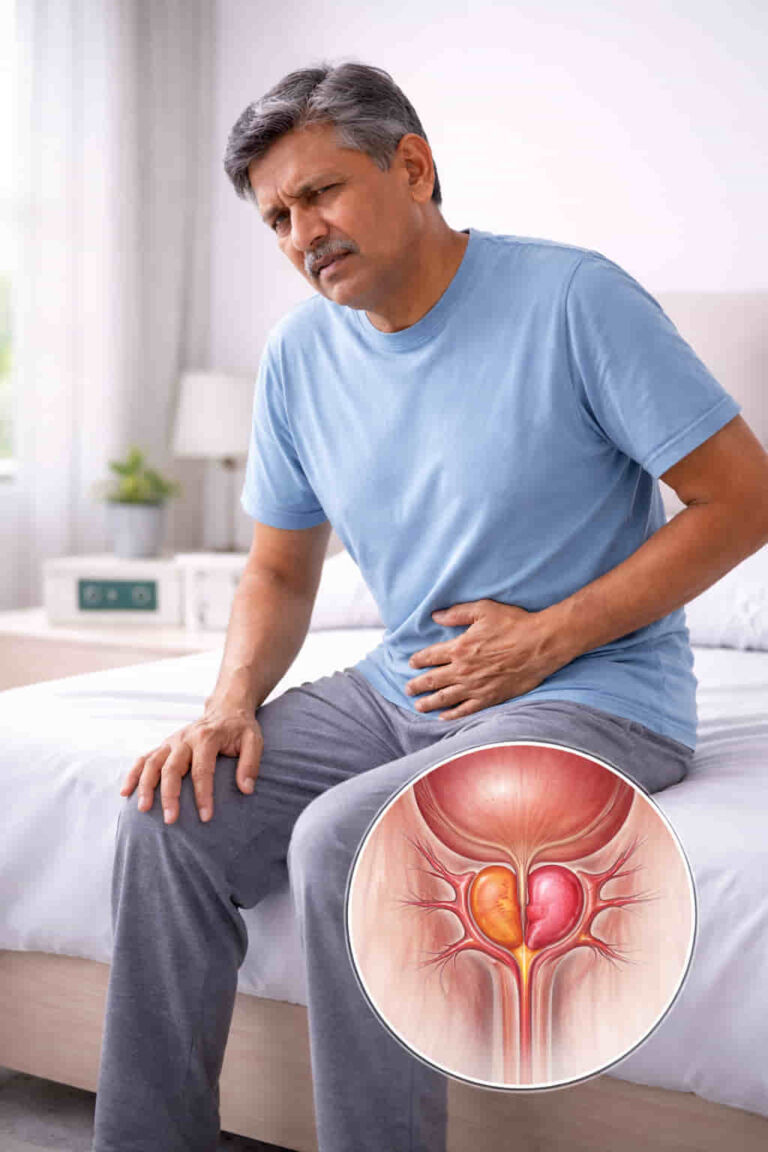
Why Choose Prostate Artery Embolization (PAE) for Enlarged Prostate?
A Safe, Effective & Minimally Invasive Treatment for Benign Prostatic Hyperplasia (BPH)
Prostate Artery Embolization (PAE) is a modern, image-guided treatment designed to effectively reduce the size of an enlarged prostate without the need for surgery. It is especially recommended for men suffering from benign prostatic hyperplasia (BPH) who want relief from urinary symptoms while avoiding the risks of traditional procedures.
Unlike conventional prostate surgery, PAE works by blocking the blood supply to the enlarged prostate, causing it to shrink naturally over time. This results in improved urinary flow, reduced frequency, and better bladder control with minimal discomfort and downtime.
This advanced, non-surgical prostate treatment is ideal for patients who are not suitable candidates for surgery or prefer a safer alternative with faster recovery and fewer complications.
Impact of Enlarged Prostate Glands
💔 Worsening Frequent Urination & Weak Urine Flow
Untreated enlarged prostate (BPH) causes frequent urination, weak urine flow, urgency, and bladder discomfort.
💔 Higher Risk of Urinary Retention in Enlarged Prostate (BPH)
Advanced BPH may block urine flow completely, leading to painful urinary retention requiring emergency treatment.
💔 Increased Chances of Bladder & Kidney Complications
Long-term untreated prostate enlargement can damage bladder function and increase risk of kidney complications.
💔 Severe Night Urination (Nocturia) Affecting Sleep Quality
Frequent nighttime urination due to BPH disrupts sleep, causing fatigue and reduced daily productivity.
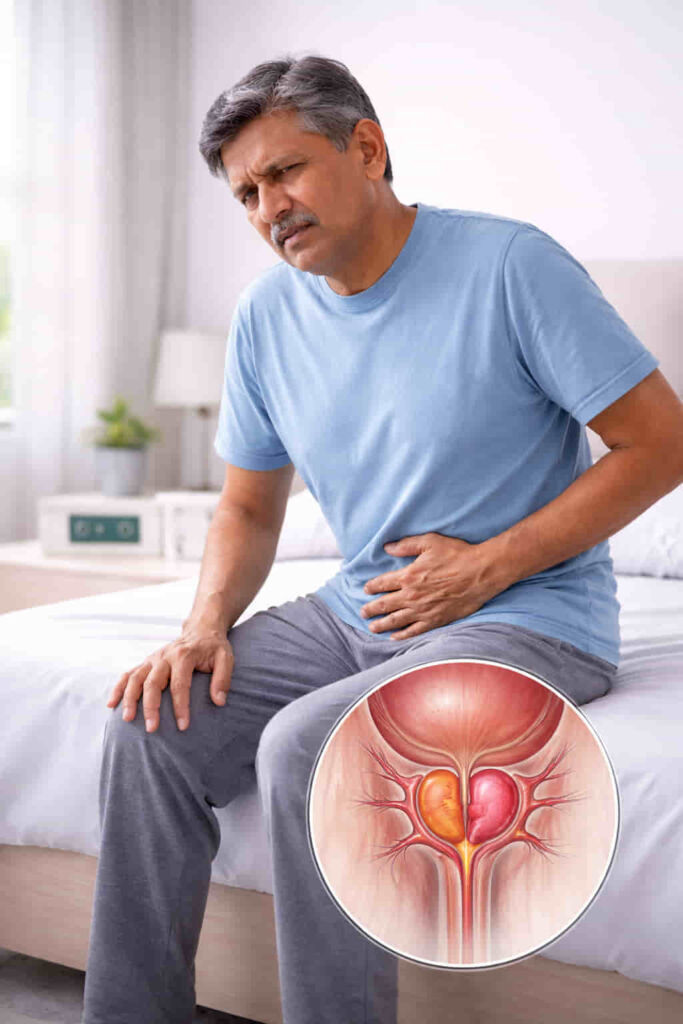

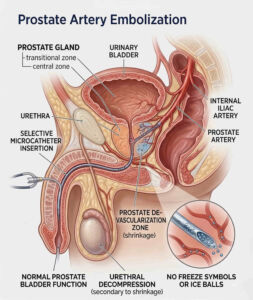
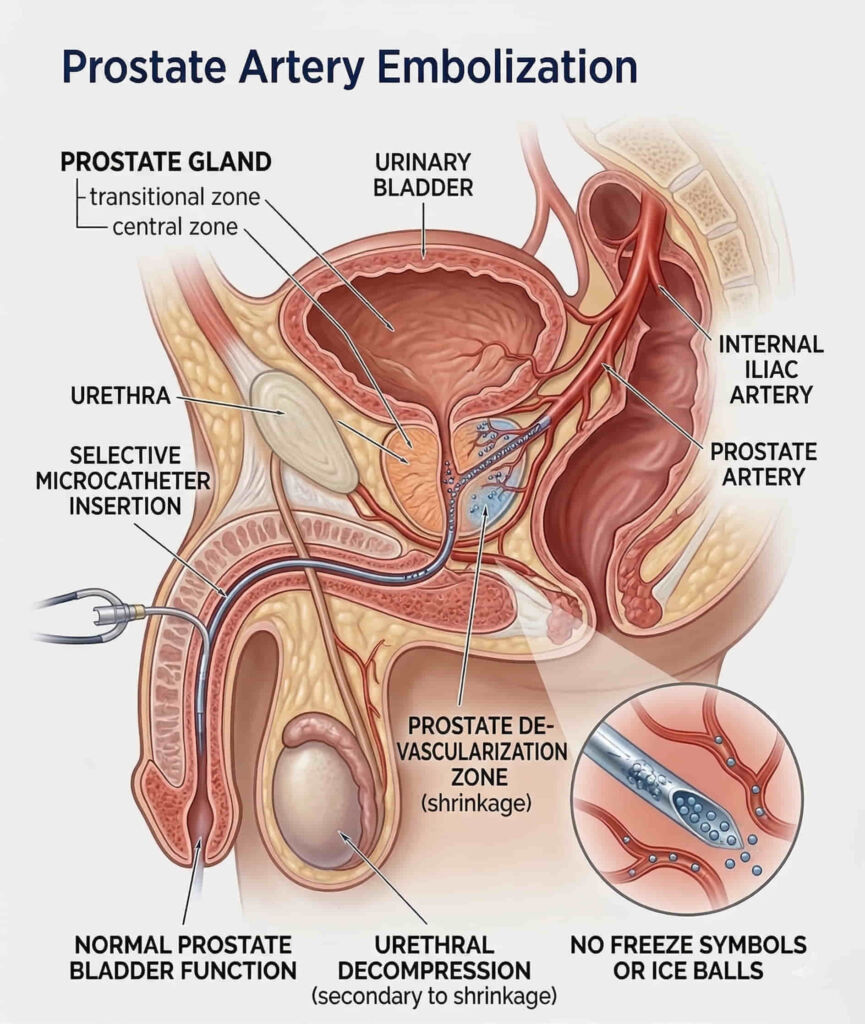
How Prostate Artery Embolization (PAE) Works for Enlarged Prostate (BPH) Treatment
A minimally invasive, image-guided procedure that safely reduces prostate size by blocking blood supply to the enlarged gland.
Image-Guided Targeting of Prostate Arteries
Using advanced imaging techniques such as fluoroscopy, the interventional radiologist precisely identifies the prostate arteries supplying blood to the enlarged prostate. This ensures accurate targeting while protecting surrounding organs and healthy tissues.
Insertion of Microcatheter Through Wrist or Groin
A thin, flexible microcatheter is inserted through a small puncture in the wrist or groin artery and carefully navigated to the prostate arteries. This minimally invasive approach avoids surgical cuts, stitches, and reduces overall procedure risk.
Injection of Embolic Particles into Prostate Arteries
Once positioned, tiny biocompatible embolic particles are injected into the prostate arteries. These particles block the blood flow to the enlarged prostate tissue, initiating a controlled shrinkage process.
Reduction of Blood Supply and Prostate Shrinkage
By cutting off excess blood supply, the prostate gradually reduces in size over time. This helps relieve pressure on the urethra and bladder, addressing the root cause of urinary symptoms associated with benign prostatic hyperplasia (BPH).
Improvement in Urinary Symptoms and Quality of Life
As the prostate shrinks, patients experience significant relief from symptoms such as frequent urination, urgency, weak urine flow, and incomplete bladder emptying, leading to improved comfort and quality of life.
Get a complete, detailed explanation of Prostate Artery Embolization by Dr Ram Kishore
How Prostate Artery Embolization (PAE) Works for Enlarged Prostate (BPH) Treatment
A minimally invasive, image-guided procedure that safely reduces prostate size by blocking blood supply to the enlarged gland.
Image-Guided Targeting of Prostate Arteries
Using advanced imaging techniques such as fluoroscopy, the interventional radiologist precisely identifies the prostate arteries supplying blood to the enlarged prostate. This ensures accurate targeting while protecting surrounding organs and healthy tissues.
Insertion of Microcatheter Through Wrist or Groin
A thin, flexible microcatheter is inserted through a small puncture in the wrist or groin artery and carefully navigated to the prostate arteries. This minimally invasive approach avoids surgical cuts, stitches, and reduces overall procedure risk.
Injection of Embolic Particles into Prostate Arteries
Once positioned, tiny biocompatible embolic particles are injected into the prostate arteries. These particles block the blood flow to the enlarged prostate tissue, initiating a controlled shrinkage process.
Reduction of Blood Supply and Prostate Shrinkage
By cutting off excess blood supply, the prostate gradually reduces in size over time. This helps relieve pressure on the urethra and bladder, addressing the root cause of urinary symptoms associated with benign prostatic hyperplasia (BPH).
Improvement in Urinary Symptoms and Quality of Life
As the prostate shrinks, patients experience significant relief from symptoms such as frequent urination, urgency, weak urine flow, and incomplete bladder emptying, leading to improved comfort and quality of life.
Prostate Artery Embolization (PAE) vs TURP: Which is Better for Enlarged Prostate Treatment?
A detailed comparison of genicular nerve ablation and traditional knee surgery based on effectiveness, recovery, and patient outcomes. Discover a minimally invasive knee pain treatment with faster recovery, less blood loss, and lower risk compared to traditional surgery.
🛡️Benefits of Genicular Nerve Ablation
- Minimally invasive – No major cuts, stitches, or scars
- Preserves knee joint – Targets pain nerves without altering joint structure
- Quick recovery – Return to normal activities within 1–3 days
- Outpatient procedure – No hospital stay required
- Long-lasting pain relief – Effectively blocks knee pain signals
- Lower risk – Fewer complications compared to surgery
- Ideal alternative – Suitable for patients avoiding knee replacement
⚡ Limitations of Traditional Knee Surgery
- Requires surgery – Involves incisions and stitches
- Long recovery time – Weeks to months for full healing
- Hospitalization needed – Requires admission and post-op care
- Post-surgical pain – Swelling and discomfort are common
- Higher risk – Infection, blood clots, and anesthesia risks
- Joint alteration – May involve artificial implants
- Not for everyone – Risky for elderly or medically unfit patients
Prostate Artery Embolization (PAE) vs TURP: Which is Better for Enlarged Prostate Treatment?
A detailed comparison of Prostate Artery Embolization (PAE) and TURP surgery based on effectiveness, recovery time, safety, and patient outcomes in enlarged prostate (BPH) treatment.
🛡️Benefits of Prostate Artery Embolization
- Minimally Invasive Treatment – No major cuts, stitches, or surgical removal of prostate tissue
- No Hospital Stay Required – Outpatient procedure with same-day discharge
- Faster Recovery Time – Resume normal activities within a few days
- Relieves Urinary Symptoms – Improves urine flow, frequency, and bladder control
- Preserves Sexual Function – Lower risk of erectile dysfunction and retrograde ejaculation
- Reduced Risk of Complications – Safer alternative compared to traditional TURP surgery
- Effective Prostate Size Reduction – Shrinks enlarged prostate by blocking blood supply
- Ideal Alternative to Surgery – Suitable for patients avoiding invasive prostate procedures
⚡ Limitations of Transurethral Resection of the Prostate
- Requires Surgical Procedure – Involves removal of prostate tissue through an invasive approach
- Longer Recovery Time – May take several weeks for complete healing and symptom improvement
- Hospital Stay Required – Requires admission and post-procedure monitoring
- Post-Surgical Discomfort – Pain, burning sensation, and urinary irritation are common
- Higher Risk of Complications – Includes bleeding, infection, and anesthesia-related risks
- Sexual Side Effects Risk – Higher chances of retrograde ejaculation and erectile dysfunction
- Catheter Requirement – Temporary urinary catheter needed after the procedure
- Not Ideal for High-Risk Patients – May not be suitable for elderly or patients with comorbidities
★★★★★
“I was suffering from frequent urination and disturbed sleep due to prostate enlargement. I was very anxious about undergoing surgery. After consulting at IR4U, Dr. Ram Kishore Gurajala suggested Prostate Artery Embolization. The procedure was smooth, painless, and required no major hospitalization. Within a few weeks, my symptoms improved significantly. I’m grateful to IR4U for giving me a safe, minimally invasive solution.”

Shekar Y
Hyderabad, India
Age 64 | 1.8 years Post- Prostate Artery Embolization
★★★★★
“For years, I struggled with urinary issues and was advised TURP surgery. Then I discovered IR4U and consulted Dr. Ram Kishore Gurajala. He explained PAE clearly and gave me confidence. The treatment was quick, with minimal discomfort, and I returned to normal life faster than expected. Today, I feel much better and highly recommend IR4U for anyone looking for advanced prostate treatment.”

Krishna Kumar
Hyderabad, India
Age 57 | 2 years Post – Prostate Artery Embolization
Patient Experiences with Genicular Artery Embolization Treatment
★★★★★
“I was suffering from frequent urination and disturbed sleep due to prostate enlargement. I was very anxious about undergoing surgery. After consulting at IR4U, Dr. Ram Kishore Gurajala suggested Prostate Artery Embolization. The procedure was smooth, painless, and required no major hospitalization. Within a few weeks, my symptoms improved significantly. I’m grateful to IR4U for giving me a safe, minimally invasive solution.”

Shekar Y
Hyderabad, India
Age 64 | 1.8 years Post – Prostate Artery Embolization
★★★★★
“For years, I struggled with urinary issues and was advised TURP surgery. Then I discovered IR4U and consulted Dr. Ram Kishore Gurajala. He explained PAE clearly and gave me confidence. The treatment was quick, with minimal discomfort, and I returned to normal life faster than expected. Today, I feel much better and highly recommend IR4U for anyone looking for advanced prostate treatment.”

Manohar fernandes
Chennai, India
Age 58 | 2 years Post – Prostate Artery Embolization
Frequently Asked Questions About Prostate Artery Embolization
What is Prostate Artery Embolization (PAE)?
Prostate Artery Embolization (PAE) is a minimally invasive, image-guided procedure used to treat an enlarged prostate, also known as benign prostatic hyperplasia (BPH). It works by blocking the blood supply to specific areas of the prostate, causing it to shrink over time. Unlike traditional surgery, PAE does not require cuts or general anesthesia, making it a safer option for many patients. This advanced treatment is performed by an interventional radiologist and typically allows faster recovery with fewer complications.
Who is an ideal candidate for Prostate Artery Embolization?
PAE is best suited for men suffering from moderate to severe urinary symptoms caused by an enlarged prostate. It is particularly beneficial for patients who want to avoid surgery or are not fit for anesthesia due to other health conditions. Men experiencing frequent urination, weak urine flow, or incomplete bladder emptying may find significant relief with this procedure. A proper evaluation, including imaging and clinical assessment, is necessary to determine eligibility.
What are the benefits of Prostate Artery Embolization over surgery?
One of the major benefits of PAE is that it is a non-surgical procedure with no major incisions, reducing the risk of complications like bleeding or infection. Patients usually experience shorter hospital stays and can return to normal activities much faster compared to traditional prostate surgery. Additionally, PAE has a lower risk of side effects such as sexual dysfunction or urinary incontinence. This makes it an attractive option for men seeking a safer and effective alternative.
How long does it take to recover after PAE?
Recovery after Prostate Artery Embolization is generally quick and smooth. Most patients can go home the same day or within 24 hours after the procedure. Mild discomfort, fatigue, or urinary symptoms may occur for a few days but usually resolve quickly. Many individuals notice improvement in urinary symptoms within a few weeks, with full benefits developing over a few months as the prostate gradually shrinks.
Is Prostate Artery Embolization painful?
PAE is usually performed under local anesthesia with mild sedation, so patients remain comfortable throughout the procedure. Some may feel slight pressure or warmth during the embolization, but it is not considered painful. After the procedure, mild pelvic discomfort or a burning sensation during urination may occur temporarily. These symptoms are manageable with medications and typically subside within a few days.
How effective is Prostate Artery Embolization for treating BPH?
Clinical studies have shown that PAE is highly effective in reducing prostate size and improving urinary symptoms in men with BPH. Many patients experience significant relief from frequent urination, urgency, and weak stream. The success rate is comparable to some surgical treatments, especially for appropriately selected patients. Long-term outcomes are also promising, making it a reliable option for managing prostate enlargement.Pain relief after genicular nerve ablation is usually gradual and may begin within a few days to a few weeks after the procedure. Some patients may experience immediate relief due to the local anesthetic used during the treatment, but the full effect develops as the nerve signals are disrupted. Over time, patients notice reduced pain, improved mobility, and better overall knee function.
Are there any risks or side effects of PAE?
Like any medical procedure, PAE carries some risks, but they are generally minimal compared to surgery. Common side effects include mild pain, temporary urinary discomfort, or low-grade fever, which usually resolve quickly. Rare complications may include infection or non-target embolization, but these are uncommon when performed by experienced specialists. Overall, PAE is considered a safe and well-tolerated treatment option.
How soon can I see results after Prostate Artery Embolization?
Most patients begin to notice improvements in urinary symptoms within 2 to 4 weeks after the procedure. As the prostate continues to shrink, symptoms such as frequent urination and weak flow gradually improve over time. Maximum benefits are typically seen within 3 months. The gradual improvement ensures a natural and sustained relief without sudden side effects.
Frequently Asked Questions About Prostate Artery Embolization
What is Prostate Artery Embolization (PAE)?
Prostate Artery Embolization (PAE) is a minimally invasive, image-guided procedure used to treat an enlarged prostate, also known as benign prostatic hyperplasia (BPH). It works by blocking the blood supply to specific areas of the prostate, causing it to shrink over time. Unlike traditional surgery, PAE does not require cuts or general anesthesia, making it a safer option for many patients. This advanced treatment is performed by an interventional radiologist and typically allows faster recovery with fewer complications.
Who is an ideal candidate for Prostate Artery Embolization?
PAE is best suited for men suffering from moderate to severe urinary symptoms caused by an enlarged prostate. It is particularly beneficial for patients who want to avoid surgery or are not fit for anesthesia due to other health conditions. Men experiencing frequent urination, weak urine flow, or incomplete bladder emptying may find significant relief with this procedure. A proper evaluation, including imaging and clinical assessment, is necessary to determine eligibility.
What are the benefits of Prostate Artery Embolization over surgery?
One of the major benefits of PAE is that it is a non-surgical procedure with no major incisions, reducing the risk of complications like bleeding or infection. Patients usually experience shorter hospital stays and can return to normal activities much faster compared to traditional prostate surgery. Additionally, PAE has a lower risk of side effects such as sexual dysfunction or urinary incontinence. This makes it an attractive option for men seeking a safer and effective alternative.
How long does it take to recover after PAE?
Recovery after Prostate Artery Embolization is generally quick and smooth. Most patients can go home the same day or within 24 hours after the procedure. Mild discomfort, fatigue, or urinary symptoms may occur for a few days but usually resolve quickly. Many individuals notice improvement in urinary symptoms within a few weeks, with full benefits developing over a few months as the prostate gradually shrinks.
Is Prostate Artery Embolization painful?
PAE is usually performed under local anesthesia with mild sedation, so patients remain comfortable throughout the procedure. Some may feel slight pressure or warmth during the embolization, but it is not considered painful. After the procedure, mild pelvic discomfort or a burning sensation during urination may occur temporarily. These symptoms are manageable with medications and typically subside within a few days.
How effective is Prostate Artery Embolization for treating BPH?
Pain relief after genicular nerve ablation is usually gradual and may begin within a few days to a few weeks after the procedure. Some patients may experience immediate relief due to the local anesthetic used during the treatment, but the full effect develops as the nerve signals are disrupted. Over time, patients notice reduced pain, improved mobility, and better overall knee function.
Are there any risks or side effects of PAE?
Like any medical procedure, PAE carries some risks, but they are generally minimal compared to surgery. Common side effects include mild pain, temporary urinary discomfort, or low-grade fever, which usually resolve quickly. Rare complications may include infection or non-target embolization, but these are uncommon when performed by experienced specialists. Overall, PAE is considered a safe and well-tolerated treatment option.
How soon can I see results after Prostate Artery Embolization?
Most patients begin to notice improvements in urinary symptoms within 2 to 4 weeks after the procedure. As the prostate continues to shrink, symptoms such as frequent urination and weak flow gradually improve over time. Maximum benefits are typically seen within 3 months. The gradual improvement ensures a natural and sustained relief without sudden side effects.
Your Life Doesn't Have to Be Controlled by a Tumour
Thousands of women have reclaimed their freedom through UFE, a safe and minimally invasive treatment for uterine fibroids. You don’t have to live with constant pain, heavy bleeding, or exhaustion. You deserve relief without major surgery or long recovery. Take control of your health and take the first step toward a life free from fibroid symptoms today.
Available in Hyderabad & Chennai | Cleveland Clinic Trained | 14+ Years Experience | 90% Success Rate
First Consultation is Risk-Free: Meet with Dr. Kishore, discuss your symptoms, and explore all treatment options. No pressure, no obligation. We’re here to help you make the best decision for your health.
Your Life Doesn't Have to Be Controlled by a Tumour
Thousands of women have reclaimed their freedom through UFE, a safe and minimally invasive treatment for uterine fibroids. You don’t have to live with constant pain, heavy bleeding, or exhaustion. You deserve relief without major surgery or long recovery. Take control of your health and take the first step toward a life free from fibroid symptoms today.
Available in Hyderabad & Chennai | Cleveland Clinic Trained | 14+ Years Experience | 90% Success Rate
First Consultation is Risk-Free: Meet with Dr. Kishore, discuss your symptoms, and explore all treatment options. No pressure, no obligation. We’re here to help you make the best decision for your health.