

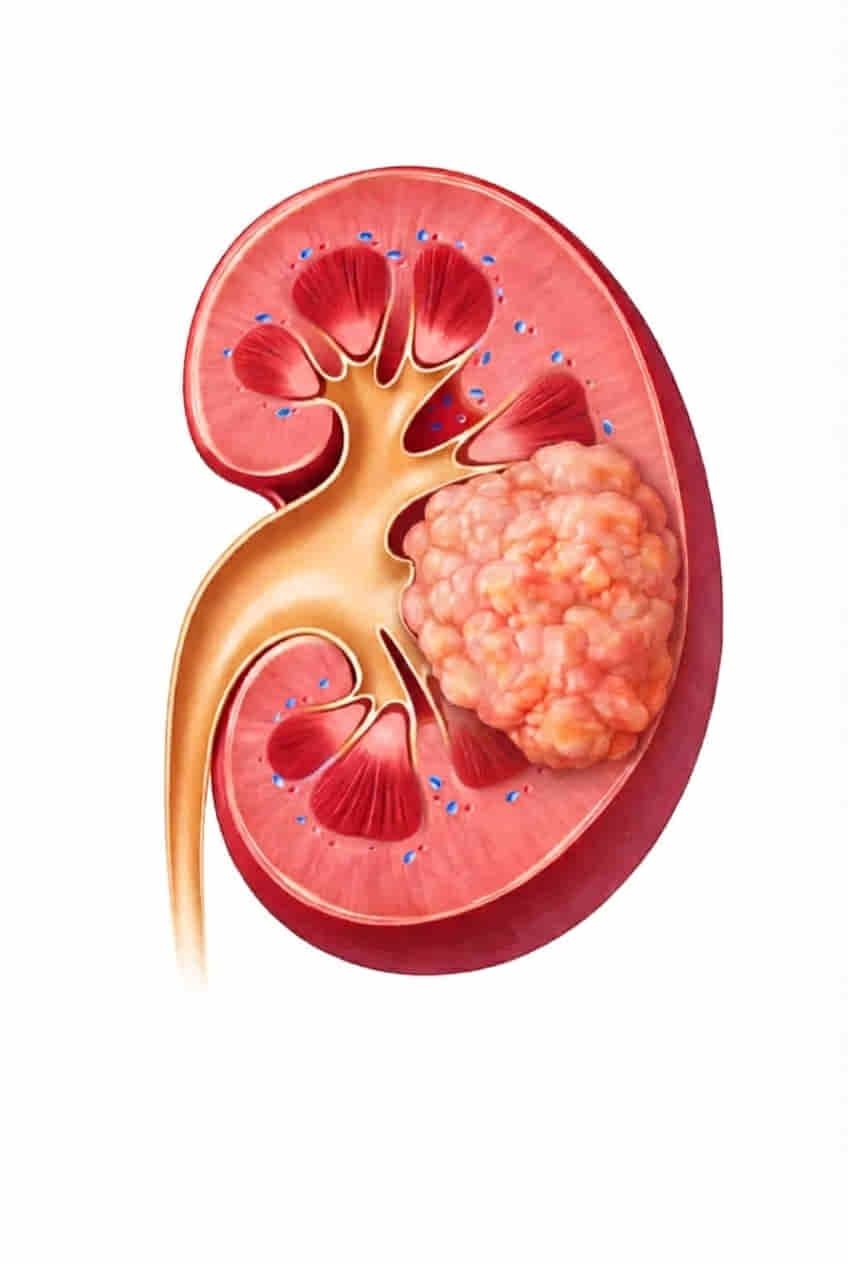
Renal Cancer: Preoperative Embolization for Kidney Cancer in Hyderabad & Chennai

✓ Advanced Kidney Tumor Preparation Treatment
Renal Preoperative Embolization:
Reduce Bleeding & Improve,
Kidney Surgery Outcomes
Renal preoperative embolization is a minimally invasive procedure that blocks blood flow to kidney tumors before surgery, helping reduce bleeding and improve surgical safety.
Renal preoperative embolization is an advanced, image-guided procedure used to prepare patients for kidney tumor surgery. By selectively blocking the blood supply to the tumor, this technique significantly reduces intraoperative bleeding, improves surgical visibility, and enhances overall outcomes. It is especially beneficial for large or highly vascular kidney tumors and helps surgeons perform safer and more precise procedures.
 Reduces Blood Loss During Surgery
Minimises excessive bleeding and lowers surgical risks.
Improves Surgical Precision
Enhances visibility and control for safer tumor removal.
Minimally Invasive & Safe
Performed through a small catheter with faster recovery.
✓ Advanced Kidney Tumour Preparation Treatment
Renal Preoperative Embolization: Reduce Bleeding & Improve Kidney Surgery Outcomes
Renal Preoperative Embolization is a minimally invasive, image-guided procedure used to prepare patients for kidney tumour surgery.
This advanced technique works by selectively blocking the blood supply to the tumour, helping to reduce intraoperative bleeding, improve surgical visibility, and enhance overall safety. It is particularly beneficial for large or highly vascular kidney tumours, enabling surgeons to perform more precise and effective procedures.

Reduces Blood Loss During Surgery
Minimizes excessive bleeding and lowers surgical risks.
Improves Surgical Precision
Enhances visibility and control for safer tumour removal.
Minimally Invasive & Safe
Performed through a small catheter with faster recovery.
Dr Ram will be consulting in Hyderabad from August 1st.
Early Symptoms of Kidney Cancer: Warning Signs You Should Not Ignore
 Intractable Hematuria (Persistent Blood in Urine)
Persistent or severe blood in the urine (intractable hematuria) is a key symptom of kidney tumours, caused by abnormal bleeding blood vessels within the tumour. It may indicate a highly vascular kidney tumour requiring careful treatment.
Renal preoperative embolization is an important step in kidney tumour treatment, as it blocks the tumour’s blood supply before surgery. This helps control bleeding, stabilize the patient, and reduce blood loss during tumour removal.
“Persistent blood in urine may indicate a highly vascular kidney tumor, where controlling bleeding before surgery becomes essential for safer treatment.”
Common Signs Associated with Increased Blood in Urine
- Visible blood in urine (pink, red, or dark-colored urine)
- Frequent or continuous bleeding episodes
- Blood clots in urine, causing discomfort
- Weakness or fatigue due to ongoing blood loss
- Increased risk of complications during surgery
 Severe Flank Pain (Persistent Side Pain)
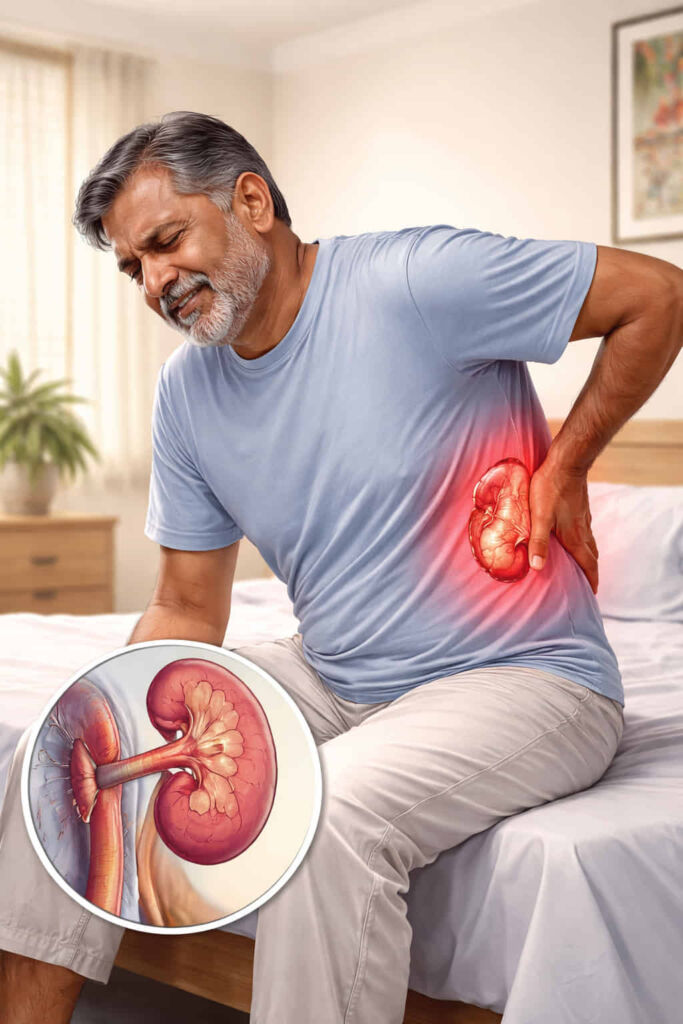
Severe flank pain, felt on one side of the lower back or abdomen, is a common symptom of kidney tumours. It occurs when the tumour grows in size, presses on surrounding tissues, or causes internal bleeding, and may become persistent.
Renal preoperative embolization helps by blocking the tumour’s blood supply, which reduces pressure and bleeding, provides pain relief, and makes kidney tumour surgery safer and more controlled.
“Persistent flank pain may indicate increased pressure or bleeding within the kidney, where reducing blood flow to the tumor can improve both comfort and surgical safety.”
Common Signs of Severe Flank Pain
- Sharp or dull pain on one side of the lower back
- Pain radiating to the abdomen or groin area
- Increased discomfort during movement or activity
- Pain not relieved by standard medications
- Symptoms worsen as the tumour grows
 Palpable Abdominal Mass (Noticeable Lump in Abdomen)
A palpable abdominal mass is a noticeable lump in the abdomen that can be felt during examination and may indicate advanced kidney tumours. These tumours are often highly vascular, making the condition more complex.
Renal preoperative embolization is important as it blocks the tumour’s blood supply before surgery, helping reduce tumour size, minimize bleeding risk, and enable safer kidney tumour removal.
“A detectable abdominal lump may indicate a larger, highly vascular kidney tumor where reducing blood flow before surgery is critical for safety.”
Common Signs Forming of Lumps in Abdomenal area
- Noticeable lump or swelling in the abdomen
- Feeling of fullness or heaviness in the stomach area
- Discomfort or pressure in the abdominal region
- Increase in size of the lump over time
- Associated pain or tenderness on touch
 Anemia-Related Fatigue (Persistent Weakness & Tiredness)
Anemia-related fatigue is a common symptom in kidney tumours, caused by chronic blood loss or reduced red blood cell production. This can lead to persistent tiredness, weakness, and low stamina.
Renal preoperative embolization helps by blocking the tumour’s blood supply, which controls bleeding, stabilizes hemoglobin levels, and prepares the patient for safer kidney tumour surgery.
“Persistent fatigue and weakness may be a sign of ongoing blood loss from a kidney tumor, where controlling bleeding before surgery is essential for patient stability.”
Common Signs Anemia-Related Fatigue
- Constant tiredness even after rest
- Weakness and reduced physical strength
- Shortness of breath during routine activities
- Pale skin or low energy levels
- Dizziness or lightheadedness
 Recurrent Fever (Frequent Unexplained Fever)
Recurrent or persistent fever without a clear cause can be associated with kidney tumours and underlying renal conditions. It often occurs due to tumour-related inflammation, tissue damage, or infection, and may indicate an active disease process.
Renal preoperative embolization helps by reducing the tumour’s blood supply, which decreases inflammation, lowers infection risk, and improves safety during kidney tumour removal.
“Repeated unexplained fever may signal underlying tumor activity or inflammation, where controlling the tumor’s blood supply can improve patient stability before surgery.”
Common Signs Associated with Frequent Fever
- Frequent fever episodes without clear infection
- Chills or sweating associated with fever
- Weakness and general discomfort
- Fever not responding fully to medications
- Recurring symptoms over days or weeks
Early Symptoms of Kidney Cancer: Warning Signs You Should Not Ignore
Intractable Hematuria (Persistent Blood in Urine)
Persistent or severe blood in the urine (intractable hematuria) is a key symptom of kidney tumours, caused by abnormal bleeding blood vessels within the tumour. It may indicate a highly vascular kidney tumour requiring careful treatment.
Renal preoperative embolization is an important step in kidney tumour treatment, as it blocks the tumour’s blood supply before surgery. This helps control bleeding, stabilize the patient, and reduce blood loss during tumour removal.
“Persistent blood in urine may indicate a highly vascular kidney tumour, where controlling bleeding before surgery becomes essential for safer treatment.”
Common Signs Associated with Increased Blood in Urine
- Visible blood in urine (pink, red, or dark-colored urine)
- Frequent or continuous bleeding episodes
- Blood clots in the urine, causing discomfort
- Weakness or fatigue due to ongoing blood loss
- Increased risk of complications during surgery
Severe Flank Pain (Persistent Side Pain)
Severe flank pain, felt on one side of the lower back or abdomen, is a common symptom of kidney tumours. It occurs when the tumour grows in size, presses on surrounding tissues, or causes internal bleeding, and may become persistent.
Renal preoperative embolization helps by blocking the tumour’s blood supply, which reduces pressure and bleeding, provides pain relief, and makes kidney tumour surgery safer and more controlled.
“Persistent flank pain may indicate increased pressure or bleeding within the kidney, where reducing blood flow to the tumor can improve both comfort and surgical safety.”
Common Signs of Severe Flank Pain
- Sharp or dull pain on one side of the lower back
- Pain radiating to the abdomen or groin area
- Increased discomfort during movement or activity
- Pain not relieved by standard medications
- Symptoms worsen as the tumour grows
Palpable Abdominal Mass (Noticeable Lump in Abdomen)
A palpable abdominal mass is a noticeable lump in the abdomen that can be felt during examination and may indicate advanced kidney tumours. These tumours are often highly vascular, making the condition more complex.
Renal preoperative embolization is important as it blocks the tumour’s blood supply before surgery, helping reduce tumour size, minimize bleeding risk, and enable safer kidney tumour removal.
“A detectable abdominal lump may indicate a larger, highly vascular kidney tumour where reducing blood flow before surgery is critical for safety.”
Common Signs Associated with Palpable Abdominal Mass
- Noticeable lump or swelling in the abdomen
- Feeling of fullness or heaviness in the stomach area
- Discomfort or pressure in the abdominal region
- Increase in size of the lump over time
- Associated pain or tenderness on touch
Anemia-Related Fatigue (Persistent Weakness & Tiredness)
Anemia-related fatigue is a common symptom in kidney tumours, caused by chronic blood loss or reduced red blood cell production. This can lead to persistent tiredness, weakness, and low stamina.
Renal preoperative embolization helps by blocking the tumour’s blood supply, which controls bleeding, stabilizes hemoglobin levels, and prepares the patient for safer kidney tumour surgery.
“Persistent fatigue and weakness may be a sign of ongoing blood loss from a kidney tumor, where controlling bleeding before surgery is essential for patient stability.”
Common Signs Associated with Anaemia-Related Fatigue
- Constant tiredness even after rest
- Weakness and reduced physical strength
- Shortness of breath during routine activities
- Pale skin or low energy levels
- Dizziness or lightheadedness
Recurrent Fever (Frequent Unexplained Fever)
Recurrent or persistent fever without a clear cause can be associated with kidney tumours and underlying renal conditions. It often occurs due to tumour-related inflammation, tissue damage, or infection, and may indicate an active disease process.
Renal preoperative embolization helps by reducing the tumour’s blood supply, which decreases inflammation, lowers infection risk, and improves safety during kidney tumour removal.
“Repeated unexplained fever may signal underlying tumour activity or inflammation, where controlling the tumour’s blood supply can improve patient stability before surgery.”
Common Signs Associated with Frequent Fever
- Frequent fever episodes without clear infection
- Chills or sweating associated with fever
- Weakness and general discomfort
- Fever not responding fully to medications
- Recurring symptoms over days or weeks
Board-Certified Expertise
Internationally trained with credentials from leading medical institutions
FRCR
Fellow, Royal College of Radiologists
DABIR
Diplomate, American Board of Interventional Radiology
MRCSEd
Member, Royal College of Surgeons Edinburg
40+ Publications
Peer-reviewed scientific research
Why Dr. Ram Kishore Stands Out
 Cleveland Clinic Training
Advanced interventional radiology fellowship from one of the world’s top medical institutions.
✅ Research Pioneer
40+ Peer-reviewed publications advancing the field of interventional radiology
✅ 14+ Years Experience
Thousands of successful treatments, with exceptional patient outcomes
✅ Patient-Centered Care
Evidence-based approach with focus on patient education and informed decision making
Board-Certified Expertise
Internationally trained with credentials from leading medical institutions
FRCR
Fellow, Royal College of Radiologists
DABIR
Diplomate, American Board of Interventional Radiology
MRCSEd
Member, Royal College of Surgeons Edinburgh
40+ Publications
Peer-reviewed scientific research
Why Dr. Ram Kishore Stands Out
✅ Cleveland Clinic Training
Advanced interventional radiology fellowship from one of the world’s top medical institutions.
✅ Research Pioneer
40+ Peer-reviewed publications advancing the field of interventional radiology
✅ 14+ Years Experience
Thousands of successful treatments, with exceptional patient outcomes
✅ Patien-Centered Care
Evidence-based approach with focus on patient education and informed decision making
Why Renal Preoperative Embolization is Important for Kidney Tumour Treatment
Understanding Why Early Intervention and Embolization Are Critical
Large kidney tumours can significantly affect both overall health and the complexity of surgical treatment. As tumours grow in size, they tend to develop an extensive blood supply, increasing the risk of severe bleeding during surgery. They may also press against surrounding organs, cause persistent pain, and impair normal kidney function.
Renal preoperative embolization plays a vital role in managing these challenges. By blocking the blood flow to large and highly vascular tumours before surgery, it helps reduce bleeding risk, improves surgical control, and enhances patient safety. This approach is especially important in complex cases where tumour size and vascularity can increase surgical complications.
💔 Increased Risk of Heavy Bleeding
Large tumours have rich blood supply, making surgery more challenging.
💔 Reduced Kidney Function
Growing tumours can damage healthy kidney tissue over time.
 Persistent Pain and Discomfort
Pressure on nearby organs can lead to ongoing pain.
Higher Surgical Complexity
Larger tumours require more precise and controlled removal.
💔 Greater Risk of Complications
Without proper preparation, surgery may involve higher risks.
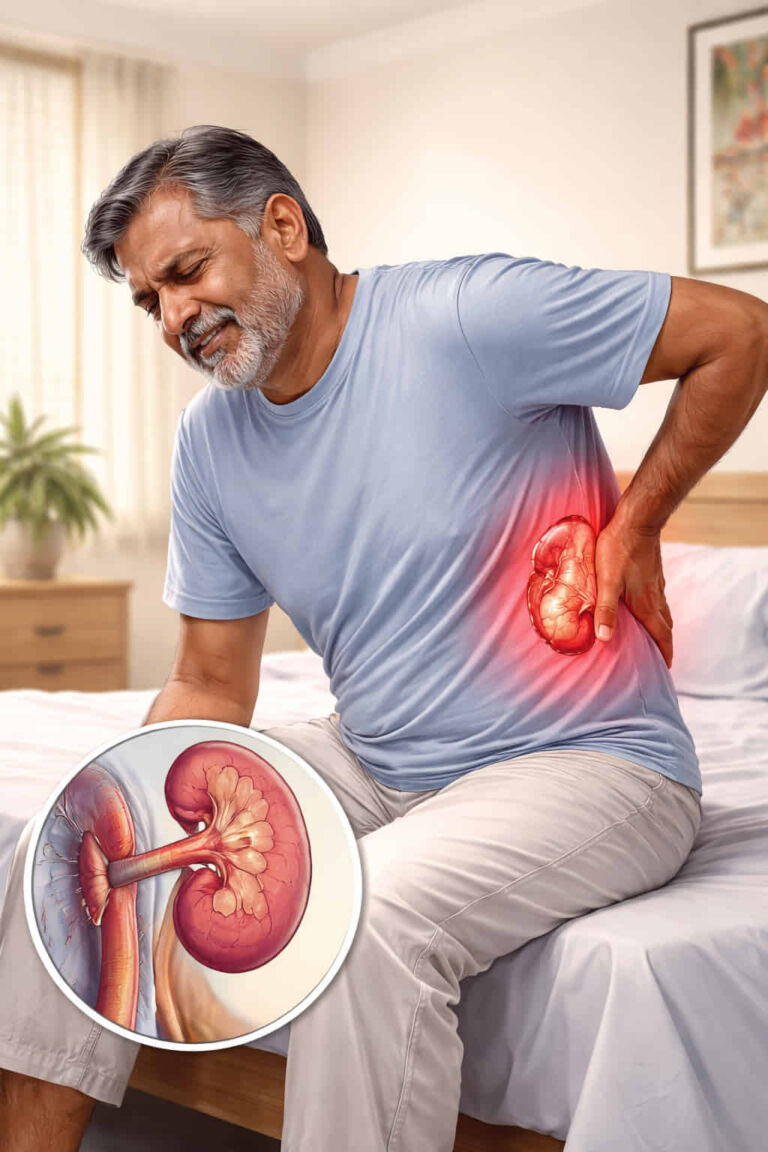
Why Renal Preoperative Embolization is Important for Kidney Tumour Treatment
Understanding Why Early Intervention and Embolization Are Critical
Large kidney tumours can significantly affect both overall health and the complexity of surgical treatment. As tumours grow in size, they tend to develop an extensive blood supply, increasing the risk of severe bleeding during surgery. They may also press against surrounding organs, cause persistent pain, and impair normal kidney function.
Renal preoperative embolization plays a vital role in managing these challenges. By blocking the blood flow to large and highly vascular tumours before surgery, it helps reduce bleeding risk, improves surgical control, and enhances patient safety. This approach is especially important in complex cases where tumor size and vascularity can increase surgical complications.
Challenges of Kidney Tumours Before Surgery
💔 Increased Risk of Heavy Bleeding
Large tumours have rich blood supply, making surgery more challenging.
💔 Reduced Kidney Function
Growing tumours can damage healthy kidney tissue over time.
💔 Persistent Pain and Discomfort
Pressure on nearby organs can lead to ongoing pain.
💔 Higher Surgical Complexity
Larger tumours require more precise and controlled removal.
💔 Greater Risk of Complications
Without proper preparation, surgery may involve higher risks.

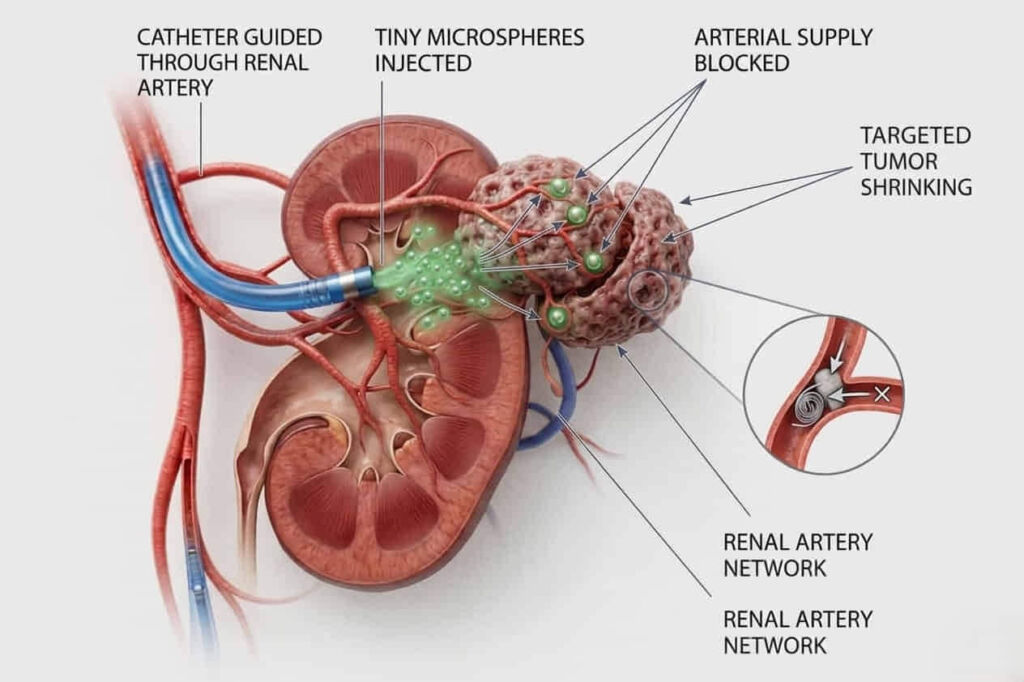
How Renal Preoperative Embolization Works for Kidney Tumor Treatment
A minimally invasive, image-guided procedure that blocks blood flow to kidney tumors before surgery to reduce bleeding and improve surgical safety.
Image-Guided Catheter Placement
A thin catheter is carefully inserted through a small puncture in the groin or wrist and guided to the renal artery using advanced imaging techniques such as fluoroscopy. This ensures precise access to the blood vessels supplying the kidney tumor.
Selective Targeting of Tumor Blood Supply
Once positioned, the interventional radiologist identifies the specific arteries feeding the tumor. This targeted approach ensures that only the tumor’s blood supply is affected while preserving healthy kidney tissue.
Injection of Embolic Agents
The tumor is then allowed to thaw, and the freeze cycle may be repeated to ensure complete destruction of cancer cells. This freeze-thaw process increases treatment effectiveness.
Improved Surgical Safety and Outcomes
With reduced blood flow, surgeons can perform kidney tumor removal with better visibility, less blood loss, and lower risk of complications, leading to improved patient outcomes.
Get a complete, detailed explanation of Renal Preoperative Embolization by Dr Ram Kishore
How Renal Preoperative Embolization Works for Kidney Tumour Treatment
A minimally invasive, image-guided procedure that blocks blood flow to kidney tumours before surgery to reduce bleeding and improve surgical safety.
Image-Guided Catheter Placement
A thin catheter is carefully inserted through a small puncture in the groin or wrist and guided to the renal artery using advanced imaging techniques such as fluoroscopy. This ensures precise access to the blood vessels supplying the kidney tumour.
Selective Targeting of Tumour Blood Supply
Once positioned, the interventional radiologist identifies the specific arteries feeding the tumour. This targeted approach ensures that only the tumour’s blood supply is affected while preserving healthy kidney tissue.
Injection of Embolic Agents
By cutting off the blood supply, the tumour becomes less active and less prone to bleeding. This step is critical in preparing the tumour for safer surgical removal.
Improved Surgical Safety and Outcomes
With reduced blood flow, surgeons can perform kidney tumour removal with better visibility, less blood loss, and lower risk of complications, leading to improved patient outcomes.
Renal Preoperative Embolization vs Traditional Kidney Surgery: Why Pre-Surgical Preparation Matters
A comparison of renal preoperative embolization and standard kidney surgery approaches based on safety, bleeding control, and surgical outcomes.
🛡️Benefits of Renal Preoperative Embolization
- Reduces Blood Loss - Blocks tumor blood supply, minimizing surgical bleeding.
- Improves Surgical Precision - Enhances visibility for safer tumour removal.
- Minimally Invasive Procedure - Done through a small catheter without major cuts.
- Enhances Surgical Safety - Lowers risks in highly vascular kidney tumours.
- Shortens Surgery Time - Pre-treated tumours are easier to remove.
- Faster Recovery - Fewer complications support quicker healing.
- Ideal for Complex Tumors Best for large or highly vascular kidney tumours.
⚡ Limitations With traditional appraoch
- Higher Bleeding Risk - Highly vascular tumours can cause significant blood loss.
- Reduced Surgical Visibility - Excess bleeding makes tumour removal harder.
- Longer Surgery Time - Complex tumours take more time without preparation.
- Increased Complications - Higher risk of transfusion and surgical challenges.
- Greater Patient Stress - More demanding procedure in complex cases.
- Less Effective - for Large Tumors Harder to manage highly vascular tumours.
- Slower Recovery - Complications may delay healing.
Renal Preoperative Embolization vs Traditional Kidney Surgery: Why Pre-Surgical Preparation Matters
A comparison of renal preoperative embolization and standard kidney surgery approaches based on safety, bleeding control, and surgical outcomes.
🛡️Benefits of Renal Preoperative Embolization
- Reduces Blood Loss - Blocks tumour blood supply, minimizing surgical bleeding.
- Improves Surgical Precision - Enhances visibility for safer tumour removal.
- Minimally Invasive Procedure - Done through a small catheter without major cuts.
- Enhances Surgical Safety - Lowers risks in highly vascular kidney tumours.
- Shortens Surgery Time - Pre-treated tumours are easier to remove.
- Faster Recovery - Fewer complications support quicker healing.
- Ideal for Complex Tumours Best for large or highly vascular kidney tumours.
⚡ Limitations With traditional appraoch
- Higher Bleeding Risk - Highly vascular tumours can cause significant blood loss.
- Reduced Surgical Visibility - Excess bleeding makes tumour removal harder.
- Longer Surgery Time - Complex tumours take more time without preparation.
- Increased Complications - Higher risk of transfusion and surgical challenges.
- Greater Patient Stress - More demanding procedure in complex cases.
- Less Effective - for Large Tumours Harder to manage highly vascular tumours.
- Slower Recovery - Complications may delay healing.
★★★★★
“I was diagnosed with a kidney tumor and was extremely worried about undergoing major surgery. My doctor suggested Renal Preoperative Embolization (RPE), and it truly made a difference. The procedure was minimally invasive, and it significantly reduced the risks during my surgery. I experienced very little discomfort and recovered quickly. Thanks to RPE, my surgery was smoother, safer, and my overall recovery was much faster than I expected.”

Ayush Verma
Hyderabad, India
Age 36 | 1 years Post – Renal Preoperative Embolization
★★★★★
“When I learned about my kidney condition, I was anxious about complications and long recovery times. Choosing Renal Preoperative Embolization (RPE) was the best decision I made. The procedure helped control bleeding before surgery and made the entire process much safer. I was able to get back to my normal routine sooner than I imagined. I highly recommend RPE to anyone looking for a safer and effective pre-surgical treatment.”

Savitri Iyer
Chennai, India
Age 44 | 2 years Post – Renal Preoperative Embolization
Patient Experiences with Renal Preoperative Embolization Kidney Cancer Treatment
★★★★★
“I was diagnosed with a kidney tumour and was extremely worried about undergoing major surgery. My doctor suggested Renal Preoperative Embolization (RPE), and it truly made a difference. The procedure was minimally invasive, and it significantly reduced the risks during my surgery. I experienced very little discomfort and recovered quickly. Thanks to RPE, my surgery was smoother, safer, and my overall recovery was much faster than I expected.”

Ayush Verma
Hyderabad, India
Age 36 | 1 years Post – Renal Preoperative Embolization
★★★★★
“When I learned about my kidney condition, I was anxious about complications and long recovery times. Choosing Renal Preoperative Embolization (RPE) was the best decision I made. The procedure helped control bleeding before surgery and made the entire process much safer. I was able to get back to my normal routine sooner than I imagined. I highly recommend RPE to anyone looking for a safer and effective pre-surgical treatment.”

Savitri Iyer
Chennai, India
Age 44 | 2 years Post – Renal Preoperative Embolization
Frequently Asked Questions About Renal Preoperative Embolization
What exactly is Renal Preoperative Embolization?
Renal Preoperative Embolization (RPE) is a minimally invasive procedure used to block the blood supply to a kidney tumor before surgery. By reducing blood flow, it helps shrink the tumor and minimizes bleeding during surgical removal, improving overall safety and outcomes.
Is Renal Preoperative Embolization a type of surgery?
No, Renal Preoperative Embolization is not a traditional surgery. It is a catheter-based, image-guided procedure performed by an interventional radiologist, requiring only a small puncture instead of large incisions.
How is Renal Preoperative Embolization different from kidney surgery?
Unlike conventional kidney surgery (such as partial nephrectomy), RPE does not remove the tumor directly. Instead, it prepares the tumor for safer surgical removal by cutting off its blood supply, resulting in reduced intraoperative bleeding and improved surgical precision.
Will I be radioactive after Renal Preoperative Embolization?
No, Renal Preoperative Embolization does not involve radiation therapy or radioactive materials. It uses specialized particles or agents to block blood vessels, making it completely safe in this regard.
What are the common side effects of Renal Preoperative Embolization?
Some patients may experience mild side effects such as pain, fever, nausea, or fatigue after the procedure. These symptoms are usually temporary and manageable with medication.
Is renal cryoablation a permanent cure for kidney cancer?
RPE itself is not a standalone cure. It is used as a supportive procedure before surgery to improve outcomes. The final treatment success depends on the surgical removal of the tumor and overall cancer management.
How does Renal Preoperative Embolization improve surgical outcomes?
RPE significantly reduces blood loss during surgery, shortens operation time, and allows surgeons to remove the tumor more effectively, leading to better recovery and fewer complications.
Is Renal Preoperative Embolization available and insured in India?
Yes, Renal Preoperative Embolization is available at advanced medical centers across India. Insurance coverage may vary depending on the provider and policy, so it is recommended to check with your insurer or hospital for specific details.
Frequently Asked Questions About Renal Preoperative Embolization
What exactly is Renal Preoperative Embolization?
Renal Preoperative Embolization (RPE) is a minimally invasive procedure used to block the blood supply to a kidney tumor before surgery. By reducing blood flow, it helps shrink the tumor and minimizes bleeding during surgical removal, improving overall safety and outcomes.
Is Renal Preoperative Embolization a type of surgery?
No, Renal Preoperative Embolization is not a traditional surgery. It is a catheter-based, image-guided procedure performed by an interventional radiologist, requiring only a small puncture instead of large incisions.
How is Renal Preoperative Embolization different from kidney surgery?
Unlike conventional kidney surgery (such as partial nephrectomy), RPE does not remove the tumor directly. Instead, it prepares the tumor for safer surgical removal by cutting off its blood supply, resulting in reduced intraoperative bleeding and improved surgical precision.
Will I be radioactive after Renal Preoperative Embolization?
No, Renal Preoperative Embolization does not involve radiation therapy or radioactive materials. It uses specialized particles or agents to block blood vessels, making it completely safe in this regard.
What are the common side effects of Renal Preoperative Embolization?
Some patients may experience mild side effects such as pain, fever, nausea, or fatigue after the procedure. These symptoms are usually temporary and manageable with medication.
Is Renal Preoperative Embolization a permanent cure for kidney cancer?
Renal Preoperative Embolization itself is not a standalone cure. It is used as a supportive procedure before surgery to improve outcomes. The final treatment success depends on the surgical removal of the tumor and overall cancer management.
How does Renal Preoperative Embolization improve surgical outcomes?
Renal Preoperative Embolization significantly reduces blood loss during surgery, shortens operation time, and allows surgeons to remove the tumor more effectively, leading to better recovery and fewer complications.
Is Renal Preoperative Embolization available and insured in India?
Yes, Renal Preoperative Embolization is available at advanced medical centers across India. Insurance coverage may vary depending on the provider and policy, so it is recommended to check with your insurer or hospital for specific details.
Your Life Doesn't Have to Be Controlled by a Tumour
Thousands of women have reclaimed their freedom through UFE, a safe and minimally invasive treatment for uterine fibroids. You don’t have to live with constant pain, heavy bleeding, or exhaustion. You deserve relief without major surgery or long recovery. Take control of your health and take the first step toward a life free from fibroid symptoms today.
Available in Hyderabad & Chennai | Cleveland Clinic Trained | 14+ Years Experience | 90% Success Rate
First Consultation is Risk-Free: Meet with Dr. Kishore, discuss your symptoms, and explore all treatment options. No pressure, no obligation. We’re here to help you make the best decision for your health.
Your Life Doesn't Have to Be Controlled by a Tumour
Thousands of women have reclaimed their freedom through UFE, a safe and minimally invasive treatment for uterine fibroids. You don’t have to live with constant pain, heavy bleeding, or exhaustion. You deserve relief without major surgery or long recovery. Take control of your health and take the first step toward a life free from fibroid symptoms today.
Available in Hyderabad & Chennai | Cleveland Clinic Trained | 14+ Years Experience | 90% Success Rate
First Consultation is Risk-Free: Meet with Dr. Kishore, discuss your symptoms, and explore all treatment options. No pressure, no obligation. We’re here to help you make the best decision for your health.