

Transhepatic Venous Catheters treatment for Liver Cancer in Hyderabad & Chennai
✓ Minimally Invasive Lifeline for Dialysis Access
Transhepatic Venous Catheter: A Minimally Invasive Solution for Difficult Venous Access
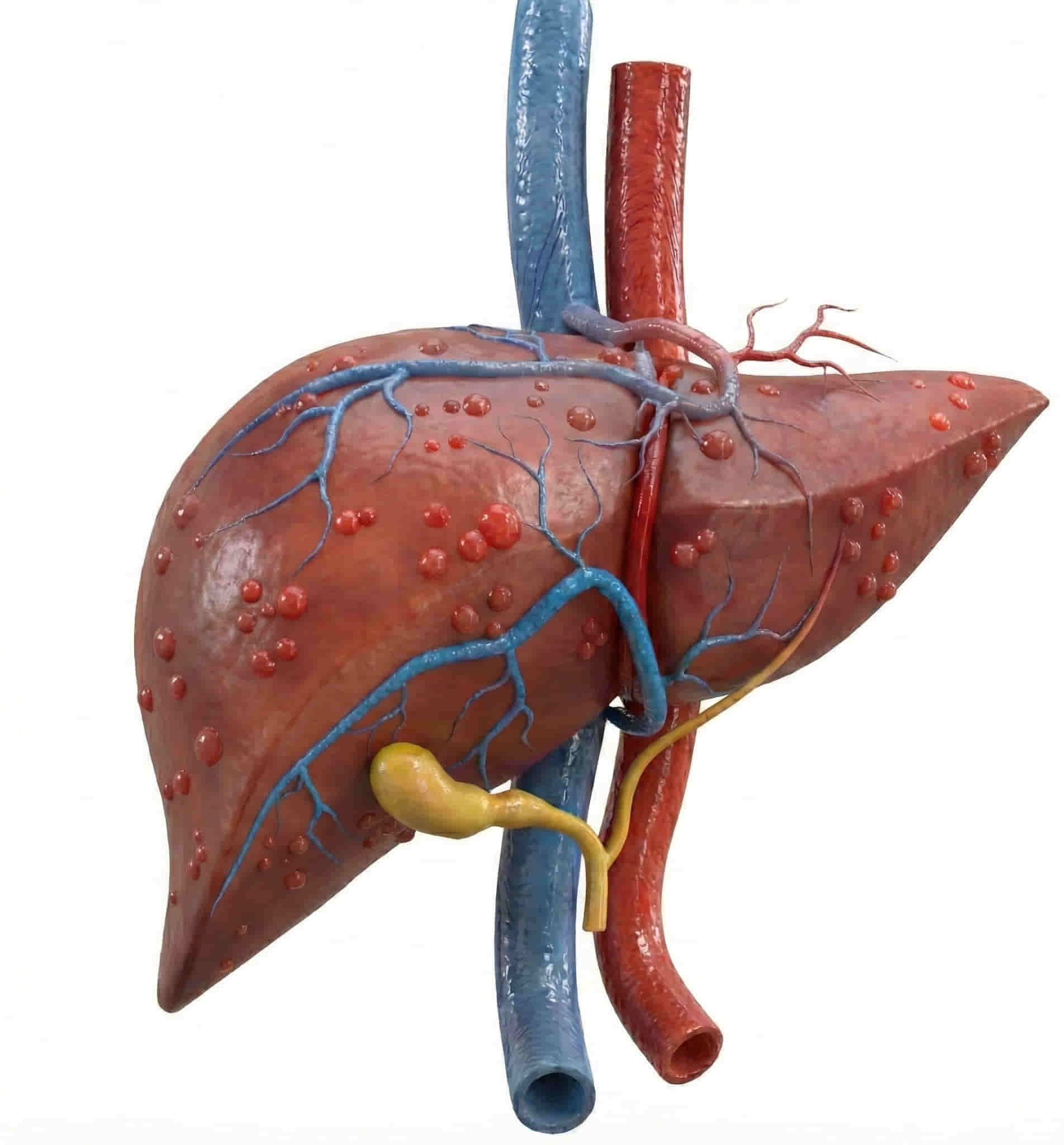
Transhepatic venous catheterization is a minimally invasive, image-guided procedure used when conventional central venous access is not possible. It creates a reliable route for dialysis and long-term venous access by placing a catheter through the liver into central veins.
This technique is ideal for patients with blocked or exhausted veins, offering a safe, effective alternative while preserving other access sites.
 Faster Recovery (Same Day/Next Day Discharge)
Quick recovery with minimal hospital stay.
Ideal for Complex Cases
Best option when other access sites are not available.
Preserves Remaining Veins
Helps protect veins for long-term use.
✓ Minimally Invasive Lifeline for Dialysis Access
Transhepatic Venous Catheter: A Minimally Invasive Solution for Difficult Venous Access
Transhepatic venous catheterization is a minimally invasive, image-guided procedure used when conventional central venous access is not possible. It creates a reliable route for dialysis and long-term venous access by placing a catheter through the liver into central veins.
This technique is ideal for patients with blocked or exhausted veins, offering a safe, effective alternative while preserving other access sites.

Faster Recovery (Same Day/Next Day Discharge)
Quick recovery with minimal hospital stay.
Ideal for Complex Cases
Best option when other access sites are not available.
Preserves Remaining Veins
Helps protect veins for long-term use.
Dr Ram will be consulting in Hyderabad from August 1st.
Early Signs That Indicate the Need for Transhepatic Venous Catheter
 Repeated Dialysis Access Failure
Repeated dialysis access failure is a key indication for transhepatic venous catheterization. When veins in the neck, chest, or groin become blocked or damaged, continuing dialysis becomes difficult. This is common in patients with long-term chronic kidney disease (CKD) and multiple prior catheter placements. Transhepatic access offers a reliable alternative, ensuring uninterrupted dialysis.
“You may experience frequent catheter failures or difficulty completing dialysis sessions effectively.”
Common Signs Associated with Dialysis Access Failure
- Repeated catheter malfunction or blockage
- Inability to maintain proper dialysis flow
- History of multiple failed access sites
- Difficulty completing dialysis sessions
- Need for alternative long-term venous access
 Swelling of Face, Neck, or Arms (Venous Obstruction)
Swelling of the face, neck, or arms due to central vein blockage is a key indication for transhepatic venous catheterization. When major veins are obstructed, it leads to difficulty or failure of conventional dialysis access, making treatment challenging.
Transhepatic venous catheterization provides a reliable alternative route by bypassing blocked veins, ensuring effective and continuous dialysis access without major surgery.
“You may notice persistent swelling in the face, neck, or arms due to blocked veins.”
Common Signs Associated with Venous Obstruction
- Swelling in face, neck, or upper limbs
- Tightness or discomfort in the affected area
- Visible enlarged veins on chest or neck
- History of central vein blockage
- Difficulty in placing a standard dialysis access
 No Usable Veins for Dialysis Access
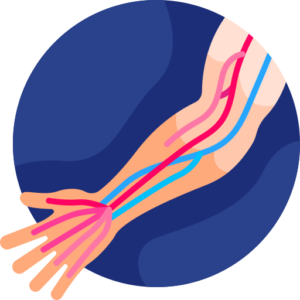
Lack of usable veins for dialysis access is a key issue in patients requiring transhepatic venous catheterization. When veins in the neck, chest, or groin become inaccessible due to repeated use or blockage, it leads to difficulty in maintaining dialysis access and interrupted treatment.
Transhepatic venous catheterization provides a reliable alternative by offering a new access route, ensuring continuous and effective dialysis in patients with limited vascular options without major surgery.
“Doctors may be unable to find a suitable vein for placing a standard dialysis catheter.”
Common Signs Associated with Lack of Venous Access
- No accessible veins for catheter placement
- Multiple failed attempts at standard access
- History of long-term or repeated catheter use
- Blocked or scarred central veins
- Need for alternative dialysis access route
 Multiple Failed Catheter
A history of multiple failed catheter placements is a strong indication for transhepatic venous catheterization. Repeated attempts at placing dialysis catheters can lead to vein damage, scarring, and eventual loss of access sites. This is commonly seen in patients with long-term chronic kidney disease (CKD). Transhepatic venous catheter provides a dependable alternative route when conventional access repeatedly fails.
“Doctors may be unable to find a suitable vein for placing a standard dialysis catheter.”
Common Signs Associated with Multiple Access Failures
- Repeated unsuccessful catheter placements
- History of frequent catheter replacements
- Vein damage or scarring from prior procedures
- Limited options for new access sites
- Need for a long-term alternative dialysis route
 Catheter Infections
Recurrent catheter infections or complications are a key indication for transhepatic venous catheterization. Frequent infections, blockages, or clotting can make standard dialysis access difficult. This is common in patients with long-term catheter use and chronic kidney disease (CKD). Transhepatic venous catheter provides a reliable alternative for safer dialysis access.
“You may experience repeated infections or complications with existing dialysis catheters.”
Common Signs Associated with Catheter Complications
- Frequent catheter-related infections
- Recurrent blockage or clotting of catheters
- Need for repeated catheter replacements
- Pain or discomfort at access sites
- Difficulty maintaining stable dialysis access
Early Signs That Indicate the Need for Transhepatic Venous Catheter
Repeated Dialysis Access Failure
Repeated dialysis access failure is a key indication for transhepatic venous catheterization. When veins in the neck, chest, or groin become blocked or damaged, continuing dialysis becomes difficult. This is common in patients with long-term chronic kidney disease (CKD) and multiple prior catheter placements. Transhepatic access offers a reliable alternative, ensuring uninterrupted dialysis.
“You may experience frequent catheter failures or difficulty completing dialysis sessions effectively.”
Common Signs Associated with Dialysis Access Failure
- Repeated catheter malfunction or blockage
- Inability to maintain proper dialysis flow
- History of multiple failed access sites
- Difficulty completing dialysis sessions
- Need for alternative long-term venous access
Swelling of Face, Neck, or Arms (Venous Obstruction)
Swelling of the face, neck, or arms due to central vein blockage is a key indication for transhepatic venous catheterization. When major veins are obstructed, it leads to difficulty or failure of conventional dialysis access, making treatment challenging.
Transhepatic venous catheterization provides a reliable alternative route by bypassing blocked veins, ensuring effective and continuous dialysis access without major surgery.
“You may notice persistent swelling in the face, neck, or arms due to blocked veins.”
Common Signs Associated with Venous Obstruction
- Swelling in face, neck, or upper limbs
- Tightness or discomfort in the affected area
- Visible enlarged veins on chest or neck
- History of central vein blockage
- Difficulty in placing a standard dialysis access
No Usable Veins for Dialysis Access
Lack of usable veins for dialysis access is a key issue in patients requiring transhepatic venous catheterization. When veins in the neck, chest, or groin become inaccessible due to repeated use or blockage, it leads to difficulty in maintaining dialysis access and interrupted treatment.
Transhepatic venous catheterization provides a reliable alternative by offering a new access route, ensuring continuous and effective dialysis in patients with limited vascular options without major surgery.
“Doctors may be unable to find a suitable vein for placing a standard dialysis catheter.”
Common Signs Associated with Lack of Venous Access
- No accessible veins for catheter placement
- Multiple failed attempts at standard access
- Blocked or scarred central veins
- History of long-term or repeated catheter use
- Need for an alternative dialysis access route
Multiple Failed Catheter
A history of multiple failed catheter placements is a strong indication for transhepatic venous catheterization. Repeated attempts at placing dialysis catheters can lead to vein damage, scarring, and eventual loss of access sites. This is commonly seen in patients with long-term chronic kidney disease (CKD). Transhepatic venous catheter provides a dependable alternative route when conventional access repeatedly fails.
“You may have undergone several unsuccessful catheter placements for dialysis access.”
Common Signs Associated with Multiple Access Failures
- Repeated unsuccessful catheter placements
- History of frequent catheter replacements
- Vein damage or scarring from prior procedures
- Limited options for new access sites
- Need for a long-term alternative dialysis route
Catheter Infections
Recurrent catheter infections or complications are a key indication for transhepatic venous catheterization. Frequent infections, blockages, or clotting can make standard dialysis access difficult. This is common in patients with long-term catheter use and chronic kidney disease (CKD). Transhepatic venous catheter provides a reliable alternative for safer dialysis access.
“You may experience repeated infections or complications with existing dialysis catheters.”
Common Signs Associated with Catheter Complications
- Frequent catheter-related infections
- Recurrent blockage or clotting of catheters
- Need for repeated catheter replacements
- Pain or discomfort at access sites
- Difficulty maintaining stable dialysis access
Board-Certified Expertise
Internationally trained with credentials from leading medical institutions
FRCR
Fellow, Royal College of Radiologists
DABIR
Diplomate, American Board of Interventional Radiology
MRCSEd
Member, Royal College of Surgeons Edinburg
40+ Publications
Peer-reviewed scientific research
Why Dr. Ram Kishore Stands Out
 Cleveland Clinic Training
Advanced interventional radiology fellowship from one of the world’s top medical institutions.
✅ Research Pioneer
40+ Peer-reviewed publications advancing the field of interventional radiology
✅ 14+ Years Experience
Thousands of successful treatments, with exceptional patient outcomes
✅ Patient-Centered Care
Evidence-based approach with focus on patient education and informed decision making
Board-Certified Expertise
Internationally trained with credentials from leading medical institutions
FRCR
Fellow, Royal College of Radiologists
DABIR
Diplomate, American Board of Interventional Radiology
MRCSEd
Member, Royal College of Surgeons Edinburgh
40+ Publications
Peer-reviewed scientific research
Why Dr. Ram Kishore Stands Out
✅ Cleveland Clinic Training
Advanced interventional radiology fellowship from one of the world’s top medical institutions.
✅ Research Pioneer
40+ Peer-reviewed publications advancing the field of interventional radiology
✅ 14+ Years Experience
Thousands of successful treatments, with exceptional patient outcomes
✅ Patien-Centered Care
Evidence-based approach with focus on patient education and informed decision making
Advanced Transhepatic Venous Catheter for Dialysis Access in India
Delayed Complications Can Affect Your Health Silently
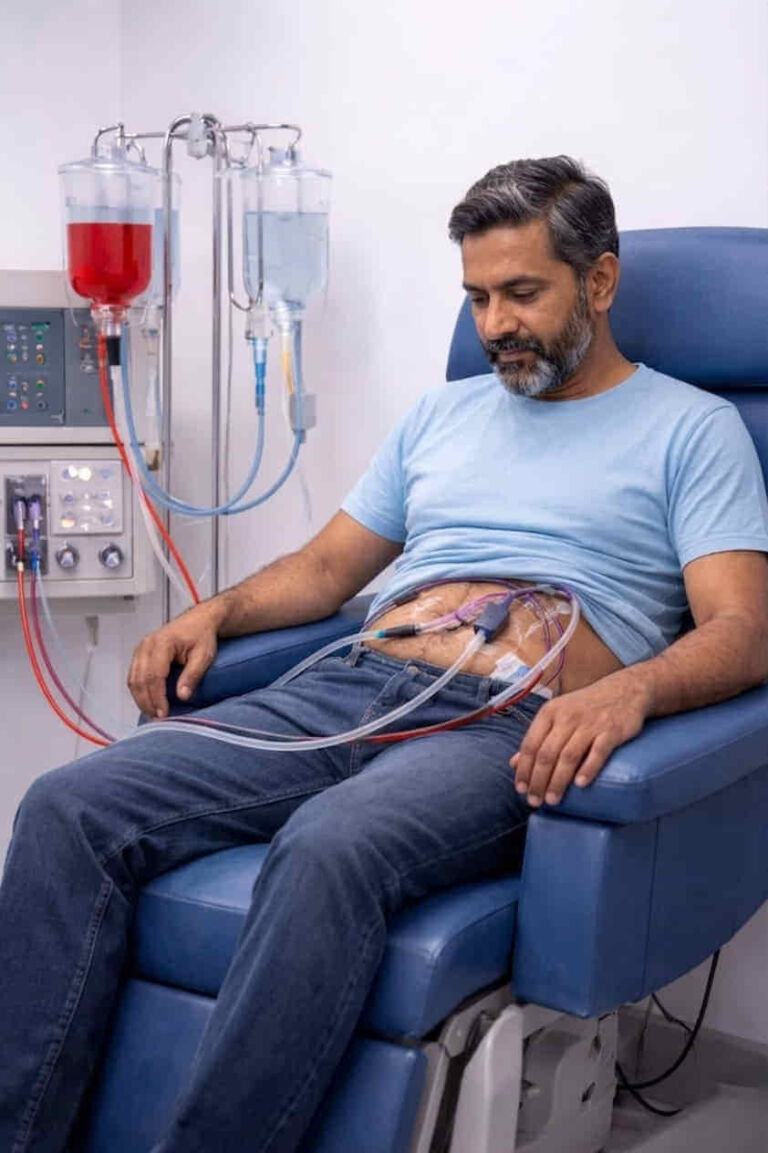
Transhepatic venous catheterization is an advanced, minimally invasive procedure used when conventional venous access is not possible. While it provides a reliable route for dialysis, it also carries certain risks due to catheter placement through the liver.
As the catheter passes through liver tissue into central veins, patients may experience complications such as bleeding, infection, or catheter-related issues. Proper monitoring and expert care are essential to minimize these risks and ensure safe long-term dialysis access.
The real risks of Problematic Liver
💔 Bleeding Risk
Minor to moderate bleeding may occur due to liver puncture, especially in high-risk patients.
💔 Infection Risky
Long-term catheter use can increase the risk of infections at the insertion site or bloodstream.
 Catheter Dysfunction
Blockage, clotting, or displacement of the catheter can affect dialysis efficiency.
Liver-Related Complications
Rare complications related to liver access may occur and require medical attention.
Advanced Transhepatic Venous Catheter for Dialysis Access in India
Delayed Complications Can Affect Your Health Silently
Transhepatic venous catheterization is an advanced, minimally invasive procedure used when conventional venous access is not possible. While it provides a reliable route for dialysis, it also carries certain risks due to catheter placement through the liver.
As the catheter passes through liver tissue into central veins, patients may experience complications such as bleeding, infection, or catheter-related issues. Proper monitoring and expert care are essential to minimize these risks and ensure safe long-term dialysis access.
The real risks of Problematic Liver
💔 Bleeding Risk
Minor to moderate bleeding may occur due to liver puncture, especially in high-risk patients.
💔 Infection Risk
Long-term catheter use can increase the risk of infections at the insertion site or bloodstream.
💔 Catheter Dysfunction
Blockage, clotting, or displacement of the catheter can affect dialysis efficiency.
💔 Liver-Related Complications
Rare complications related to liver access may occur and require medical attention.

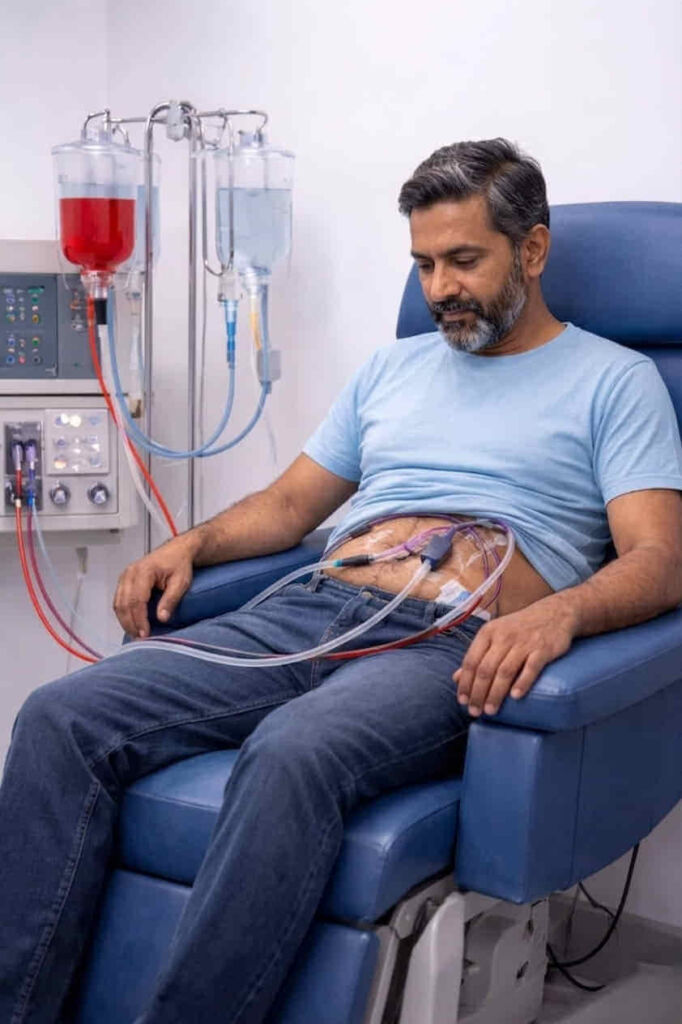
How Transhepatic Venous Catheter Placement Works for Dialysis & Central Venous Access
A minimally invasive, image-guided procedure used when traditional veins are blocked or unavailable
Transhepatic Access to Central Veins
A thin, flexible catheter is inserted through the skin and guided into the hepatic vein using ultrasound and fluoroscopy. This technique is used when conventional access points such as the jugular, subclavian, or femoral veins are blocked due to thrombosis or repeated catheter use.
Catheter Placement via the Liver
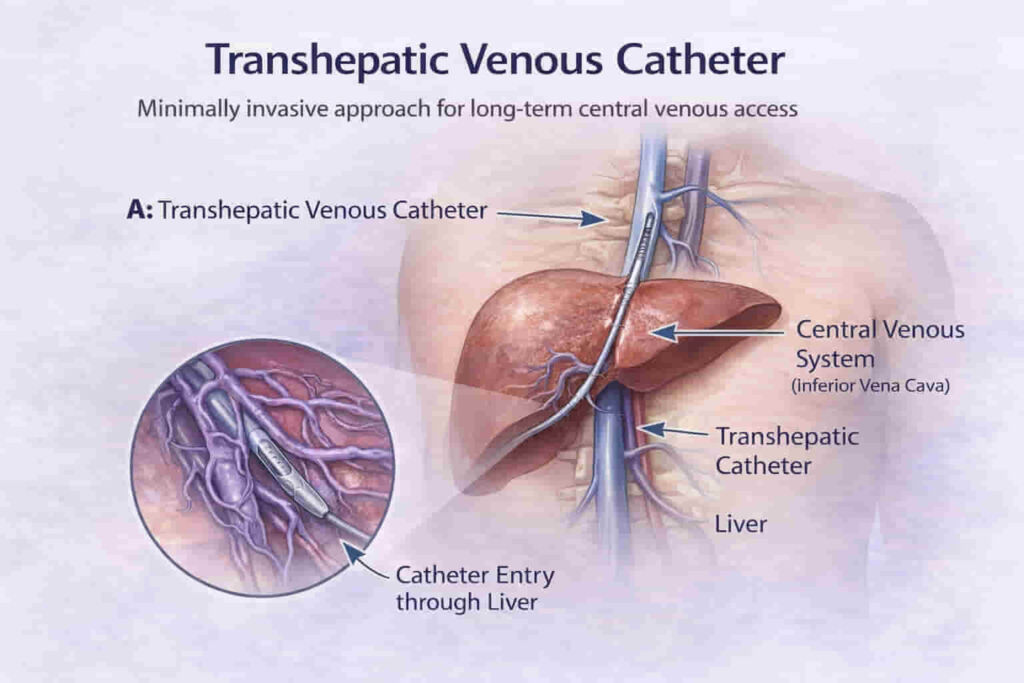
Using real-time imaging guidance, the catheter is advanced through the liver into a central vein (inferior vena cava). This ensures precise placement and makes it a reliable option for patients requiring dialysis or long-term intravenous treatments.
Establishing Reliable Blood Flow for Dialysis
Once positioned, the transhepatic venous catheter provides a stable pathway for blood flow. It enables effective hemodialysis and medication delivery while bypassing damaged or occluded veins, ensuring uninterrupted treatment.
Long-Term Venous Access Solution
This procedure is ideal for patients with limited vascular access options. With proper care and monitoring, the catheter can be used for long-term dialysis or repeated treatments, reducing the need for multiple invasive attempts.
Get a complete, detailed explanation of Transhepatic Venous Catheter by Dr Ram Kishore
How Transhepatic Venous Catheter Placement Works for Dialysis & Central Venous Access
A minimally invasive, image-guided procedure used when traditional veins are blocked or unavailable
Transhepatic Access to Central Veins
A thin, flexible catheter is inserted through the skin and guided into the hepatic vein using ultrasound and fluoroscopy. This technique is used when conventional access points such as the jugular, subclavian, or femoral veins are blocked due to thrombosis or repeated catheter use.
Catheter Placement via the Liver
Using real-time imaging guidance, the catheter is advanced through the liver into a central vein (inferior vena cava). This ensures precise placement and makes it a reliable option for patients requiring dialysis or long-term intravenous treatments.
Establishing Reliable Blood Flow for Dialysis
Once positioned, the transhepatic venous catheter provides a stable pathway for blood flow. It enables effective hemodialysis and medication delivery while bypassing damaged or occluded veins, ensuring uninterrupted treatment.
Long-Term Venous Access Solution
This procedure is ideal for patients with limited vascular access options. With proper care and monitoring, the catheter can be used for long-term dialysis or repeated treatments, reducing the need for multiple invasive attempts.
Transhepatic Venous Catheter vs Traditional Central Venous Surgery: Benefits, Risks & Recovery
“Transhepatic Venous Catheter vs Traditional Surgery: Effectiveness, Recovery, and Safety”
🛡️Benefits of Transhepatic Venous Catheter
- Minimally Invasive – Image-guided procedure without major surgery.
- Alternative Access – Used when traditional veins are blocked.
- Long-Term Use – Suitable for dialysis and ongoing treatments.
- Immediate Function – Ready for use right after placement.
- Reliable Blood Flow – Stable access to central veins.
- Life-Saving Option – Effective when all other access fails.
- Avoids Major Surgery – Safer than surgical alternatives.
⚡ Limitations of Traditional Approach
- More Invasive – Larger access, more tissue damage.
- More Monitoring – Longer observation required.
- Discomfort – More pain and slower recovery.
- Higher Risk – Increased chance of bleeding or misplacement.
- Infection Risk – Greater exposure to infections.
- Not for High-Risk Patients – Unsafe with liver or clotting issues.
- More Maintenance – Needs frequent follow-up.
Transhepatic Venous Catheter vs Traditional Central Venous Surgery: Benefits, Risks & Recovery
“Transhepatic Venous Catheter vs Traditional Surgery: Effectiveness, Recovery, and Safety”
🛡️Benefits of Transhepatic Venous Catheter
- Minimally Invasive – Image-guided procedure without major surgery.
- Alternative Access – Used when traditional veins are blocked.
- Long-Term Use – Suitable for dialysis and ongoing treatments.
- Immediate Function – Ready for use right after placement.
- Reliable Blood Flow – Stable access to central veins.
- Life-Saving Option – Effective when all other access fails.
- Avoids Major Surgery – Safer than surgical alternatives.
⚡ Limitations of Traditional Approach
- More Invasive – Larger access, more tissue damage.
- More Monitoring – Longer observation required.
- Discomfort – More pain and slower recovery.
- Higher Risk – Increased chance of bleeding or misplacement.
- Infection Risk – Greater exposure to infections.
- Not for High-Risk Patients – Unsafe with liver or clotting issues.
- More Maintenance – Needs frequent follow-up.
★★★★★
“After multiple failed access sites, my doctors suggested a transhepatic venous catheter as a last option. I was nervous at first, but the procedure was surprisingly quick and done under local anesthesia. Recovery was smooth, and I could resume dialysis without interruptions. It really gave me confidence and peace of mind knowing I still had a reliable option.”

Sana Qureshi
Hyderabad, India
Age 42 | 1.5 years Post – Transhepatic Venous Catheter
★★★★★
“I had exhausted all other vein access options, and this procedure felt like my only hope. The transhepatic catheter worked effectively from the start, providing stable blood flow during every dialysis session. I experienced minimal discomfort and was able to get back to my routine faster than expected. It truly helped me continue my treatment without complications.”

Ravi Kumaran
Chennai, India
Age 54| 2 years Post Transhepatic Venous Catheter
Patient Experiences with Transhepatic Venous Catheter Treatment
★★★★★
“After multiple failed access sites, my doctors suggested a transhepatic venous catheter as a last option. I was nervous at first, but the procedure was surprisingly quick and done under local anesthesia. Recovery was smooth, and I could resume dialysis without interruptions. It really gave me confidence and peace of mind knowing I still had a reliable option.”

Sana Qureshi
Hyderabad, India
Age 42 | 1.5 years Post – Transhepatic Venous Catheter
★★★★★
“I had exhausted all other vein access options, and this procedure felt like my only hope. The transhepatic catheter worked effectively from the start, providing stable blood flow during every dialysis session. I experienced minimal discomfort and was able to get back to my routine faster than expected. It truly helped me continue my treatment without complications.”

Ravi Kumaran
Chennai, India
Age 54| 2 years Post Transhepatic Venous Catheter
Frequently Asked Questions About Transhepatic Venous Catheter
What is a transhepatic venous catheter?
A transhepatic venous catheter is a specialized central venous access placed through the liver into the inferior vena cava (IVC). It is used when traditional access sites like the neck or chest veins are blocked. This method allows reliable long-term access for dialysis or medication delivery.
When is a transhepatic venous catheter required?
It is recommended for patients who have exhausted conventional venous access options due to blockage or repeated failures. Commonly used in long-term dialysis patients, it serves as a lifesaving alternative. Doctors choose this approach when no other safe access route is available.
Is transhepatic venous catheter placement safe?
Yes, it is generally safe when performed by experienced interventional radiologists under imaging guidance. The procedure is minimally invasive and highly precise. However, like any medical procedure, there are some risks which are carefully managed.
How long can a transhepatic venous catheter be used?
A transhepatic catheter can be used for long-term treatment if properly maintained. Many patients successfully use it for dialysis over extended periods. Regular follow-ups and care help ensure its effectiveness and reduce complications.
What are the risks of a transhepatic venous catheter?
Potential risks include bleeding, infection, catheter displacement, or liver-related complications. However, these risks are relatively low with proper technique and monitoring. Doctors take precautions to minimize complications during and after the procedure.
How is a transhepatic venous catheter inserted?
The catheter is inserted through the liver using imaging guidance such as ultrasound and fluoroscopy. A small puncture is made, and the catheter is guided into the IVC. The procedure is usually done under local anesthesia.
What is the recovery time after transhepatic catheter placement?
Recovery is generally quick, with many patients discharged the same or next day. Most individuals can return to normal activities within 1–2 weeks. Mild discomfort may occur initially but improves quickly.
Is transhepatic venous access better than traditional surgery?
For patients with blocked veins, it is often a safer and more effective alternative. It is less invasive, has faster recovery, and preserves other veins. However, suitability depends on individual patient conditions.
Frequently Asked Questions About Transhepatic Venous Catheter
What is a transhepatic venous catheter?
A transhepatic venous catheter is a specialized central venous access placed through the liver into the inferior vena cava (IVC). It is used when traditional access sites like the neck or chest veins are blocked. This method allows reliable long-term access for dialysis or medication delivery.
When is a transhepatic venous catheter required?
It is recommended for patients who have exhausted conventional venous access options due to blockage or repeated failures. Commonly used in long-term dialysis patients, it serves as a lifesaving alternative. Doctors choose this approach when no other safe access route is available.
Is transhepatic venous catheter placement safe?
Yes, it is generally safe when performed by experienced interventional radiologists under imaging guidance. The procedure is minimally invasive and highly precise. However, like any medical procedure, there are some risks which are carefully managed.
How long can a transhepatic venous catheter be used?
A transhepatic catheter can be used for long-term treatment if properly maintained. Many patients successfully use it for dialysis over extended periods. Regular follow-ups and care help ensure its effectiveness and reduce complications.
What are the risks of a transhepatic venous catheter?
Potential risks include bleeding, infection, catheter displacement, or liver-related complications. However, these risks are relatively low with proper technique and monitoring. Doctors take precautions to minimize complications during and after the procedure.
How is a transhepatic venous catheter inserted?
The catheter is inserted through the liver using imaging guidance such as ultrasound and fluoroscopy. A small puncture is made, and the catheter is guided into the IVC. The procedure is usually done under local anesthesia.
What is the recovery time after transhepatic catheter placement?
Recovery is generally quick, with many patients discharged the same or next day. Most individuals can return to normal activities within 1–2 weeks. Mild discomfort may occur initially but improves quickly.
Is transhepatic venous access better than traditional surgery?
For patients with blocked veins, it is often a safer and more effective alternative. It is less invasive, has faster recovery, and preserves other veins. However, suitability depends on individual patient conditions.
Your Life Doesn't Have to Be Controlled by a Tumour
Thousands of women have reclaimed their freedom through UFE, a safe and minimally invasive treatment for uterine fibroids. You don’t have to live with constant pain, heavy bleeding, or exhaustion. You deserve relief without major surgery or long recovery. Take control of your health and take the first step toward a life free from fibroid symptoms today.
Available in Hyderabad & Chennai | Cleveland Clinic Trained | 14+ Years Experience | 90% Success Rate
First Consultation is Risk-Free: Meet with Dr. Kishore, discuss your symptoms, and explore all treatment options. No pressure, no obligation. We’re here to help you make the best decision for your health.
Your Life Doesn't Have to Be Controlled by a Tumour
Thousands of women have reclaimed their freedom through UFE, a safe and minimally invasive treatment for uterine fibroids. You don’t have to live with constant pain, heavy bleeding, or exhaustion. You deserve relief without major surgery or long recovery. Take control of your health and take the first step toward a life free from fibroid symptoms today.
Available in Hyderabad & Chennai | Cleveland Clinic Trained | 14+ Years Experience | 90% Success Rate
First Consultation is Risk-Free: Meet with Dr. Kishore, discuss your symptoms, and explore all treatment options. No pressure, no obligation. We’re here to help you make the best decision for your health.