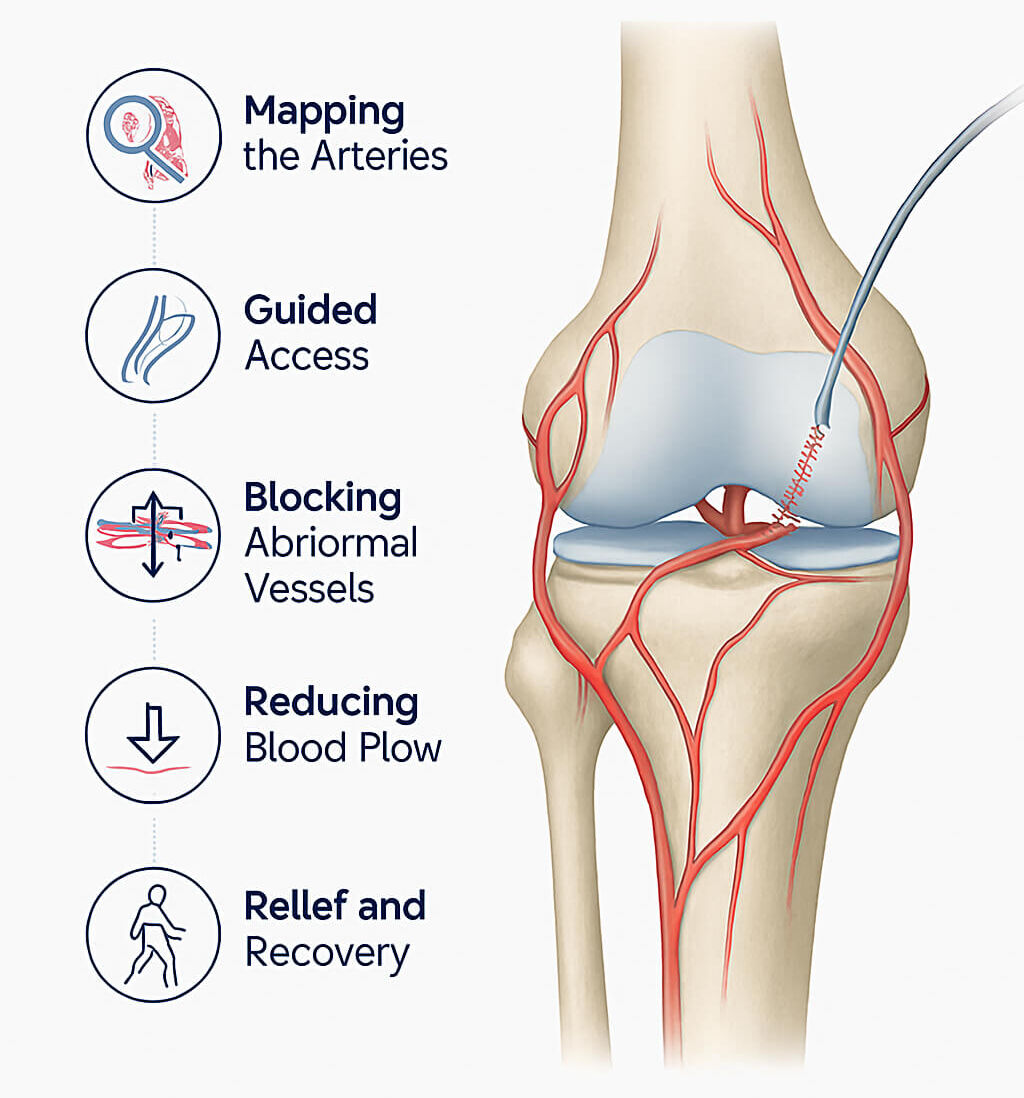
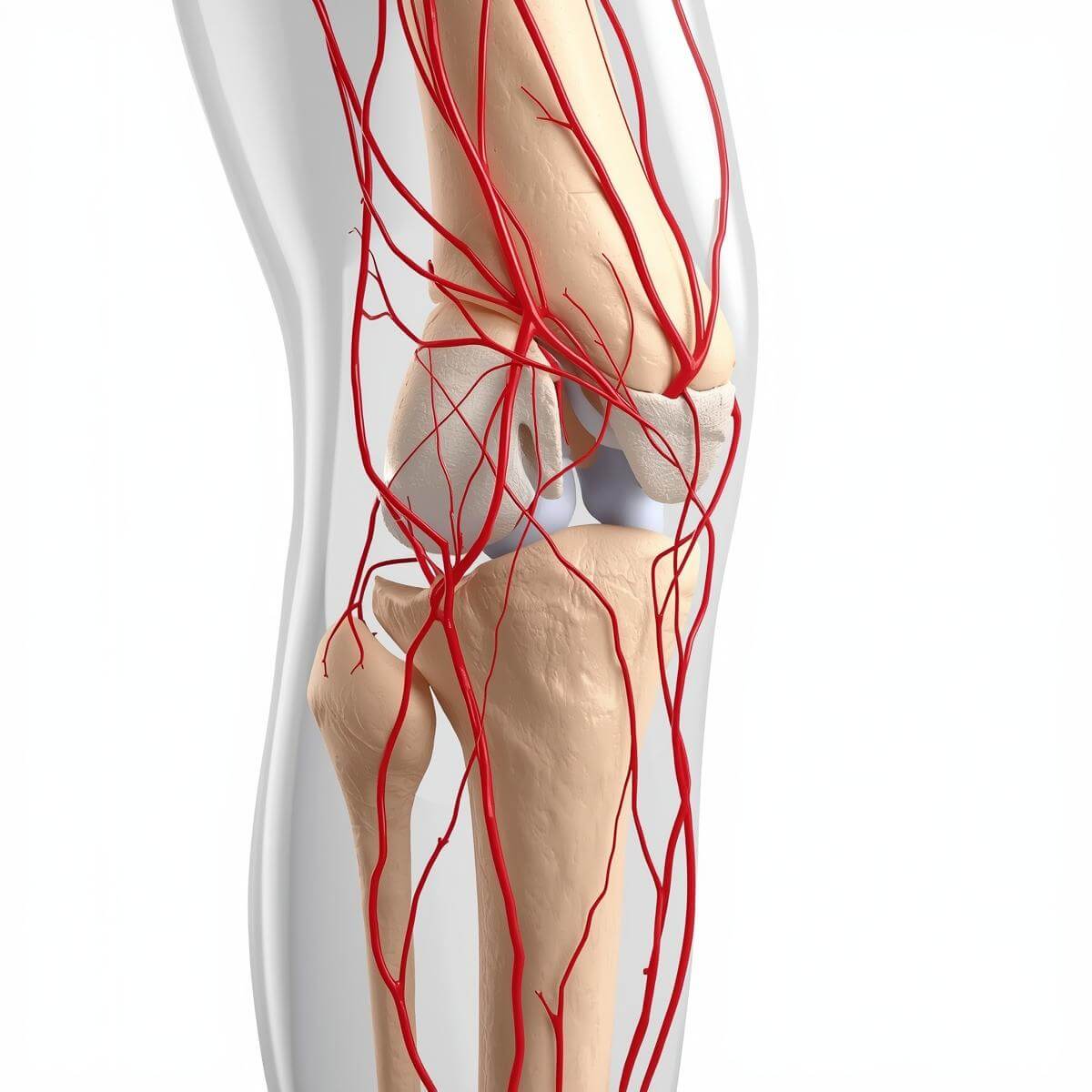
Minimally Invasive procedure involves blocking the blood supply to the tumor before surgery.
Globally recognized innovator, Dr. Ram K Gurajala MD, leads the frontier with patented technologies, 40+ pioneering publications, and breakthroughs that redefine cancer and vascular care.
Non‑surgical, outpatient option
- Faster recovery
- Minimal disruption to daily life
- Durable relief, delaying or avoiding knee replacement
What Is Preoperative Embolization?
Preoperative embolization is an image-guided interventional radiology technique. It uses catheters and embolic agents (such as particles, coils, or glue) to selectively block the renal arteries feeding the tumor. By cutting off blood flow, the tumor shrinks and becomes easier to remove surgically.
Why Is It Done?
Reduce intraoperative bleeding: By limiting blood supply, surgeons face less blood loss during nephrectomy.
Improve visualization: A devascularized tumor is easier to dissect and remove.
Palliative care: In patients not eligible for surgery, embolization can reduce pain, hematuria (blood in urine), and other symptoms.
How the Procedure Works
Access: A small incision is made in the groin or wrist to insert a catheter.
Imaging: Angiography maps the renal arteries supplying the tumor.
Embolization: Embolic agents are delivered to block blood flow.
Outcome: The tumor is devascularized, reducing bleeding risk during surgery.
Who Benefits from Preoperative Embolization?
Proven Benefits:
Patients with large or highly vascular renal tumors.
Individuals with renal cell carcinoma requiring nephrectomy.
Patients with hematuria or pain who are not surgical candidates.
⚕️ Risks and Considerations
Post-embolization syndrome (fever, pain, nausea).
Rare risks: non-target embolization, infection, or vessel injury.
Requires expertise in renal artery anatomy for safe and effective results.
Non‑surgical, outpatient option
- Faster recovery
- Minimal disruption to daily life
- Durable relief, delaying or avoiding knee replacement
✅ Effectiveness
Clinical studies show that preoperative embolization:
Significantly reduces blood loss during nephrectomy.
Improves surgical precision.
Provides symptom relief in palliative cases.
Availability in India
Preoperative embolization for renal cancer is available at advanced interventional radiology centers, including Hyderabad (Lakshmi Hospital for Women & Children, Kondapur) and Chennai (MGM Healthcare), under the expertise of Dr. Ram Kishore Gurajala.
Advanced treatments
Personalized approach
Compassionate comfort
Common questions
Frequently Asked Questions
How effective is preoperative embolization?
It significantly reduces blood loss during surgery and improves the precision of tumor removal.
Who is a candidate for this procedure?
Patients with large or highly vascular renal tumors, those undergoing nephrectomy, or patients needing symptom relief when surgery is not an option.
What are the risks involved?
Common risks include post-embolization syndrome (fever, pain, nausea). Rare complications may include infection or damage to nearby vessels.
How effective is preoperative embolization?
It significantly reduces blood loss during surgery and improves the precision of tumor removal.
Is this procedure available in India?
Yes, it is available in Hyderabad and Chennai at specialized interventional radiology centers.