

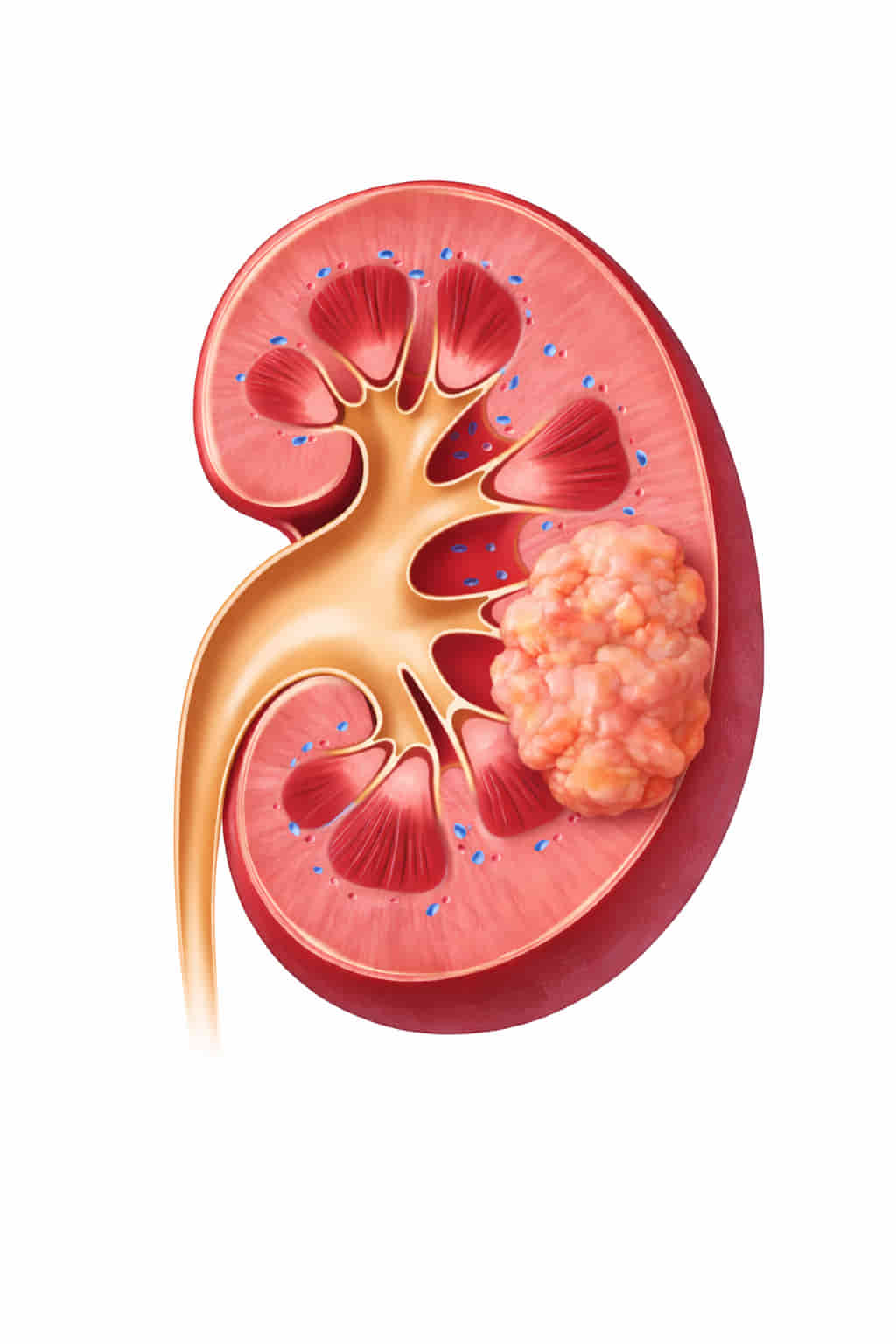
Renal Cryoablation for Kidney Cancer Treatment in Hyderabad & Chennai

✓ Minimally Invasive Kidney Tumour Treatment
Renal Cryoablation:
A Minimally Invasive
Treatment for Kidney Tumours
Renal cryoablation is a minimally invasive procedure that freezes and destroys kidney tumors while preserving healthy kidney tissue.
Renal cryoablation is an advanced, image-guided treatment designed to target kidney tumors with extreme cold. This precise technique destroys cancer cells while minimizing damage to surrounding tissue, leading to faster recovery and fewer complications compared to traditional surgery.
 Faster Recovery (1–3 Days)
Resume daily activities much quicker than traditional surgery.
No Major Surgery or Large Cuts
A minimally invasive catheter-based treatment with less pain and faster healing.
Preserves Healthy Kidney Tissue
Targets only tumor cells while protecting kidney function.

✓ Advanced Minimally Invasive Kidney Tumor Treatment
Renal Cryoablation: A Minimally Invasive Treatment for Kidney Tumours
Renal cryoablation is a minimally invasive procedure that freezes and destroys kidney tumors while preserving healthy kidney tissue.
Renal cryoablation is an advanced, image-guided treatment designed to target kidney tumors with extreme cold. This precise technique destroys cancer cells while minimizing damage to surrounding tissue, leading to faster recovery and fewer complications compared to traditional surgery.

Faster Recovery (1–3 Days)
Resume daily activities much quicker than traditional surgery.
No Major Surgery or Large Cuts
A minimally invasive procedure with reduced pain and minimal scarring.
Preserves Healthy Kidney
Targets only tumor cells while protecting kidney function.
Dr Ram will be consulting in Hyderabad from August 1st.
Early Symptoms of Kidney Cancer: Warning Signs You Should Not Ignore
 Unexplained Weight Loss
Unexplained weight loss is an early symptom of kidney cancer (renal tumors) and often results from metabolic changes caused by tumor growth. Cancer cells increase the body’s energy use and reduce appetite, leading to rapid, unintentional weight loss without changes in diet or physical activity.
This weight loss is commonly accompanied by fatigue, loss of appetite, and weakness. Early detection helps diagnose kidney tumors at a stage where minimally invasive treatments like renal cryoablation are highly effective while preserving kidney function.
“Patients may notice a steady decline in body weight and strength without any clear reason, which should always be medically evaluated.”
Common Signs Associated with Unexplained Weight Loss
- Rapid weight loss without dieting or exercise
- Loss of muscle mass and physical strength
- Persistent fatigue and low energy levels
- Reduced stamina during daily activities
 Loss of Appetite
Loss of appetite is a common symptom of kidney cancer (renal tumors) and can result from metabolic changes, inflammation, or pressure from a growing tumor. Many patients experience early satiety, feeling full after eating small amounts, which reduces overall food intake.
This symptom is more concerning when combined with fatigue, unexplained weight loss, or blood in urine. Early evaluation and diagnosis allow for minimally invasive treatments like renal cryoablation, which effectively treats kidney tumors while preserving healthy kidney tissue.
“Many patients report a persistent lack of hunger and feeling full quickly, even without eating large meals.”
Common Signs of Appetite Loss in Liver Cancer
- Feeling full after small portions (early satiety)
- Reduced interest in food over time
- Nausea or discomfort after meals
- Gradual decrease in daily food intake
- Persistent weakness or low energy levels.
 Persistent Back Pain
Persistent side or back pain (flank pain) is a key symptom of kidney cancer (renal tumors), especially when it occurs on one side below the ribs and does not improve over time. Unlike muscle pain, it is usually constant, not movement-related, and may worsen as the tumor grows.
Kidney tumors can press on nearby nerves and tissues, causing a dull, aching, or pressure-like pain in the flank area that may sometimes spread to the abdomen or lower back.
“Patients often report a deep, persistent ache on one side of the back that does not resolve with rest or medication.”
Common Signs Associated with Persistent Back Pain
- One-sided pain below the ribs (flank region)
- Dull, aching, or pressure-like discomfort
- Pain not related to physical activity or posture
- Gradually worsening or persistent pain over time
- Occasional radiation of pain to the abdomen
 Blood in Urine
Blood in urine (hematuria) is an early sign of kidney cancer (renal tumours) and should not be ignored. It may appear pink, red, or dark, or be detected only through urine tests.
This occurs when a kidney tumor affects blood vessels, causing bleeding into the urinary tract. It is often painless in early stages, making timely diagnosis important. Treatments like renal cryoablation can effectively target tumors while preserving kidney function.
“Some patients notice visible changes in urine color, while others are diagnosed through routine screening tests without any discomfort.”
Common Signs Associated with Blood in Urine
- Visible red, pink, or cola-colored urine (gross hematuria)
- Blood detected only in laboratory urine tests (microscopic hematuria)
- Intermittent or sudden episodes of bleeding
- Typically painless in early stages
- May occur without other noticeable symptoms
 Fatigue and Weakness
Persistent fatigue and weakness are common symptoms of kidney cancer (renal tumors), often caused by anemia and metabolic changes from tumor growth. These tumors can reduce red blood cell production, leading to constant tiredness and low stamina.
This fatigue does not improve with rest and may occur with weight loss, loss of appetite, or blood in urine. Early diagnosis allows treatments like renal cryoablation to treat tumors effectively while preserving kidney function.
“Patients often describe a constant lack of energy and physical weakness that persists even after adequate sleep or rest.”
Common Signs Associated with Fatigue and Weakness
- Constant tiredness or exhaustion despite rest
- Low energy levels throughout the day
- Generalized weakness or reduced stamina
- Difficulty concentrating or mental fatigue
- Decreased ability to perform daily activities
 Lump in Side
A lump in the abdomen or side can be a sign of kidney cancer (renal tumors) caused by a growing mass in or around the kidney. As the tumor grows, it may cause swelling, discomfort, or heaviness in the flank or abdominal area.
Early diagnosis is important, as treatments like renal cryoablation can effectively treat kidney tumors while preserving kidney function.
“A noticeable or persistent mass should always be evaluated with proper medical imaging.”
Common Signs Associated with Lump in Side
- Visible or palpable swelling in the abdomen or side
- Firm or hard mass on touch
- Abdominal or flank discomfort
- Feeling of heaviness or pressure
Early Symptoms of Kidney Cancer: Warning Signs You Should Not Ignore
Unexplained Weight Loss
Unexplained weight loss is an early symptom of kidney cancer (renal tumors) and often results from metabolic changes caused by tumor growth. Cancer cells increase the body’s energy use and reduce appetite, leading to rapid, unintentional weight loss without changes in diet or physical activity.
This weight loss is commonly accompanied by fatigue, loss of appetite, and weakness. Early detection helps diagnose kidney tumors at a stage where minimally invasive treatments like renal cryoablation are highly effective while preserving kidney function.
“Patients may notice a steady decline in body weight and strength without any clear reason, which should always be medically evaluated.”
Common Signs Associated with Unexplained Weight Loss
- Rapid weight loss without dieting or exercise
- Loss of muscle mass and physical strength
- Persistent fatigue and low energy levels
- Reduced stamina during daily activities
Loss of Appetite
Loss of appetite is a common symptom of kidney cancer (renal tumors) and can result from metabolic changes, inflammation, or pressure from a growing tumor. Many patients experience early satiety, feeling full after eating small amounts, which reduces overall food intake.
This symptom is more concerning when combined with fatigue, unexplained weight loss, or blood in urine. Early evaluation and diagnosis allow for minimally invasive treatments like renal cryoablation, which effectively treats kidney tumors while preserving healthy kidney tissue.
“Many patients report a persistent lack of hunger and feeling full quickly, even without eating large meals.”
Common Signs of Low Appetite in Liver Cancer
- Feeling full after small portions (early satiety)
- Reduced interest in food over time
- Nausea or discomfort after meals
- Gradual decrease in daily food intake
- Persistent weakness or low energy level
Persistent Back Pain
Persistent side or back pain (flank pain) is a key symptom of kidney cancer (renal tumors), especially when it occurs on one side below the ribs and does not improve over time. Unlike muscle pain, it is usually constant, not movement-related, and may worsen as the tumor grows.
Kidney tumors can press on nearby nerves and tissues, causing a dull, aching, or pressure-like pain in the flank area that may sometimes spread to the abdomen or lower back.
“Patients often report a deep, persistent ache on one side of the back that does not resolve with rest or medication.”
Common Signs Associated with Persistent Back Pain
- One-sided pain below the ribs (flank region)
- Dull, aching, or pressure-like discomfort
- Pain not related to physical activity or posture
- Gradually worsening or persistent pain over time
- Occasional radiation of pain to the abdomen
Blood in Urine
Blood in urine (hematuria) is an early sign of kidney cancer (renal tumours) and should not be ignored. It may appear pink, red, or dark, or be detected only through urine tests.
This occurs when a kidney tumor affects blood vessels, causing bleeding into the urinary tract. It is often painless in early stages, making timely diagnosis important. Treatments like renal cryoablation can effectively target tumors while preserving kidney function.
“Some patients notice visible changes in urine color, while others are diagnosed through routine screening tests without any discomfort.”
Common Signs Associated with Blood and Urine in Kidney Cancer
- Visible red, pink, or cola-colored urine (gross hematuria)
- Blood detected only in laboratory urine tests (microscopic hematuria)
- Intermittent or sudden episodes of bleeding
- Typically painless in early stages
- May occur without other noticeable symptoms
Fatigue and Weakness
Persistent fatigue and weakness are common symptoms of kidney cancer (renal tumors), often caused by anemia and metabolic changes from tumor growth. These tumors can reduce red blood cell production, leading to constant tiredness and low stamina.
This fatigue does not improve with rest and may occur with weight loss, loss of appetite, or blood in urine. Early diagnosis allows treatments like renal cryoablation to treat tumors effectively while preserving kidney function.
“Patients often describe a constant lack of energy and physical weakness that persists even after adequate sleep or rest.”
Common Signs Associated with Fatigue and Weakness
- Constant tiredness or exhaustion despite rest
- Low energy levels throughout the day
- Generalized weakness or reduced stamina
- Difficulty concentrating or mental fatigue
- Decreased ability to perform daily activities
Lump in Abdomen Side
A lump in the abdomen or side can be a sign of kidney cancer (renal tumors) caused by a growing mass in or around the kidney. As the tumor grows, it may cause swelling, discomfort, or heaviness in the flank or abdominal area.
Early diagnosis is important, as treatments like renal cryoablation can effectively treat kidney tumors while preserving kidney function.
“A noticeable or persistent mass should always be evaluated with proper medical imaging.”
Common Signs Associated with Lump in Side
- Visible or palpable swelling in the abdomen or side
- Firm or hard mass on touch
- Abdominal or flank discomfort
- Feeling of heaviness or pressure
Board-Certified Expertise
Internationally trained with credentials from leading medical institutions
FRCR
Fellow, Royal College of Radiologists
DABIR
Diplomate, American Board of Interventional Radiology
MRCSEd
Member, Royal College of Surgeons Edinburg
40+ Publications
Peer-reviewed scientific research
Why Dr. Ram Kishore Stands Out
 Cleveland Clinic Training
Advanced interventional radiology fellowship from one of the world’s top medical institutions.
✅ Research Pioneer
40+ Peer-reviewed publications advancing the field of interventional radiology
✅ 14+ Years Experience
Thousands of successful treatments, with exceptional patient outcomes
✅ Patient-Centered Care
Evidence-based approach with focus on patient education and informed decision making
Board-Certified Expertise
Internationally trained with credentials from leading medical institutions
FRCR
Fellow, Royal College of Radiologists
DABIR
Diplomate, American Board of Interventional Radiology
MRCSEd
Member, Royal College of Surgeons Edinburgh
40+ Publications
Peer-reviewed scientific research
Why Dr. Ram Kishore Stands Out
✅ Cleveland Clinic Training
Advanced interventional radiology fellowship from one of the world’s top medical institutions.
✅ Research Pioneer
40+ Peer-reviewed publications advancing the field of interventional radiology
✅ 14+ Years Experience
Thousands of successful treatments, with exceptional patient outcomes
✅ Patien-Centered Care
Evidence-based approach with focus on patient education and informed decision making
Advanced Renal Cryoablation Treatment for Kidney Tumors in India
A Safe and Effective Treatment for Small Kidney Tumors Without Major Surgery
Renal cryoablation is a minimally invasive treatment for kidney tumors (renal tumors) that uses extreme cold to destroy cancer cells while preserving healthy kidney tissue. It is commonly recommended for small kidney cancers and patients who are not ideal candidates for surgery.
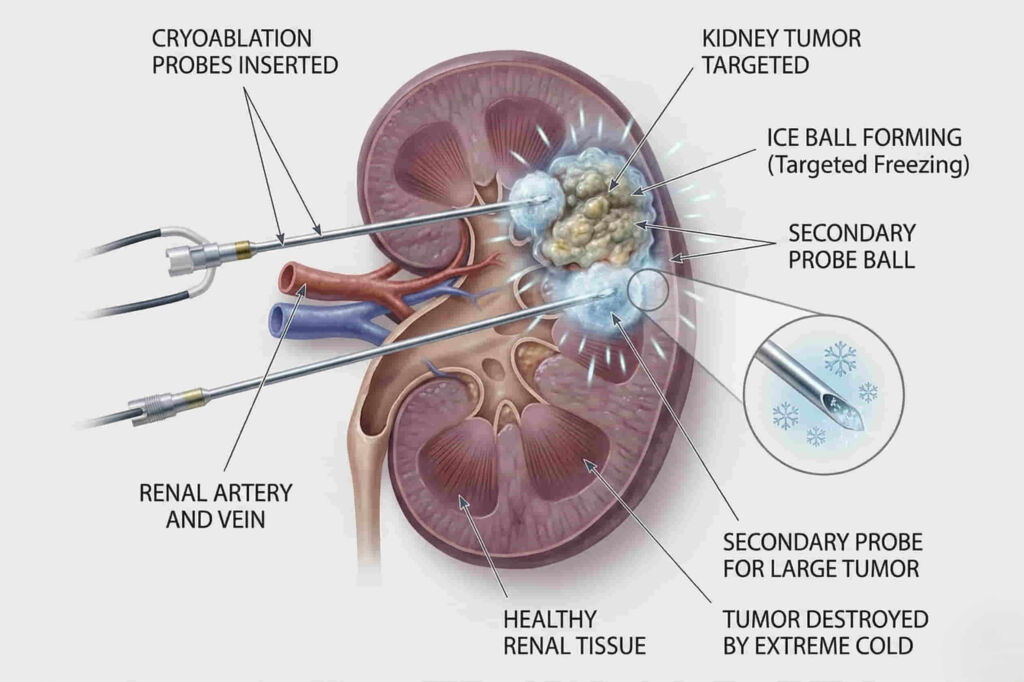
Using advanced image-guided technology, a thin probe is inserted directly into the tumor to precisely freeze and eliminate abnormal cells. This targeted approach reduces complications, shortens recovery time, and offers an effective alternative to traditional kidney surgery.
Impact of Untreated Kidney Tumors
💔 Decline in Kidney Function
Untreated kidney tumors can gradually impair kidney function, increasing the risk of long-term health complications.
💔 Persistent Pain and Discomfort
Flank pain and abdominal discomfort may worsen over time, affecting daily activities and quality of life.
 Fatigue and Weakness
Kidney cancer can cause ongoing fatigue due to anemia and metabolic changes in the body.
Emotional and Mental Stress
Living with untreated kidney cancer may lead to anxiety, stress, and reduced mental well-being.

Advanced Renal Cryoablation Treatment for Kidney Tumors in India
A Safe and Effective Treatment for Small Kidney Tumors Without Major Surgery
Renal cryoablation is a minimally invasive treatment for kidney tumors (renal tumors) that uses extreme cold to destroy cancer cells while preserving healthy kidney tissue. It is commonly recommended for small kidney cancers and patients who are not ideal candidates for surgery.
Using advanced image-guided technology, a thin probe is inserted directly into the tumor to precisely freeze and eliminate abnormal cells. This targeted approach reduces complications, shortens recovery time, and offers an effective alternative to traditional kidney surgery.
Impact of Untreated Kidney Tumors
💔 Decline in Kidney Function
Untreated kidney disease or tumours can gradually impair kidney function, increasing the risk of long-term health complications.
💔 Persistent Pain and Discomfort
Flank pain and abdominal discomfort may worsen over time, affecting daily activities and quality of life.
💔 Fatigue and Weakness
Kidney cancer can cause ongoing fatigue due to anaemia and metabolic changes in the body.
💔 Emotional and Mental Stress
Living with untreated kidney cancer may lead to anxiety, stress, and reduced mental well-being.


How Renal Cryoablation Works for Kidney Tumor Treatment
A minimally invasive treatment that uses extreme cold to destroy kidney tumors while preserving kidney function.
Image-Guided Targeting of Kidney Tumor
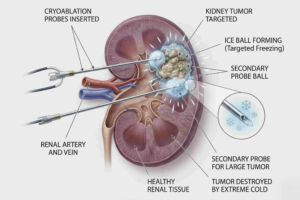
A thin probe (cryo-needle) is carefully inserted through the skin and guided precisely into the kidney tumor using CT or ultrasound imaging. This ensures accurate targeting while avoiding damage to surrounding healthy kidney tissue.
Insertion of Cryoablation Probe
Once positioned, one or more cryo-probes are placed directly into the tumor. These probes are designed to deliver extremely cold temperatures to the targeted area.
Freezing of Tumor Cells (Cryoablation)
gas is used to create an “ice ball” around the tumor, freezing and destroying cancer cells. This controlled freezing process ensures effective tumor destruction while protecting nearby structures.
Thawing and Repeat Freeze Cycles
The tumor is then allowed to thaw, and the freeze cycle may be repeated to ensure complete destruction of cancer cells. This freeze-thaw process increases treatment effectiveness.
Tumor Destruction and Gradual Shrinkage
Over time, the treated tumor cells die and are naturally absorbed by the body. This results in gradual tumor shrinkage and prevents further growth.
Get a complete, detailed explanation of Renal Cryoablation by Dr Ram Kishore
How Renal Cryoablation Works for Kidney Tumor Treatment
A minimally invasive treatment that uses extreme cold to destroy kidney tumors while preserving kidney function.
Image-Guided Targeting of Kidney Tumor
A thin probe (cryo-needle) is carefully inserted through the skin and guided precisely into the kidney tumor using CT or ultrasound imaging. This ensures accurate targeting while avoiding damage to surrounding healthy kidney tissue.
Insertion of Cryoablation Probe
Once positioned, one or more cryo-probes are placed directly into the tumor. These probes are designed to deliver extremely cold temperatures to the targeted area.
Freezing of Tumor Cells (Cryoablation)
gas is used to create an “ice ball” around the tumor, freezing and destroying cancer cells. This controlled freezing process ensures effective tumor destruction while protecting nearby structures.
Thawing and Repeat Freeze Cycles
The tumor is then allowed to thaw, and the freeze cycle may be repeated to ensure complete destruction of cancer cells. This freeze-thaw process increases treatment effectiveness.
Tumor Destruction and Gradual Shrinkage
Over time, the treated tumor cells die and are naturally absorbed by the body. This results in gradual tumor shrinkage and prevents further growth.
Renal Cryoablation vs Kidney Surgery: Which Is Better for Kidney Cancer Treatment?
A detailed comparison of Renal Cryoablation and traditional Partial Nephrectomy based on effectiveness, recovery, and patient outcomes
🛡️ Benefits of Renal Cryoablation Treatment
- No major incisions – Minimally invasive, needle-based procedure with tiny skin entry
- Preserves healthy kidney tissue – Targets only the tumour while protecting kidney function
- Short hospital stay – Same-day or next-day discharge in most cases
- Faster recovery – Resume normal activities within a few days
- Image-guided precision – CT/ultrasound ensures accurate tumour targeting
- Lower risk of complications –Reduced bleeding, infection, and surgical risks
- Effective for small kidney tumours – High success in early-stage renal tumours
⚡ Limitations of Traditional Kidney Surgery (Partial Nephrectomy)
- Surgical incisions required – Open or laparoscopic surgery with cuts
- Loss of healthy kidney tissue – Removal of part of the kidney along with the tumour
- Longer hospital stay – Several days of hospitalization needed
- Extended recovery time – 4–6 weeks for full recovery
- Post-surgical pain – Discomfort and longer healing period
- Not suitable for all patients – Especially advanced or multiple tumours
- General anesthesia risks – Not ideal for elderly or weak patients
Renal Cryoablation vs Kidney Surgery: Which Is Better for Kidney Cancer Treatment?
A detailed comparison of Renal Cryoablation and traditional Partial Nephrectomy based on effectiveness, recovery, and patient outcomes
🛡️ Benefits of Renal Cryoablation Treatment
- No major incisions – Minimally invasive, needle-based procedure with tiny skin entry
- Preserves healthy kidney tissue – Targets only the tumour while protecting kidney function
- Short hospital stay – Same-day or next-day discharge in most cases
- Faster recovery – Resume normal activities within a few days
- Image-guided precision – CT/ultrasound ensures accurate tumour targeting
- Lower risk of complications –Reduced bleeding, infection, and surgical risks
- Effective for small kidney tumours – High success in early-stage renal tumours
⚡ Limitations of Traditional Kidney Surgery (Partial Nephrectomy)
- Surgical incisions required – Open or laparoscopic surgery with cuts
- Loss of healthy kidney tissue – Removal of part of the kidney along with the tumour
- Longer hospital stay – Several days of hospitalization needed
- Extended recovery time – 4–6 weeks for full recovery
- Post-surgical pain – Discomfort and longer healing period
- Not suitable for all patients – Especially advanced or multiple tumours
- General anesthesia risks – Not ideal for elderly or weak patients
★★★★★
“After being diagnosed with a small kidney tumor, I was anxious about undergoing surgery and losing part of my kidney. Renal cryoablation offered a minimally invasive treatment that precisely targeted the tumor using extreme cold while preserving healthy kidney tissue. The procedure was smooth, and I was discharged quickly. My recovery was fast, and follow-up scans showed excellent results. I’m relieved to have treated my kidney tumor without major surgery.

Govinda
Hyderabad, India
Age 46 | 1 years Post – Renal Cryoablation
★★★★★
“When I learned I had a kidney tumor, I was concerned about the risks and long recovery associated with traditional surgery. My doctor recommended renal cryoablation as a safe, image-guided treatment. The procedure was minimally invasive, with very little pain and a short hospital stay. I was back to my normal routine within days, and my kidney function remained unaffected. I’m thankful for this effective kidney cancer treatment option.”

Joseph Paul
Chennai, India
Age 40 | 2.5 years Post – Renal Cryoablation
Real Patient Experiences with Renal Cryoablation Kidney Cancer Treatment
★★★★★
“After being diagnosed with a small kidney tumor, I was anxious about undergoing surgery and losing part of my kidney. Renal cryoablation offered a minimally invasive treatment that precisely targeted the tumor using extreme cold while preserving healthy kidney tissue. The procedure was smooth, and I was discharged quickly. My recovery was fast, and follow-up scans showed excellent results. I’m relieved to have treated my kidney tumor without major surgery.

G Govinda
Hyderabad, India
Age 46 | 2 years Post – Renal Cryoablation
★★★★★
“When I learned I had a kidney tumor, I was concerned about the risks and long recovery associated with traditional surgery. My doctor recommended renal cryoablation as a safe, image-guided treatment. The procedure was minimally invasive, with very little pain and a short hospital stay. I was back to my normal routine within days, and my kidney function remained unaffected. I’m thankful for this effective kidney cancer treatment option.”

Joshep Paul
Chennai, India
Age 40 | 1 years Post – Renal Cryoablation
Frequently Asked Questions About Renal Cryoablation
What exactly is Renal Cryoablation?
Renal Cryoablation is a minimally invasive medical procedure used to treat small kidney tumors by freezing them. Instead of traditional open surgery (Nephrectomy), which involves large incisions and removing part or all of the kidney, cryoablation uses extreme cold to destroy cancer cells while preserving as much healthy kidney function as possible.
It is typically performed by an Interventional Radiologist using real-time imaging guidance, such as a CT scan or ultrasound.
Is Renal Cryoablation a type of surgery?
Technically, Renal Cryoablation is not considered a traditional surgery. Instead, it is classified as a minimally invasive, image-guided procedure performed by an Interventional Radiologist.
While it is an alternative to surgery (like a nephrectomy), there are several key differences in how it is performed and how the body recovers.
How is renal cryoablation different from standard radiation therapy?
While both are alternatives to traditional surgery, Renal Cryoablation and Radiation Therapy (specifically Stereotactic Body Radiotherapy or SBRT) work through entirely different scientific mechanisms and have different clinical strengths.
The most basic difference is that Cryoablation is a physical procedure that kills cells with ice, while SBRT is a non-invasive treatment that kills cells by damaging their DNA.
Will I be radioactive after renal cryoablation?
It is a common point of confusion, but cryoablation uses temperature, not radiation, to treat the tumor. Here is the clear distinction to help your website visitors understand the safety of the procedure:
- cold not radiation
The “killing agent” in cryoablation is extreme cold (typically using Argon gas).
There are no radioactive seeds left in the body.
There is no beam of radiation passing through the tissue.
It is purely a thermal process—think of it like localized “frostbite” targeted specifically at the tumor.
What are the common side effects of Renal Cryoablation?
Renal cryoablation is generally considered very safe, with a much lower risk profile than traditional surgery. However, like any medical procedure, it does have potential side effects. Most are mild and temporary, though a few are more specific to the freezing process.
- Localized Pain or Soreness
- Bruising and Swelling
- Fatigue
- Hematuria
Is renal cryoablation a permanent cure for kidney cancer?
For small, localized tumors (typically under 4cm), cryoablation is highly effective and intended to be a curative treatment. Studies show that its success rates for early-stage kidney cancer are comparable to traditional surgery, but with significantly fewer complications and a much faster recovery time.
I am diabetic — how does Y90 radioembolization help me?
For diabetic patients, renal cryoablation is a superior alternative to surgery because it preserves healthy kidney tissue, crucial for those at risk of diabetic nephropathy. This “pinhole” procedure avoids large incisions, drastically reducing the risk of slow-healing wounds and post-operative infections common in diabetes.
Because cryoablation is minimally invasive, it causes less physical stress, allowing patients to maintain stable blood sugar levels and return to their medication routine immediately. Choosing this nonsurgical kidney cancer treatment ensures faster recovery and better long-term renal health for diabetic individuals.
Is Renal Cryoablatioin is insured in india?
Yes, renal cryoablation is generally covered by health insurance in India, but the extent of coverage depends on your specific policy and how the insurer classifies the treatment.
In 2019, the Insurance Regulatory and Development Authority of India (IRDAI) introduced the “Modern Treatment Benefit,” which mandates that insurers cover 12 advanced medical procedures. While “Renal Cryoablation” is often included under the umbrella of Minimally Invasive Treatments or Ablative Techniques, here is how it typically works:
Frequently Asked Questions About Renal Cryoablation
What exactly is Renal Cryoablation?
Renal Cryoablation is a minimally invasive medical procedure used to treat small kidney tumors by freezing them. Instead of traditional open surgery (Nephrectomy), which involves large incisions and removing part or all of the kidney, cryoablation uses extreme cold to destroy cancer cells while preserving as much healthy kidney function as possible.
It is typically performed by an Interventional Radiologist using real-time imaging guidance, such as a CT scan or ultrasound.
Is Renal Cryoablation a type of surgery?
Technically, Renal Cryoablation is not considered a traditional surgery. Instead, it is classified as a minimally invasive, image-guided procedure performed by an Interventional Radiologist.
While it is an alternative to surgery (like a nephrectomy), there are several key differences in how it is performed and how the body recovers.
How is renal cryoablation different from standard radiation therapy?
While both are alternatives to traditional surgery, Renal Cryoablation and Radiation Therapy (specifically Stereotactic Body Radiotherapy or SBRT) work through entirely different scientific mechanisms and have different clinical strengths.
The most basic difference is that Cryoablation is a physical procedure that kills cells with ice, while SBRT is a non-invasive treatment that kills cells by damaging their DNA.
Will I be radioactive after renal cryoablation?
It is a common point of confusion, but cryoablation uses temperature, not radiation, to treat the tumor. Here is the clear distinction to help your website visitors understand the safety of the procedure:
- cold not radiation
The “killing agent” in cryoablation is extreme cold (typically using Argon gas).
There are no radioactive seeds left in the body.
There is no beam of radiation passing through the tissue.
It is purely a thermal process—think of it like localized “frostbite” targeted specifically at the tumor.
What are the common side effects of Renal Cryoablation?
Renal cryoablation is generally considered very safe, with a much lower risk profile than traditional surgery. However, like any medical procedure, it does have potential side effects. Most are mild and temporary, though a few are more specific to the freezing process.
- Localized Pain or Soreness
- Bruising and Swelling
- Fatigue
- Hematuria
Is renal cryoablation a permanent cure for kidney cancer?
For small, localized tumors (typically under 4cm), cryoablation is highly effective and intended to be a curative treatment. Studies show that its success rates for early-stage kidney cancer are comparable to traditional surgery, but with significantly fewer complications and a much faster recovery time.
I am diabetic — how does Y90 radioembolization help me?
For diabetic patients, renal cryoablation is a superior alternative to surgery because it preserves healthy kidney tissue, crucial for those at risk of diabetic nephropathy. This “pinhole” procedure avoids large incisions, drastically reducing the risk of slow-healing wounds and post-operative infections common in diabetes.
Because cryoablation is minimally invasive, it causes less physical stress, allowing patients to maintain stable blood sugar levels and return to their medication routine immediately. Choosing this nonsurgical kidney cancer treatment ensures faster recovery and better long-term renal health for diabetic individuals.
Is Renal Cryoablatioin is insured in india?
Yes, renal cryoablation is generally covered by health insurance in India, but the extent of coverage depends on your specific policy and how the insurer classifies the treatment.
In 2019, the Insurance Regulatory and Development Authority of India (IRDAI) introduced the “Modern Treatment Benefit,” which mandates that insurers cover 12 advanced medical procedures. While “Renal Cryoablation” is often included under the umbrella of Minimally Invasive Treatments or Ablative Techniques, here is how it typically works:
Your Life Doesn't Have to Be Controlled by a Tumour
Thousands of women have reclaimed their freedom through UFE, a safe and minimally invasive treatment for uterine fibroids. You don’t have to live with constant pain, heavy bleeding, or exhaustion. You deserve relief without major surgery or long recovery. Take control of your health and take the first step toward a life free from fibroid symptoms today.
Available in Hyderabad & Chennai | Cleveland Clinic Trained | 14+ Years Experience | 90% Success Rate
First Consultation is Risk-Free: Meet with Dr. Kishore, discuss your symptoms, and explore all treatment options. No pressure, no obligation. We’re here to help you make the best decision for your health.
Your Life Doesn't Have to Be Controlled by a Tumour
Thousands of women have reclaimed their freedom through UFE, a safe and minimally invasive treatment for uterine fibroids. You don’t have to live with constant pain, heavy bleeding, or exhaustion. You deserve relief without major surgery or long recovery. Take control of your health and take the first step toward a life free from fibroid symptoms today.
Available in Hyderabad & Chennai | Cleveland Clinic Trained | 14+ Years Experience | 90% Success Rate
First Consultation is Risk-Free: Meet with Dr. Kishore, discuss your symptoms, and explore all treatment options. No pressure, no obligation. We’re here to help you make the best decision for your health.