Many men assume that frequent bathroom visits, a weak urine stream, or waking up multiple times at night are simply part of aging. While these symptoms are common, they are often caused by an enlarged prostate, a condition known as benign prostatic hyperplasia (BPH). Left untreated, these symptoms can significantly affect sleep, daily activities, and overall quality of life.
The good news is that enlarged prostate treatment without surgery is now possible through advanced image-guided techniques. One of the most effective options available today is prostate artery embolization (PAE), a minimally invasive treatment that helps shrink the prostate and improve urinary symptoms without the need for major surgery.
What Is an Enlarged Prostate?
An enlarged prostate occurs when the prostate gland gradually increases in size as men age. This condition, medically known as benign prostatic hyperplasia (BPH), is extremely common, affecting nearly half of men over the age of 50 and an even higher percentage of men over 60.
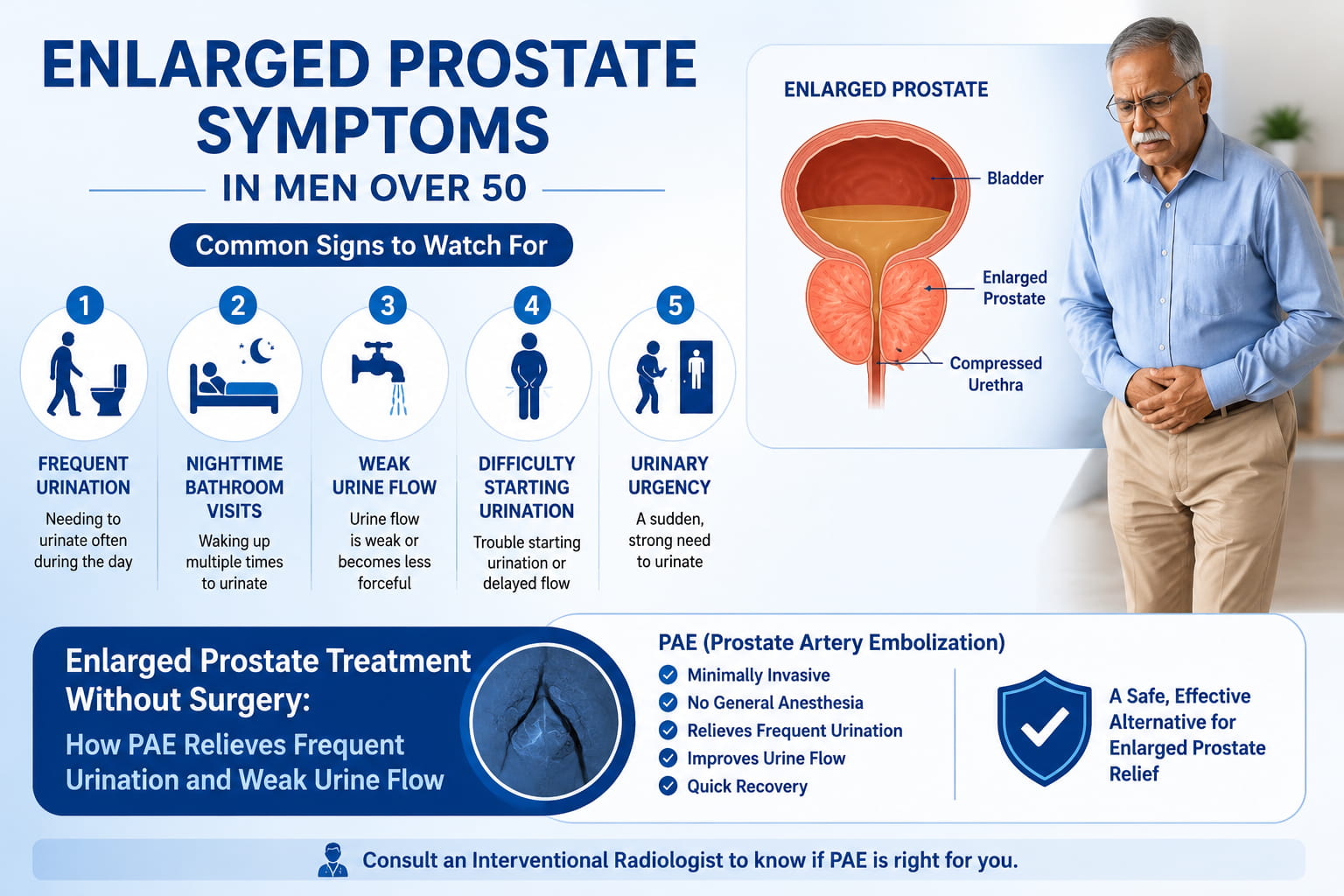
As the prostate enlarges, it places pressure on the urethra, the tube that carries urine from the bladder. This pressure restricts urine flow and leads to bothersome urinary symptoms.
Many men seek enlarged prostate treatment without surgery because they want relief from symptoms while avoiding the risks and recovery associated with traditional surgical procedures.
Common Enlarged Prostate Symptoms
Recognizing enlarged prostate symptoms early can help prevent complications and improve quality of life.
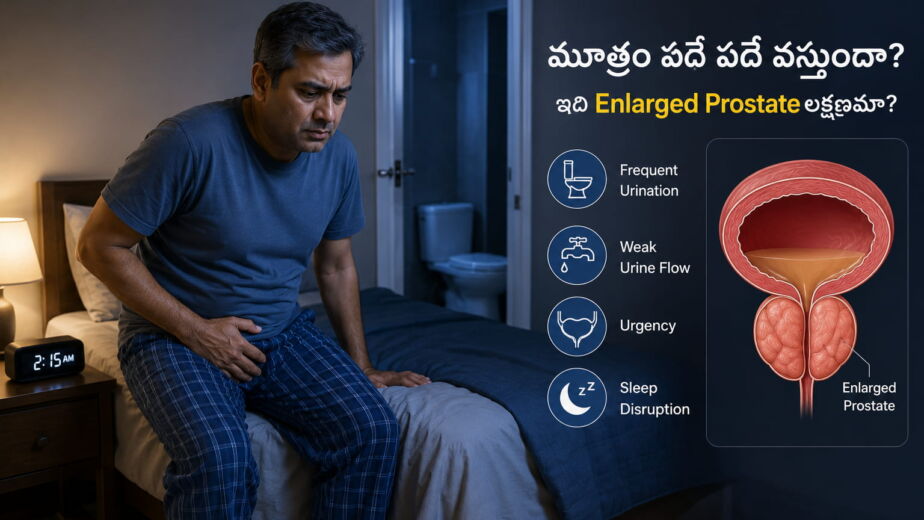
Some of the most common enlarged prostate symptoms include:
- Frequent need to urinate during the day
- Waking up multiple times at night to urinate
- Difficulty starting urination
- Weak urine stream
- Feeling that the bladder does not empty completely
- Sudden urgency to urinate
- Dribbling after urination
Many patients experiencing frequent urination in men initially ignore these symptoms, believing they are a normal part of ageing. However, persistent symptoms should be evaluated by a specialist.
Why Does an Enlarged Prostate Cause Frequent Urination and Weak Flow?
The prostate surrounds the urethra. As it grows larger, it compresses the urinary channel, making it harder for urine to pass freely.
This leads to:
- Reduced urine flow
- Increased bladder pressure
- Incomplete bladder emptying
- Frequent urges to urinate
As a result, frequent urination in men becomes more common, especially at night. Many men also experience frustration from a slow or weak urinary stream that disrupts their daily routine.
If left untreated, benign prostatic hyperplasia (BPH) may increase the risk of urinary retention, bladder stones, recurrent urinary infections, and kidney complications.
Can Enlarged Prostate Be Treated Without Surgery?
Yes. Advances in interventional radiology have made enlarged prostate treatment without surgery a reality for many patients.
Traditionally, men with moderate to severe prostate enlargement were often advised to undergo surgery such as TURP (Transurethral Resection of the Prostate) or HoLEP. While effective, these procedures may involve hospitalization, anaesthesia, and longer recovery periods.
Today, enlarged prostate treatment without surgery can be achieved using prostate artery embolization, offering symptom relief without cutting, removing, or burning prostate tissue.
What Is Prostate Artery Embolization (PAE)?
Prostate artery embolization is an advanced image-guided procedure performed by an interventional radiologist.
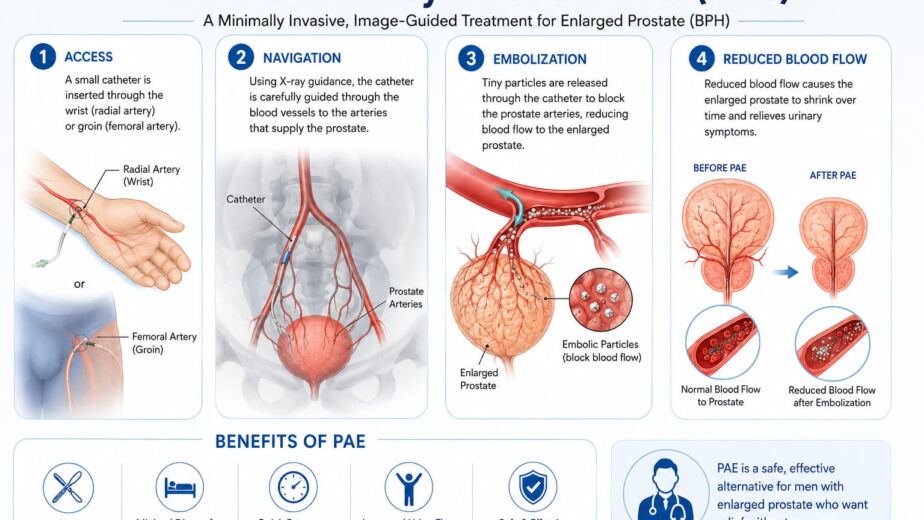
During prostate artery embolization, a tiny catheter is inserted through an artery in the wrist or groin. Using real-time imaging, the catheter is carefully guided to the arteries supplying blood to the prostate.
Microscopic particles are then injected to reduce blood flow to the enlarged prostate. Over time, the prostate naturally shrinks, relieving pressure on the urethra and improving urinary function.
Unlike surgery, prostate artery embolization does not involve incisions, tissue removal, or prolonged hospital stays.
How PAE Relieves Frequent Urination and Weak Urine Flow
The success of prostate artery embolization lies in its ability to target the root cause of prostate enlargement.
When blood flow to the prostate is reduced:
- The prostate gradually decreases in size
- Pressure on the urethra is relieved
- Urine flow improves
- Bladder emptying becomes easier
- Nighttime urination decreases
Many patients report significant improvement in frequent urination in men within weeks of treatment. Symptoms continue to improve as the prostate shrinks over the following months.
For patients seeking enlarged prostate treatment without surgery, PAE offers an effective alternative that focuses on symptom relief while preserving quality of life.
Benefits of PAE for Enlarged Prostate
There are several reasons why more men are choosing enlarged prostate treatment without surgery through PAE.
Key Benefits Include:
- No major surgical incision
- Same-day discharge in most cases
- Faster return to daily activities
- Lower risk of sexual side effects
- Reduced risk of urinary incontinence
- Effective symptom relief
- Preservation of prostate tissue
Because PAE is a non-surgical prostate treatment, many patients appreciate the ability to avoid hospitalization and lengthy recovery periods.
Who Is a Good Candidate for PAE?
PAE may be suitable for:
- Men with moderate to severe urinary symptoms
- Patients seeking enlarged prostate treatment without surgery
- Men who have not responded well to medications
- Individuals wishing to avoid traditional surgery
- Patients with other medical conditions that increase surgical risk
A detailed evaluation including imaging studies, symptom scoring, and medical history helps determine whether prostate artery embolization is the right treatment option.
What Is the Recovery Like After PAE?
One of the biggest advantages of PAE is the relatively short prostate embolization recovery time.
Most patients:
- Return home the same day
- Resume light activities within 24–48 hours
- Return to normal routines within a few days
- Experience gradual symptom improvement over several weeks
Compared with traditional surgery, the prostate embolization recovery time is generally much shorter, making it an attractive option for active individuals.
PAE vs Traditional Surgery
When comparing treatment options, many patients prefer a minimally invasive prostate procedure that offers effective symptom relief with less disruption to their lives.
| Feature | PAE | TURP |
| Incisions | No | Yes |
| Hospital Stay | Usually Same Day | Often Required |
| Recovery Time | Few Days | Several Weeks |
| Sexual Side Effects | Lower Risk | Higher Risk |
| General Anaesthesia | Usually Not Required | Often Required |
This makes PAE an appealing weak urine flow treatment for men seeking a less invasive solution.
When Should You See a Specialist?
If you experience persistent urinary symptoms, it may be time to seek medical advice.
Consult a specialist if you have:
- Frequent night-time urination
- Weak urine stream
- Difficulty emptying your bladder
- Urinary urgency
- Interrupted sleep due to urinary symptoms
Early evaluation can help identify benign prostatic hyperplasia (BPH) and determine whether prostate artery embolization is appropriate for your condition.
Conclusion
Living with an enlarged prostate does not mean you have to accept frequent bathroom trips, poor sleep, or a weak urine stream. Modern advances in interventional radiology have made enlarged prostate treatment without surgery more accessible than ever.
For many men, prostate artery embolization offers a safe and effective alternative to traditional surgery. By targeting the blood supply to the prostate, PAE helps relieve urinary symptoms, improve quality of life, and provide lasting relief without major surgery.
If you’re experiencing enlarged prostate symptoms, frequent urination in men, or looking for an effective enlarged prostate treatment without surgery, consult Dr. Ram Kishore Gurajala to learn whether PAE may be the right solution for you.