If you and your partner have been trying to conceive without success, or if you have been experiencing unexplained left testicular pain and discomfort, varicocele could be the answer you have been missing. Many men first hear about varicocele only after facing fertility concerns or persistent scrotal discomfort, yet the majority of men have never heard of it until they face a fertility crisis. While some men experience discomfort or visible swelling, others discover the condition only during fertility testing. Understanding the connection between varicocele and male infertility is important because early diagnosis and timely varicocele treatment may improve both symptoms and reproductive health.
For men struggling with unexplained fertility concerns, low sperm count, or persistent scrotal discomfort, learning the signs of varicocele can help identify whether this condition is affecting long-term health and fertility.
This guide explains everything you need to know: what varicocele is, its signs, how it is linked to male infertility causes, and why a non-surgical option may be the best choice for you.
 Quick Answer: Yes — varicocele is the single most common correctable cause of male infertility, found in up to 40% of infertile men. The good news: it is treatable, often without surgery. Quick Answer: Yes — varicocele is the single most common correctable cause of male infertility, found in up to 40% of infertile men. The good news: it is treatable, often without surgery. |
What Is a Varicocele?
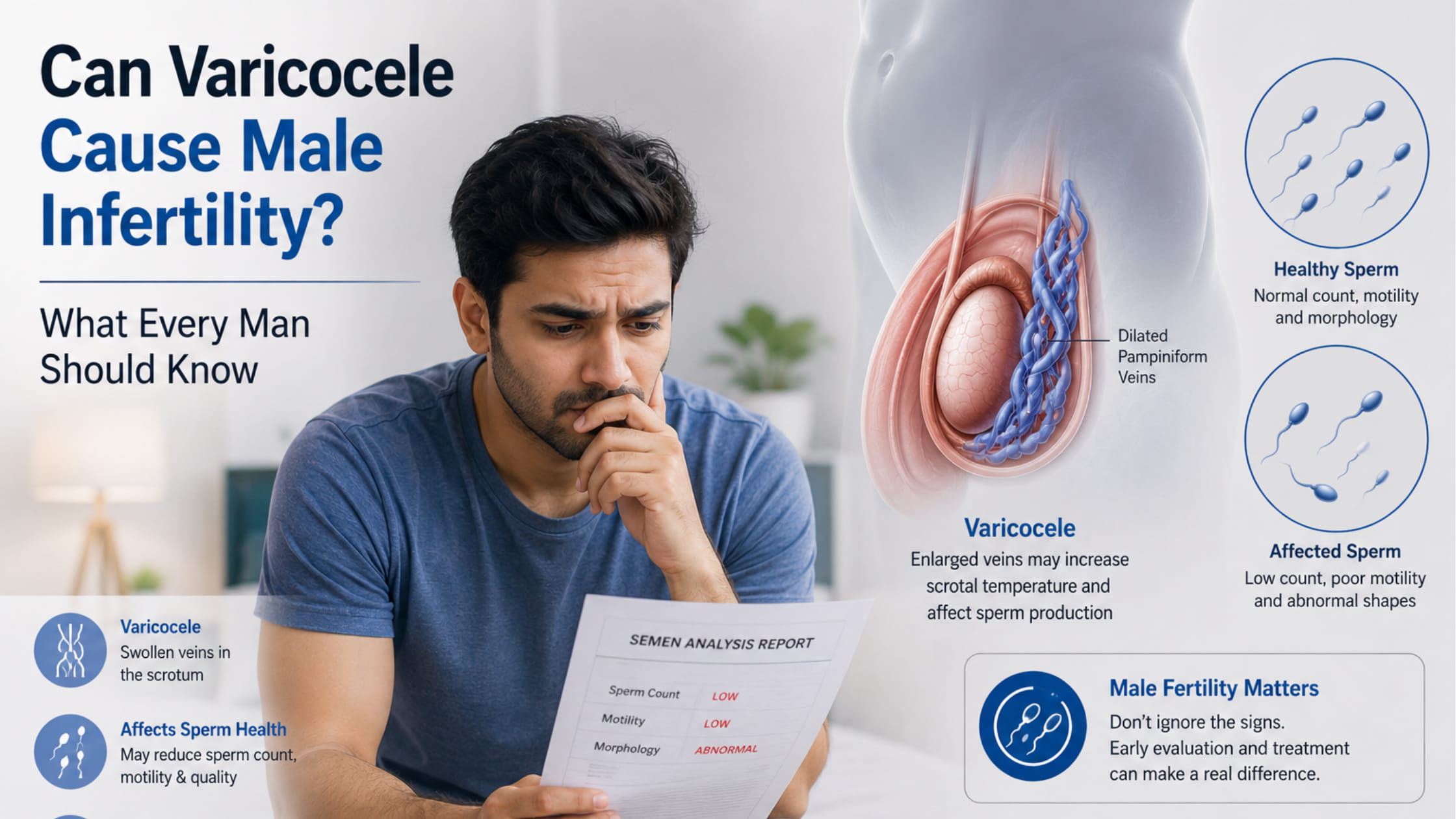
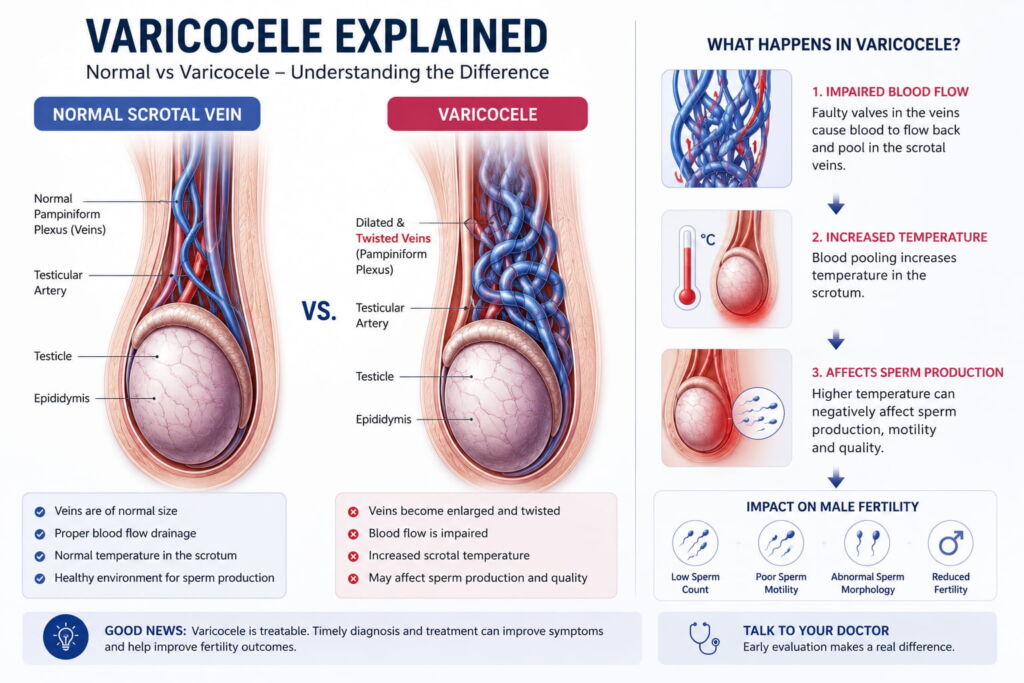
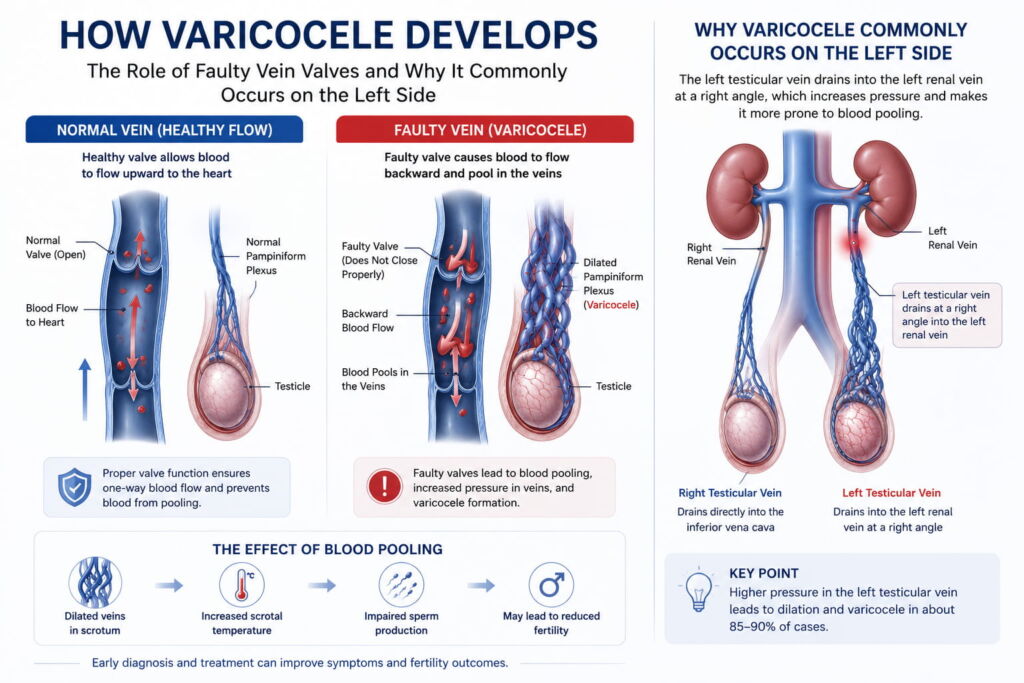
A varicocele is an abnormal enlargement of the veins inside the scrotum, the loose pouch of skin that holds the testicles. These enlarged veins in the scrotum (known medically as the pampiniform plexus) behave much like varicose veins in the legs. These veins help regulate the temperature around the testicles, which plays a critical role in sperm production and reproductive function.
Varicocele affects approximately 15% of all adult men and is found in up to 40% of men who present with fertility problems. It is more common on the left side, because the left testicular vein drains at a right angle into the left renal vein, creating higher pressure. In some men, it occurs on both sides simultaneously.
In some patients, the condition may present as enlarged veins in the scrotum, while others may have no visible symptoms at all.
What Causes Varicocele?
A varicocele develops when the small valves inside the testicular veins stop functioning properly. Instead of allowing blood to flow upward, these faulty valves allow blood to collect within the veins, causing them to enlarge gradually.
The condition most commonly affects the left side because the anatomy of the left testicular vein creates greater pressure within the venous system. This is why some men experience left testicular pain or heaviness more commonly than discomfort on the right side.
Key contributing factors include:
- Valve dysfunction — the primary cause in the majority of cases
- Anatomical differences — the left testicular vein’s angle of drainage makes it more susceptible
- Rapid growth during puberty — increased blood flow can trigger valve failure in adolescents
- Elevated abdominal pressure — heavy lifting, prolonged standing, or underlying abdominal masses
- Family history — a genetic predisposition to weak vein walls or faulty valves
Because the condition develops slowly, many men remain unaware of it until symptoms become noticeable or fertility issues arise.
Common Symptoms of Varicocele
The symptoms of varicocele can vary widely from one person to another. Some men have no symptoms at all, while others experience persistent discomfort that gradually worsens over time.
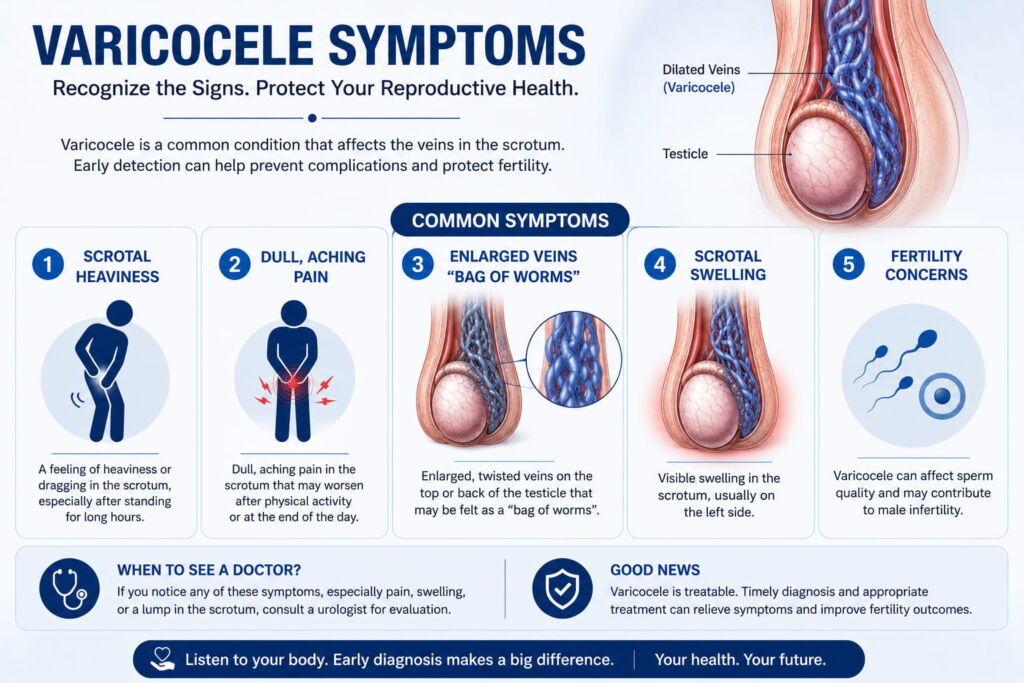
Common signs of varicocele include:
- A dull, dragging ache in the scrotum
- Heaviness or discomfort after standing for long periods
- Swelling or enlarged veins within the scrotum
- Visible veins that may feel like a “bag of worms”
- One testicle appearing smaller than the other
- Fertility problems or abnormal semen analysis
Many men ignore these symptoms because they develop slowly and are often mild initially. However, persistent symptoms should not be overlooked, especially when fertility concerns are present.
Recognising the early signs of varicocele can help patients seek timely evaluation before long-term complications develop.
It is important to note that the signs of varicocele are easy to miss or attribute to other causes. If you have been experiencing any of the above symptoms for more than a few weeks, particularly in combination with fertility problems in men, a best specialist evaluation is strongly recommended.
 Important: Varicocele symptoms are often silent. Many men only discover the condition after a semen analysis reveals low sperm count or poor sperm motility during a fertility workup. Important: Varicocele symptoms are often silent. Many men only discover the condition after a semen analysis reveals low sperm count or poor sperm motility during a fertility workup. |
Can Varicocele Affect Fertility?
Yes. Research has consistently shown a strong connection between varicocele and male infertility. In fact, varicocele is considered one of the most common reversible causes of reduced male fertility.
The condition can affect fertility in several ways:
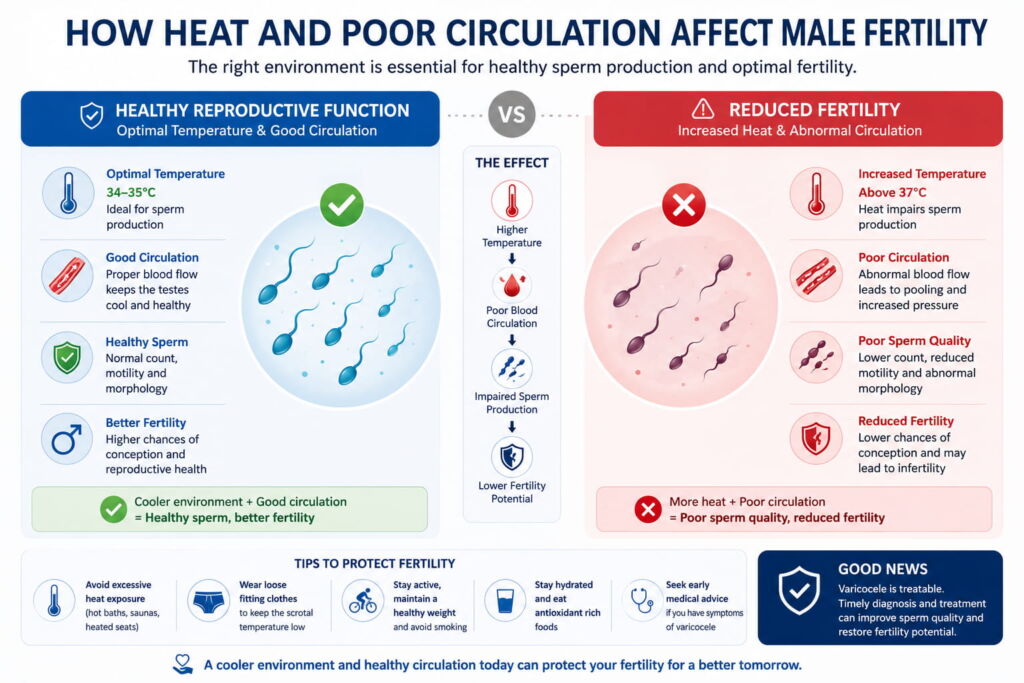
Increased Heat Around the Testicles
Healthy sperm production requires a slightly cooler temperature than normal body temperature. Enlarged veins disrupt this natural cooling system, exposing the testicles to excess heat.
Reduced Sperm Quality
Varicocele may reduce the following:
- Sperm count
- Sperm motility (movement)
- Sperm morphology (shape)
This is one reason why varicocele is frequently discussed among male infertility causes.
Oxidative Stress and Blood Flow Changes
Poor venous circulation may expose the testicles to oxidative stress, which can damage sperm cells over time.
Hormonal Effects
In some men, testosterone production may also be affected.
Because of these factors, many fertility specialists evaluate varicocele during investigations for low sperm count causes and unexplained infertility.
Not every varicocele causes fertility problems. However, when abnormal semen parameters, pain, or testicular changes are present, appropriate varicocele treatment may significantly improve outcomes.
How Is Varicocele Diagnosed?
Diagnosis usually begins with a detailed medical history and physical examination. During the examination, the enlarged veins may become more noticeable when standing or straining.
Additional testing may include:
- Physical examination
A trained physician can grade a varicocele (Grade I to III) on physical examination. Grade III varicoceles are visible to the naked eye; grade I are only palpable during the Valsalva maneuver.
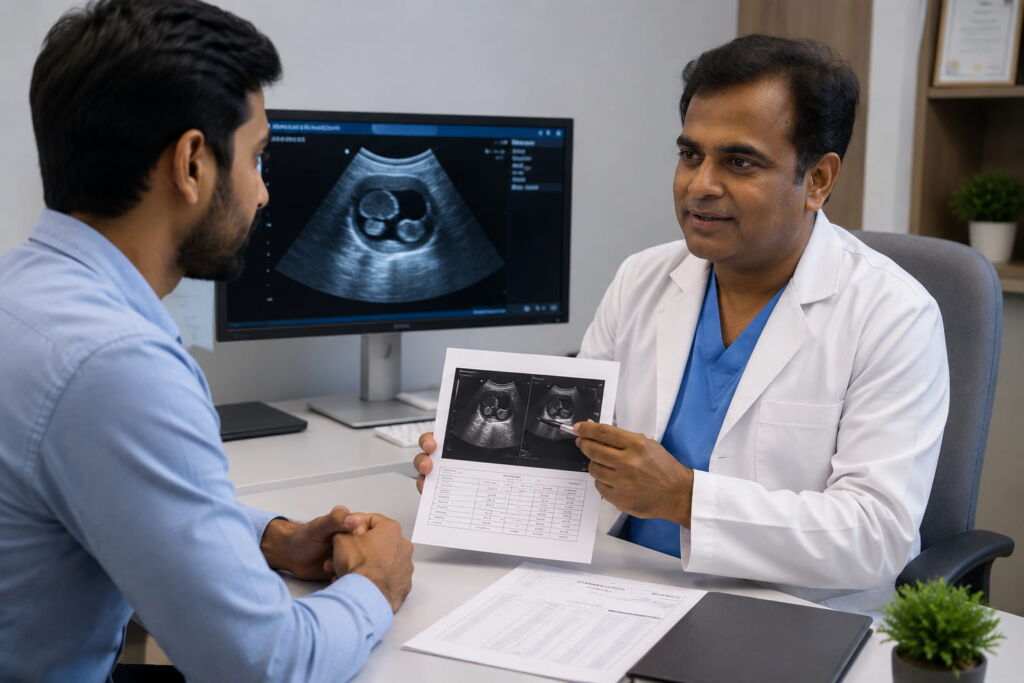
- Scrotal Doppler Ultrasound
The gold standard imaging investigation. It confirms venous reflux, measures vein diameter, and identifies subclinical varicoceles not detected on physical examination.
- Semen analysis
Two samples were collected at least two weeks apart to assess sperm count, motility, morphology, and volume. This guides treatment decisions.
- Hormonal profile
In selected patients, hormone testing may also be recommended.
FSH, LH, and testosterone levels may be checked if testicular atrophy is suspected.
Because male infertility causes can vary significantly between individuals, proper evaluation is important before deciding on treatment.
At ir4ubyram.com, Dr. Ram Kishore Gurajala offers comprehensive varicocele evaluation at his clinics in Hyderabad and Chennai, combining clinical examination with high-resolution scrotal ultrasound to arrive at a precise diagnosis before recommending varicocele treatment.
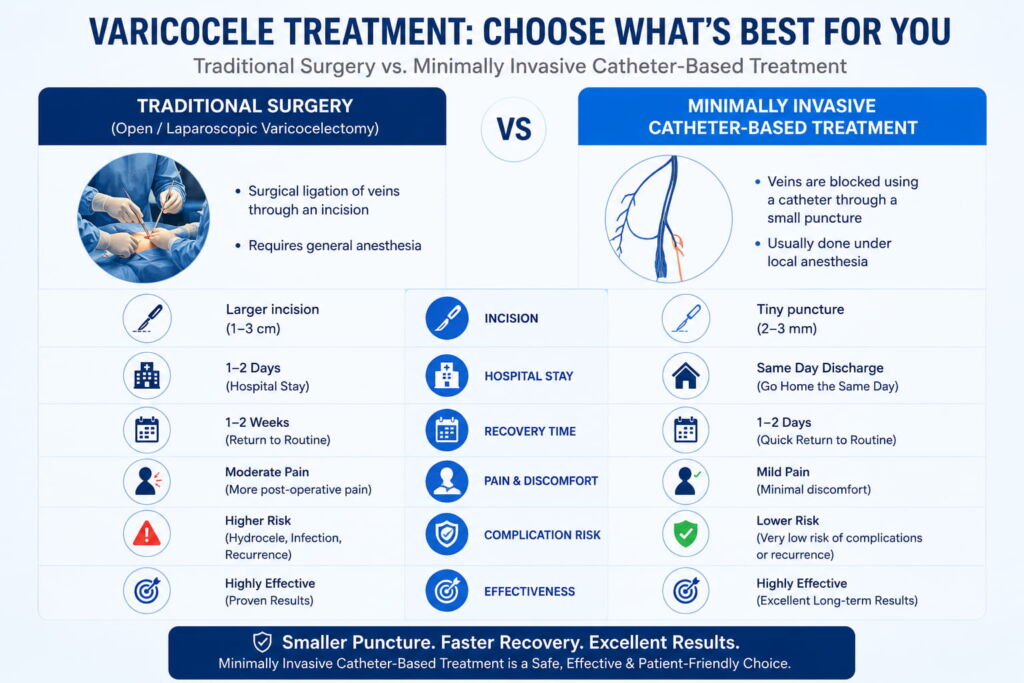
Varicocele Surgery vs Varicocele Embolization
Once diagnosed, the two main treatment options are surgical ligation (varicocelectomy) and varicocele embolization a minimally invasive, non-surgical procedure performed by an interventional radiologist. Both options aim to block the abnormal veins and redirect blood flow through healthy channels, improving scrotal temperature and restoring sperm production.
| Feature | Varicocele Surgery | Varicocele Embolization |
| Procedure type | Open surgical / Laparoscopic | Minimally invasive, image-guided |
| Anaesthesia | General anaesthesia required | Local anaesthesia only |
| Hospital stay | 1–2 days | Day procedure — home same day |
| Recovery time | 2–4 weeks | 1–3 days |
| Scarring | Incision scar | No scar — needle-size entry |
| Success rate | 85–95% | 85–95% (equally effective) |
| Pain | Moderate post-op pain | Minimal discomfort |
| Recurrence risk | 3–5% | 10–15% |
| Best for | Bilateral or complex cases | Most clinical varicoceles |
Varicocele embolization is performed under local anesthesia. A fine catheter is guided through a small nick in the groin or neck vein using real-time X-ray imaging. The affected testicular vein is identified and sealed using tiny coils or a sclerosing agent—no incision, no general anesthesia, and no hospital stay. The patient goes home the same day and can typically return to work within 24–48 hours.
This approach is as effective as surgery for most clinical varicoceles, with a significantly shorter recovery time and lower procedural risk. For men who value rapid return to normal activity and for those who wish to avoid general anesthesia, embolization is a compelling first choice.
When Should You See a Specialist?
Do not wait until infertility becomes a crisis. You should seek an evaluation for varicocele treatment if:
- You have been trying to conceive for more than 6–12 months without success
- A semen analysis has revealed a low sperm count, poor motility, or abnormal morphology
- You are experiencing persistent left testicular pain or a feeling of heaviness in the scrotum
- You can feel or see unusual veins in the scrotum
- You have been told by a urologist that surgery is your only option always seek a second opinion from an interventional radiologist in Hyderabad and Chennai
Varicocele treatment in Hyderabad and Chennai is available at Dr. Ram’s clinics, where the full journey from diagnosis to embolization can be completed within a single week. Early intervention delivers better fertility outcomes and prevents progressive testicular damage.
Don’t Ignore the Signs Your Body Is Giving You
Varicocele is one of the most common and treatable causes of male infertility, yet many men continue to live with symptoms for years without realizing the impact it may have on fertility, hormone balance, and long-term reproductive health.
If you are experiencing scrotal discomfort, visible swelling, or fertility concerns, early evaluation can make a significant difference. Modern, minimally invasive non-surgical treatment options can help relieve symptoms, improve sperm quality, and support better reproductive outcomes without major surgery.
If you want to understand whether a varicocele may be affecting your fertility or quality of life, consulting a specialist can help you explore the safest and most effective treatment options available.
 Book a Consultation with Dr. Ram Kishore Gurajala
Learn More About Minimally Invasive Varicocele Treatment in Hyderabad & Chennai