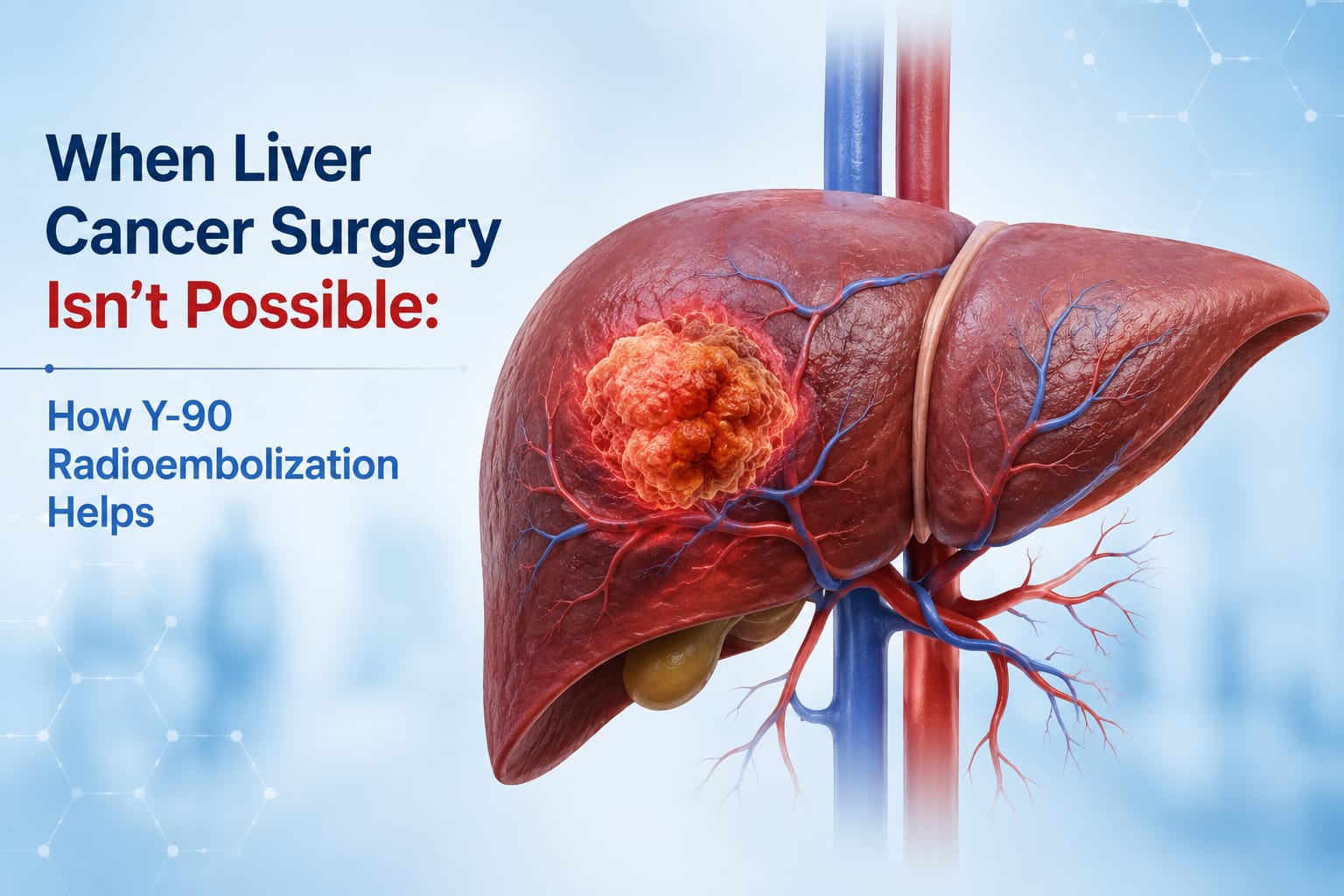
A diagnosis of liver cancer can be overwhelming, especially when patients are told that surgery may not be possible. Hearing that you are not a candidate for liver cancer surgery is one of the most frightening moments a patient or family can face. Many patients assume their treatment options are limited, but advances in modern medicine have changed that reality with Y-90 radioembolization. Today, innovative therapies such as Y-90 radioembolization offer new hope for patients with inoperable liver cancer.
This advanced, minimally invasive treatment targets liver tumors from the inside, delivering radiation directly to the cancer while preserving as much healthy liver tissue as possible.
Unlike traditional approaches that may not be suitable for every patient, Y-90 radioembolization provides an effective option for selected individuals who cannot undergo surgery due to the size, location, number of tumors, or underlying liver disease.
Understanding how Y-90 works can help patients and families make informed decisions about their care and explore treatment options that may not have been available in the past.
In this blog, we’ll explain what Y-90 radioembolization is, how it works, who may benefit from it, and what to expect if your doctor recommends it as part of your liver cancer treatment plan.
Recognising the Signs: Symptoms of Liver Cancer
Liver cancer is often called a “silent” disease because early tumours rarely cause noticeable problems. By the time symptoms of liver cancer appear, the disease has frequently progressed one reason many patients are told surgical removal is no longer possible.
Common hepatocellular carcinoma symptoms (HCC is the most frequent type of primary liver cancer) include:
- Unexplained weight loss and loss of appetite
- Pain or swelling in the upper right abdomen
- Yellowing of the skin or eyes (jaundice)
- Persistent fatigue and weakness
- Swelling in the legs or abdomen (ascites)
Because symptoms of liver cancer can be subtle or mistaken for other conditions, regular medical evaluation is important for individuals at higher risk.
If you or a loved one notice these symptoms of liver cancer, prompt evaluation by a liver specialist or interventional radiologist matters. Doctors often look closely for hepatocellular carcinoma symptoms specifically, since HCC tends to respond well to image-guided treatments even when surgery is off the table. Early detection widens your options, but even at later stages, effective non-surgical paths like Y-90 still exist.
Why Surgery Is Not Always Possible
Surgery can be highly effective when liver tumors are detected early and are confined to specific areas of the liver. However, many patients are diagnosed at a stage where surgery may not be the safest or most effective option.
Several factors may make surgery difficult:
- Multiple tumors within the liver
- Tumors located near critical blood vessels
- Reduced liver function
- Advanced age or other medical conditions
- Cancer that has spread within the liver
In these situations, physicians often explore alternative approaches for liver cancer treatment that can help control the disease while preserving liver function.
For patients seeking inoperable liver cancer treatment, minimally invasive therapies may offer new possibilities when traditional surgery is not suitable.
What Is Y-90 Radioembolization?
Y-90 radioembolization is an advanced image-guided treatment performed by an interventional radiologist.
Unlike traditional radiation therapy, Y-90 radioembolization delivers radiation directly to the tumor through its blood supply. This allows high-dose treatment to reach cancer cells while minimizing exposure to healthy liver tissue.
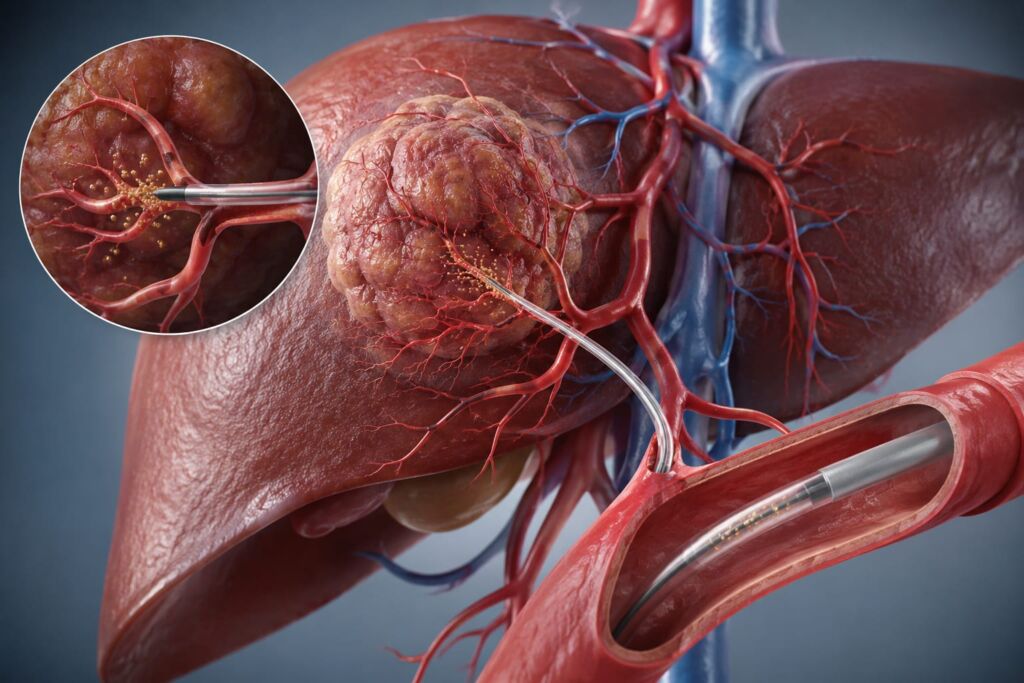
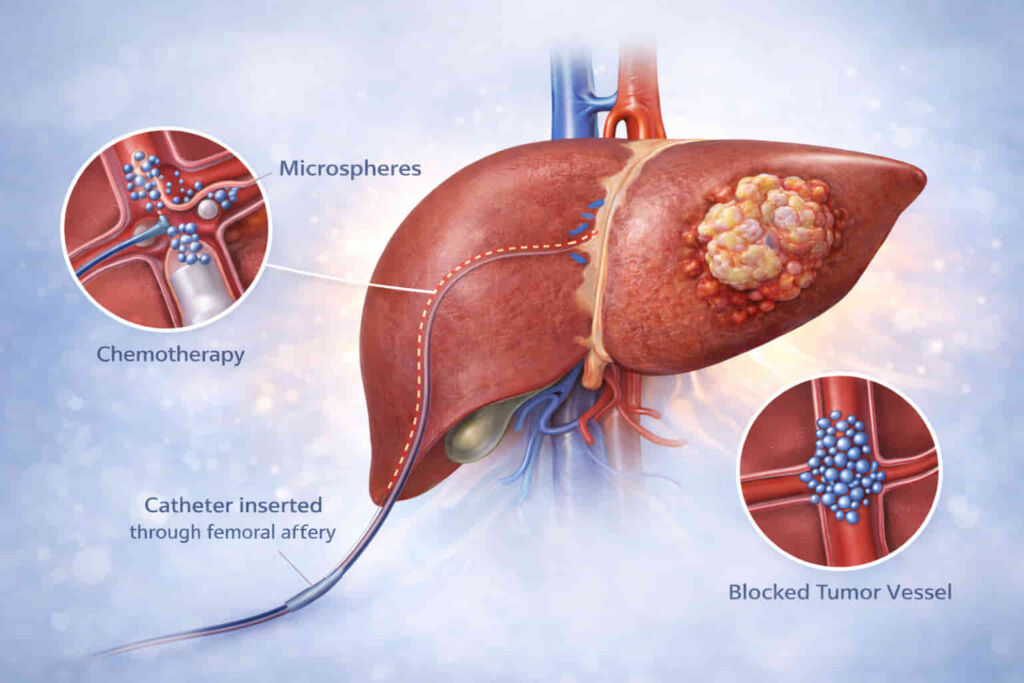
The treatment uses microscopic radioactive beads containing Yttrium-90. These particles are carefully delivered through a catheter into the arteries feeding the tumor.
This targeted approach makes radioembolization an important option for patients who may not qualify for surgery but still require effective liver cancer treatment.
How Y-90 Radioembolization Works
The liver receives blood from multiple vessels, but liver tumors depend heavily on the hepatic artery for their blood supply.
During the procedure:
Step 1: Vascular Mapping
A detailed angiogram is performed to map the blood vessels supplying the tumor.
Step 2: Catheter Placement
A thin catheter is inserted through a tiny puncture in the wrist or groin and guided to the arteries feeding the tumor.
Step 3: Delivery of Treatment
Millions of microscopic radioactive particles are delivered directly into the tumor circulation.
Step 4: Targeted Radiation
The beads release localized radiation over several days, destroying cancer cells while protecting healthy liver tissue.
This form of Liver tumour embolization combines targeted blood vessel therapy with radiation treatment, making it highly effective for selected patients.
Who Is a Candidate for Y-90 Radioembolization?
Not every patient with liver cancer requires surgery. Many patients may benefit from Y-90 radioembolization, especially when surgical options are limited.
Potential candidates include:
- Patients with primary liver cancer
- Patients with tumors confined primarily to the liver
- Individuals who are not suitable for surgery
- Patients awaiting liver transplantation
- Individuals seeking advanced inoperable liver cancer treatment
A thorough evaluation by a multidisciplinary team helps determine whether Y-90 radioembolization is the right option.
Benefits of Y-90 Radioembolization
Several advantages make this has an increasingly important option in modern liver cancer treatment.
Highly Targeted Treatment
Radiation is delivered directly into the tumor rather than throughout the entire body.
Preserves Healthy Liver Tissue
Because treatment is focused on the tumor, healthy liver tissue receives minimal exposure.
Minimally Invasive Procedure
No large incisions are required, resulting in less discomfort and faster recovery.
Effective Option for Inoperable Cases
Patients seeking inoperable liver cancer treatment often benefit from this targeted approach when surgery is not feasible.
Can Be Combined with Other Treatments
Y-90 radioembolization may be used alongside systemic therapies or as part of a broader treatment plan.
Y-90 Radioembolization vs Traditional Treatments
When comparing treatment options, physicians consider tumor size, location, liver function, and overall health.
| Treatment | Surgery | Chemotherapy | Y-90 Radioembolization |
| Invasive | Yes | No | No |
| Hospital Stay | Often Required | No | Usually Short |
| Targets Tumor Directly | Yes | Limited | Yes |
| Preserves Healthy Liver | Variable | Limited | Excellent |
| Suitable for Inoperable Cases | No | Sometimes | Yes |
For many patients, Y-90 radioembolization provides an effective balance between disease control and quality of life.
What Is Recovery Like After Y-90 Treatment?
Most patients tolerate the procedure well and are discharged on the same day or within 24 hours.
The Y-90 radioembolization recovery process is generally quicker than recovery from major liver surgery.
Patients may experience:
- Mild fatigue
- Temporary abdominal discomfort
- Low-grade fever
- Mild nausea
Most individuals return to normal daily activities within a few days.
Follow-up imaging is performed to assess treatment response and monitor tumor shrinkage.
Understanding Yttrium-90 Therapy
Many patients ask how yttrium 90 therapy differs from conventional radiation treatment.
Unlike external beam radiation, yttrium 90 therapy delivers radiation internally through the tumor’s blood vessels. This allows physicians to deliver high doses directly to cancer cells while minimizing damage to surrounding tissues.
This precision is one of the reasons why liver cancer treatment using Y-90 has become an important part of modern interventional oncology.
When Should You Consult a Specialist?
If you or a loved one has been diagnosed with liver cancer and surgery is not possible, it is important to explore all available treatment options. Patients experiencing symptoms of liver cancer or hepatocellular carcinoma symptoms should seek timely evaluation to determine the most appropriate treatment strategy.
An interventional radiology consultation can help identify whether Y-90 radioembolization may be suitable as part of a personalized liver cancer treatment plan.
A Path Forward, Not a Dead End
Being told that surgery is not an option for liver cancer can feel overwhelming, but it does not mean your treatment options have run out. For many patients requiring inoperable liver cancer treatment, Y-90 radioembolization has helped control tumor growth, preserve liver function, and improve quality of life.
If you or someone you love has been told that liver cancer surgery is not possible, speaking with an experienced interventional radiologist can help you understand the available treatment options and the next steps in your care.
Dr. Ram Kishore Gurajala, a Cleveland Clinic-trained Interventional Radiologist with over 13 years of experience, provides advanced Y-90 radioembolization and liver cancer treatment consultations for patients in Hyderabad and Chennai.
Book a Consultation to learn whether Y-90 radioembolization may be right for you.