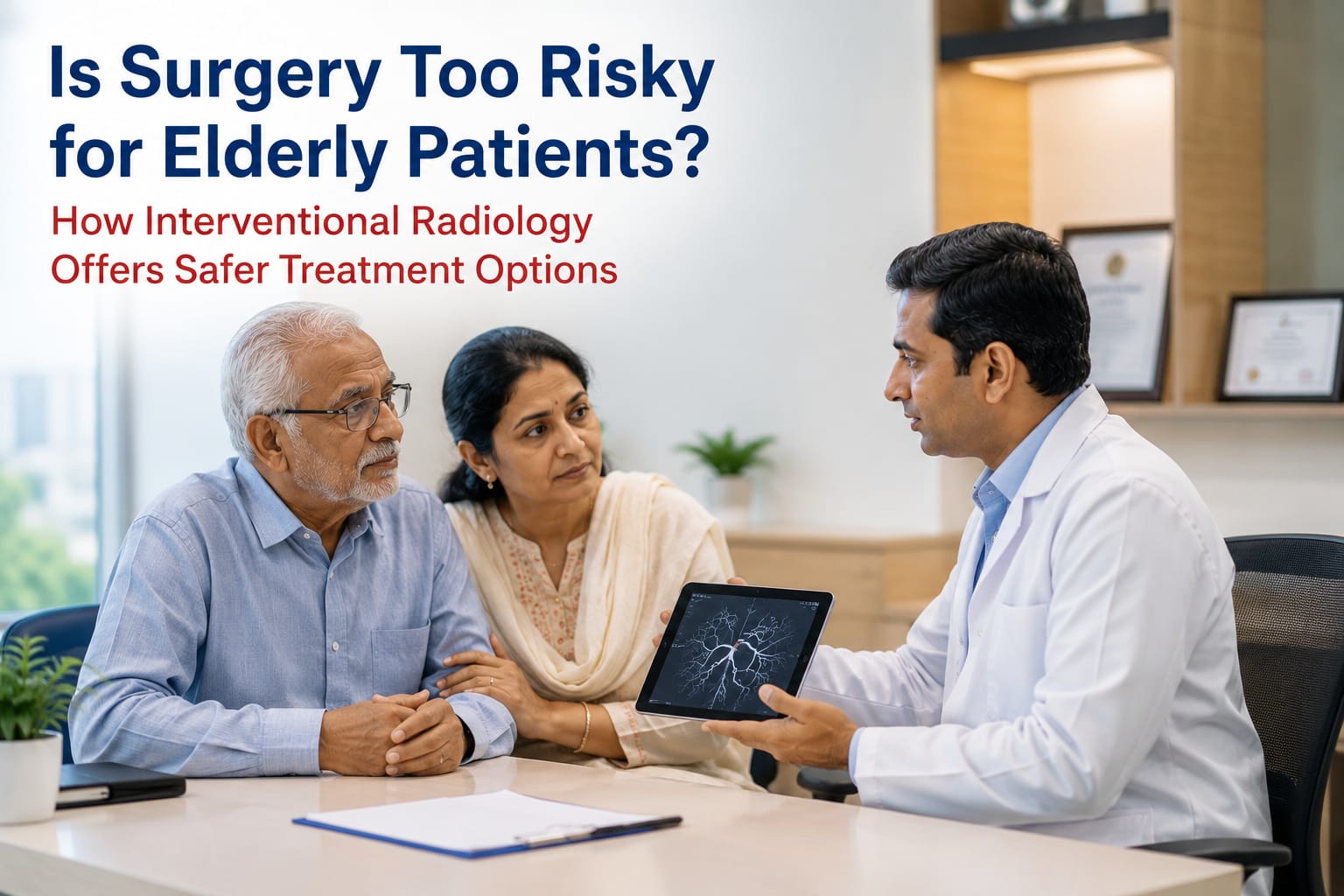
Is Surgery Too Risky for Elderly Patients? How Interventional Radiology Offers Safer Treatment Options
As parents and loved ones grow older, medical decisions often become more complicated. One of the biggest concerns families face is the surgery risk for elderly patients, especially when age, heart disease, diabetes, kidney problems, or other chronic illnesses are already present.
Many families are told that surgery is necessary, but they also worry about anaesthesia, long recovery periods, hospital stays, and complications. In these situations, exploring safer alternatives becomes important.
Today, interventional radiology for elderly patients is changing how many conditions are treated. Using image-guided techniques, doctors can often treat disease through tiny pinhole access points instead of large surgical incisions, helping older adults recover faster and with fewer risks. Interventional radiology uses imaging guidance to perform minimally invasive procedures that may reduce the need for traditional surgery in selected patients.
Why Is Surgery Riskier for Elderly Patients?
The surgery risk for elderly patients is often higher because aging affects how the body responds to stress, anaesthesia, healing, and recovery.
Older adults may have:
- Heart disease
- High blood pressure
- Diabetes
- Kidney disease
- Lung conditions
- Reduced physical reserve
Even when surgery is technically successful, recovery can sometimes be prolonged. Families frequently worry about mobility loss, infections, hospital-related complications, and the overall impact on quality of life.
The general anaesthesia risk in elderly patients is also an important consideration, particularly when multiple medical conditions are present. This does not mean surgery should always be avoided, but it does mean that treatment decisions should be individualized.
What Is Interventional Radiology?
Interventional radiology for elderly patients offers a different approach to treatment.
Instead of large incisions, interventional radiologists use advanced imaging such as ultrasound, CT scans, and fluoroscopy to guide tiny catheters and instruments directly to the area being treated. These procedures are performed through small skin punctures, often using local aesthesia and minimal sedation.
Because of this approach, many older adults can receive treatment with:
- Smaller wounds
- Less pain
- Lower blood loss
- Faster recovery
- Shorter hospital stays
For many families looking for high-risk surgical patient alternatives, this can be an important option worth discussing.
Why Are Minimally Invasive Treatments Beneficial for Older Adults?
One reason minimally invasive treatment for elderly patients is becoming increasingly important is that it focuses on reducing physical stress on the body.
Compared with traditional surgery, many minimally invasive procedures may offer:
- Faster recovery
- Reduced hospital stays
- Less post-procedure discomfort
- Lower complication rates in selected patients
- Earlier return to daily activities
Interventional Radiology has become a major part of modern minimally invasive medicine and is used across vascular disease, cancer treatment, kidney conditions, prostate enlargement, and many other health problems.
For elderly individuals who may not tolerate major surgery well, minimally invasive treatment for elderly patients can provide an effective alternative in carefully selected cases.
Common Conditions That May Be Treated Without Major Surgery
Many people are surprised to learn that non-surgical treatment for senior citizens is available for a variety of conditions.
Depending on the diagnosis, interventional radiology may help treat the following:
Enlarged Prostate (BPH)
Procedures such as prostate artery embolization (PAE) can help relieve urinary symptoms without major surgery.
Liver Cancer
Y-90 Radioembolization allows targeted treatment of liver tumors through the blood vessels feeding the cancer.
Kidney Tumors
Renal cryoablation can destroy selected kidney tumors using extreme cold while preserving healthy kidney tissue.
Uterine Fibroids
Uterine Fibroid Embolization (UFE) offers a uterus-preserving alternative to hysterectomy.
Blocked Veins and Dialysis Access Problems
Image-guided procedures can restore blood flow and help preserve critical dialysis access.
These examples demonstrate how interventional radiology for elderly patients can expand treatment options when surgery may be difficult or risky.
When Should Families Consider a Second Opinion?
A second opinion does not mean rejecting surgery.
It means understanding all available options before making a decision.
Families should consider seeking a second opinion before surgery in Hyderabad when:
- Surgery appears high-risk
- Recovery concerns are significant
- Multiple medical conditions are present
- Alternative treatments have not been discussed
- The patient wants to avoid major surgery if possible
In many cases, a second opinion helps patients feel more confident about whichever treatment path they ultimately choose.
How Interventional Radiology Helps High-Risk Surgical Patients
Many elderly individuals are considered poor candidates for major surgery because of age-related health concerns.
This is where high-risk surgical patient alternatives become particularly valuable.
Interventional radiology focuses on:
- Precision image guidance
- Organ-preserving treatments
- Local anaesthesia whenever appropriate
- Reduced procedural trauma
- Faster recovery
For many patients, non-surgical treatment for senior citizens provides an opportunity to receive treatment without the physical burden associated with open surgery.
Because these procedures are highly targeted, healthy tissues can often be preserved while directly addressing the underlying condition.
Recovery Matters Just As Much As Treatment
When evaluating the surgery risk for elderly patients, recovery is just as important as the procedure itself.
Families are increasingly concerned about:
- Prolonged hospitalization
- Physical weakness after surgery
- Loss of independence
- Delayed mobility
The possibility of recovery after surgery in elderly patients often becomes a major factor when deciding between treatment options.
This is why many physicians and families now explore minimally invasive treatment for elderly patients whenever medically appropriate.
Interventional Radiology in Hyderabad & Chennai
Awareness of interventional radiology for elderly patients continues to grow across Hyderabad and Chennai.
Patients who previously believed surgery was their only option are increasingly learning about image-guided, minimally invasive alternatives that may offer effective treatment with reduced recovery burden.
For older adults facing vascular disease, cancer, prostate enlargement, kidney tumors, or other complex conditions, discussing all available treatment options is an important part of informed decision-making.
Not Every Elderly Patient Needs Major Surgery
The presence of age alone should not determine treatment decisions.
At the same time, the surgery risk for elderly patients deserves careful evaluation before proceeding with a major operation.
If you or your loved one has been advised to undergo surgery and would like to understand whether a minimally invasive option may be available, consulting an experienced interventional radiologist can help clarify the safest and most appropriate next step.
Get expert guidance before making a treatment decision — schedule your consultation today.
Frequently Asked Questions
Is surgery always risky for elderly patients?
Not necessarily. Many elderly patients undergo surgery successfully. However, age-related conditions such as heart disease, diabetes, kidney disease, and reduced physical reserve can increase the overall surgery risk for elderly patients. A thorough medical evaluation helps determine the safest treatment approach.
What are the alternatives to surgery for elderly patients?
Depending on the condition, minimally invasive treatments performed by an interventional radiologist may be available. These image-guided procedures can often treat certain vascular conditions, cancers, prostate enlargement, and kidney tumors without the need for major surgery.
Why is interventional radiology considered safer for some elderly patients?
Interventional radiology uses image-guided techniques and small pinhole access points instead of large surgical incisions. This often results in less pain, reduced blood loss, shorter hospital stays, and faster recovery, making it a valuable option for selected elderly patients.
Should elderly patients get a second opinion before surgery?
Yes. Seeking a second opinion can help patients and families understand all available treatment options, including minimally invasive and non-surgical alternatives. This is especially important when surgery carries significant risks or recovery concerns.
Which conditions can be treated without major surgery in elderly patients?
Several conditions may be treated using minimally invasive procedures, including enlarged prostate (BPH), liver tumors, kidney tumors, uterine fibroids, blocked blood vessels, and certain dialysis access problems. Treatment suitability depends on the patient’s overall health and specific condition.