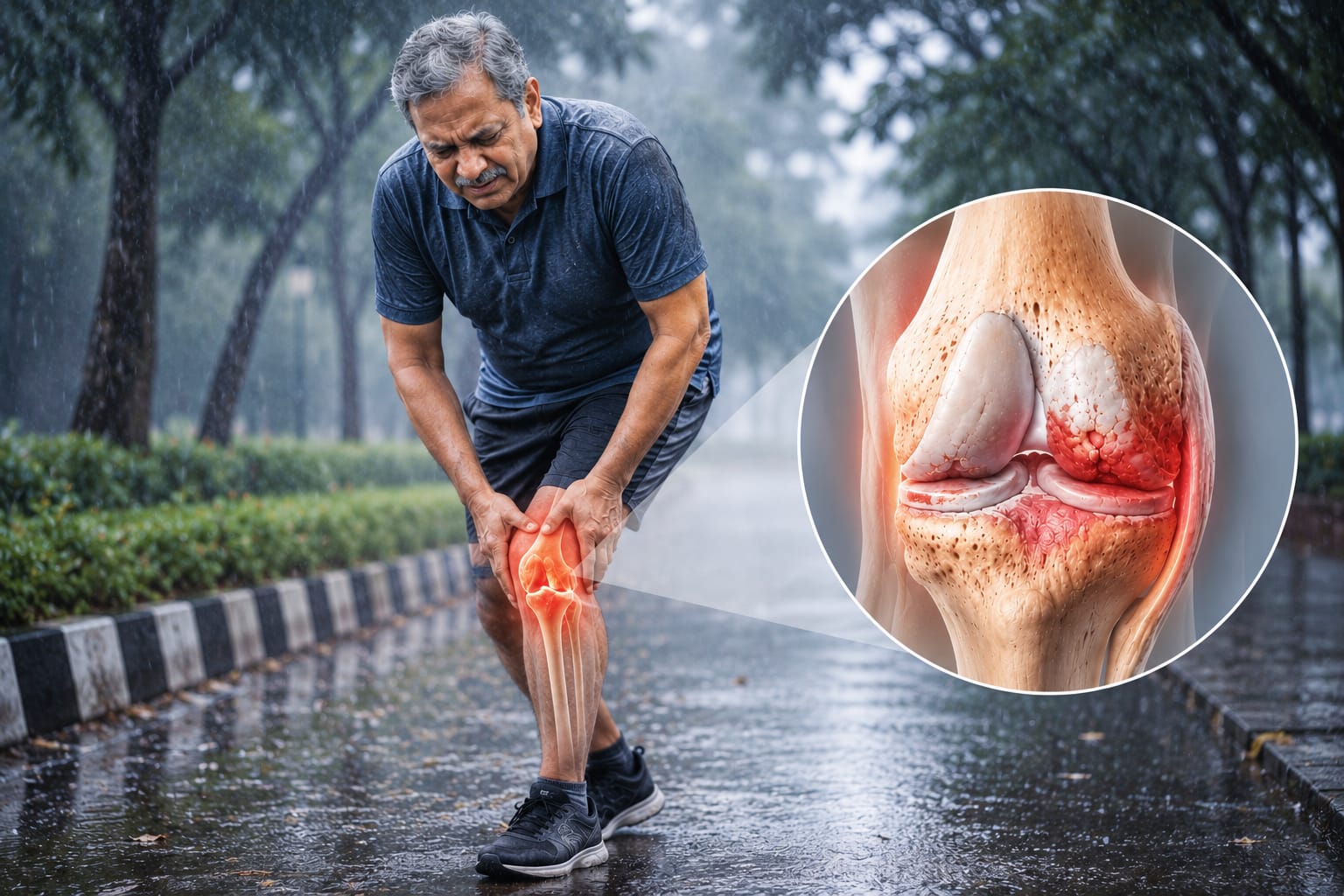
The arrival of the monsoon brings welcome relief from the summer heat, but for many people living with arthritis or long-standing knee problems, it also brings increased pain and stiffness. If you’ve noticed your knee pain during monsoon becoming worse every rainy season, you’re not alone. Many people report difficulty walking, climbing stairs, or even getting out of bed when the weather changes.
Although rain itself doesn’t damage your joints, changes in humidity, temperature, and barometric pressure may make existing joint problems more noticeable. For people with osteoarthritis, these seasonal changes can aggravate pain and reduce mobility, making everyday activities challenging.
The good news is that persistent knee pain doesn’t always mean you need surgery. Advances in Interventional Radiology now offer knee pain treatment without surgery, helping many patients find lasting relief without undergoing knee replacement. One of these innovative treatments is Genicular Artery Embolization (GAE), a minimally invasive procedure designed to reduce pain and improve quality of life.
In this blog, you’ll learn why knee pain during monsoon often worsens, what causes it, and how Genicular Artery Embolization may be an alternative to knee replacement for selected patients.
Why Does Knee Pain Get Worse During the Monsoon?
Many people believe that rain directly causes joint pain, but medical research suggests the relationship is more complex. Weather changes cannot create arthritis, but they can increase discomfort in joints that are already affected by inflammation or cartilage damage.
During the monsoon, humidity rises while atmospheric pressure often falls. These changes may influence the tissues surrounding the knee joint, making them more sensitive to pain. People with osteoarthritis knee pain are particularly likely to notice increased stiffness and discomfort during this season.
Common symptoms include:
- Increased knee stiffness in the morning
- Pain while walking or climbing stairs
- Swelling around the knee joint
- Difficulty bending or straightening the knee
- Reduced flexibility and movement
If your knee pain during monsoon continues for several weeks or interferes with your daily routine, it may indicate an underlying joint condition that requires medical evaluation.
What Causes Chronic Knee Pain?
Knee pain can result from several medical conditions, but osteoarthritis remains the most common cause among adults over the age of 45.
Some common causes of joint inflammation and chronic knee pain include:
- Osteoarthritis
- Previous knee injuries
- Obesity, which increases pressure on the knee joint
- Rheumatoid arthritis
- Age-related cartilage degeneration
- Repetitive stress on the knee
When the protective cartilage inside the knee gradually wears away, bones begin rubbing against each other. This leads to inflammation, swelling, pain, and reduced movement.
Without proper chronic knee pain treatment, these symptoms may gradually worsen over time, limiting mobility and affecting overall quality of life.
Is Every Knee Pain a Sign You Need Knee Replacement?
Not necessarily.
Many patients assume that worsening knee pain automatically means knee replacement surgery is their only option. While knee replacement can be an excellent treatment for advanced arthritis, it is not the right choice for everyone.
You may not be an ideal candidate if you:
- Have mild to moderate osteoarthritis
- Want to delay surgery
- Have medical conditions that increase surgical risk
- Prefer a quicker recovery
- Are looking for knee pain treatment without surgery
For these patients, doctors may recommend conservative treatments such as physiotherapy, medications, lifestyle changes, or newer minimally invasive procedures before considering surgery.
When Are Medicines and Physiotherapy Not Enough?
Pain medications and physiotherapy often provide relief during the early stages of arthritis. However, some patients find that their symptoms continue despite months of treatment.
If you still experience:
- Persistent pain despite medication
- Difficulty walking long distances
- Night-time knee pain
- Frequent swelling
- Reduced ability to perform daily activities
…it may be time to explore other treatment options.
Today, Genicular Artery Embolization is emerging as an effective alternative to knee replacement for selected patients with osteoarthritis. This minimally invasive knee treatment targets the blood vessels responsible for inflammation, helping reduce pain without major surgery.
What Is Genicular Artery Embolization (GAE)?
If conservative treatments are no longer providing relief, but you are not ready for knee replacement surgery, Genicular Artery Embolization (GAE) may be an option worth discussing with your doctor.
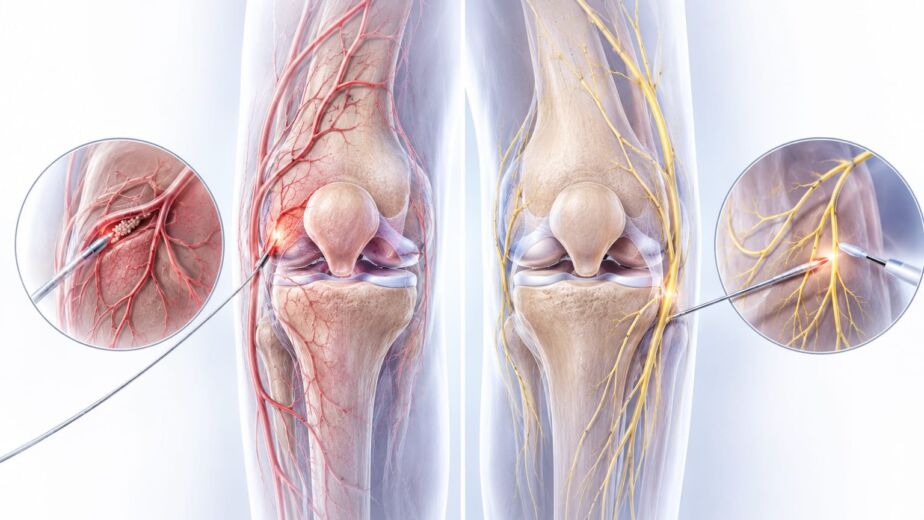
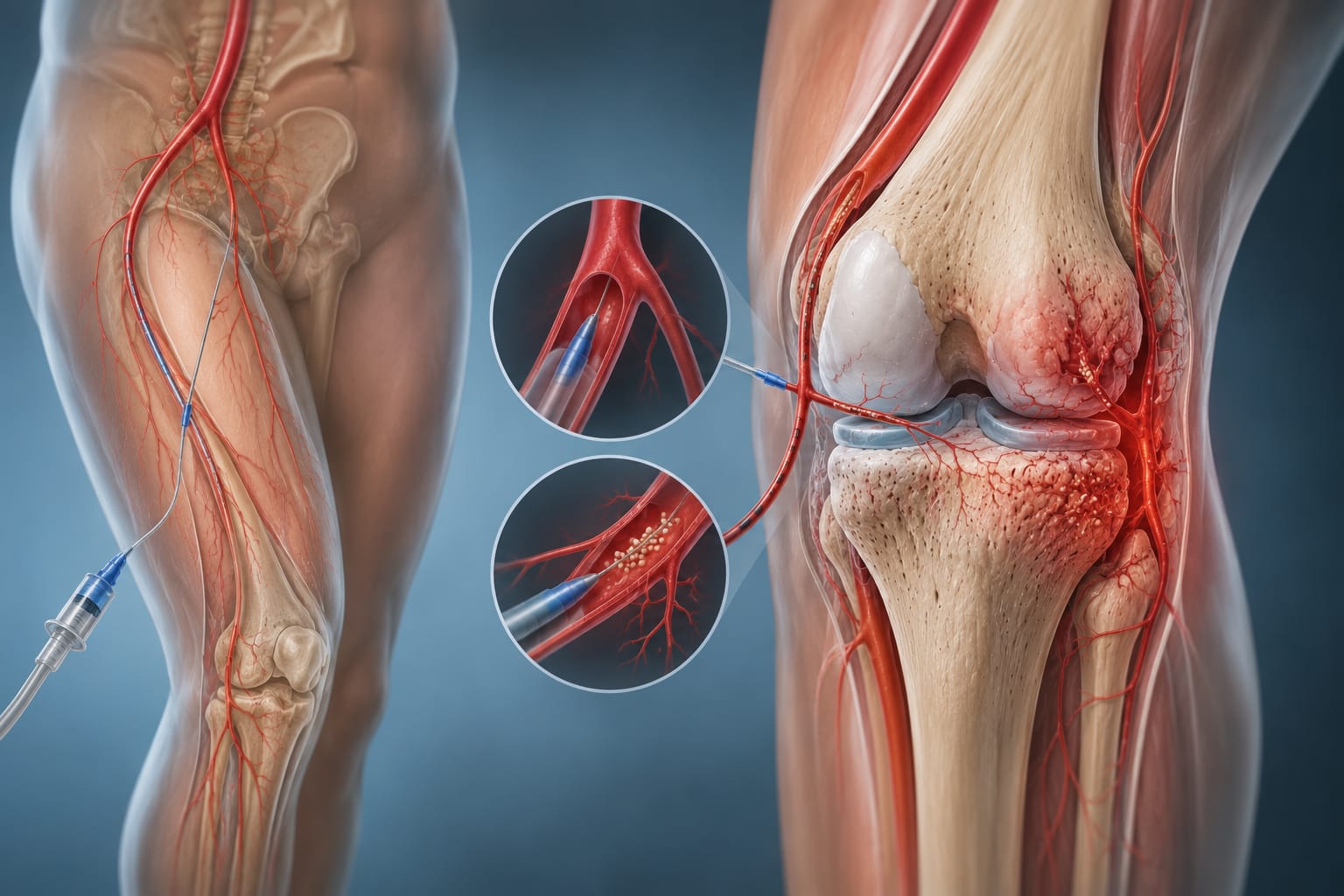
Genicular Artery Embolization is an advanced Interventional Radiology procedure that reduces inflammation inside the knee without removing or replacing the joint. Unlike traditional surgery, GAE is performed through a tiny catheter inserted into a blood vessel, making it a knee pain treatment without surgery for carefully selected patients.
The procedure targets the abnormal blood vessels that develop around the inflamed knee joint in osteoarthritis. These blood vessels contribute to ongoing inflammation and pain. By reducing blood flow to these vessels, Genicular Artery Embolization helps decrease inflammation, relieve pain, and improve knee function.
Because it is a minimally invasive knee treatment, there are no large incisions, minimal blood loss, and recovery is generally much faster than with knee replacement surgery.
Who Can Benefit from GAE?
Although Genicular Artery Embolization is not suitable for everyone, it may be considered for patients who:
- Have mild to moderate osteoarthritis
- Experience persistent osteoarthritis knee pain
- Continue to have pain despite medications or physiotherapy
- Want knee pain treatment without surgery
- Are looking for an alternative to knee replacement
- Are not suitable candidates for major surgery because of age or other medical conditions
A detailed clinical evaluation, imaging studies, and consultation with an Interventional Radiologist in Hyderabad and Chennai will help determine whether GAE is appropriate for your condition.
Benefits of Genicular Artery Embolization
One of the biggest advantages of Genicular Artery Embolization is that it addresses inflammation while avoiding major surgery.
Some potential benefits include:
- No large surgical incision
- Same-day or next-day discharge in most cases
- Faster recovery compared with knee replacement surgery
- Reduced inflammation and pain
- Improved mobility and daily function
- Lower risk of complications associated with major surgery
For many patients experiencing knee pain during monsoon, GAE offers an opportunity to manage symptoms effectively without immediately proceeding to joint replacement.
GAE vs Knee Replacement Surgery
Many patients ask whether GAE is better than knee replacement.
The answer depends on the severity of arthritis.
Knee replacement surgery remains an excellent option for patients with advanced joint damage. However, patients with early or moderate osteoarthritis may benefit from Genicular Artery Embolization before considering surgery.
| Genicular Artery Embolization | Knee Replacement Surgery |
| Minimally invasive procedure | Major surgery |
| Tiny catheter, no large incision | Large surgical incision |
| Short recovery | Longer rehabilitation |
| Preserves the natural knee joint | Artificial joint replacement |
| Suitable for selected patients | Suitable for advanced arthritis |
For many individuals seeking an alternative to knee replacement, GAE can provide meaningful pain relief while helping delay or even avoid surgery in appropriate cases.
What Is Recovery Like After GAE?
Recovery following Genicular Artery Embolization is generally quicker than recovery after knee replacement surgery.
Most patients can:
- Walk on the same day
- Resume light activities within a few days
- Return to normal routines sooner than after major surgery
Pain relief may begin within a few weeks, although improvement varies from person to person. Your doctor may also recommend exercises, weight management, and physiotherapy to maximize long-term results.
Because chronic knee pain treatment often requires a combination of approaches, GAE works best as part of a personalized treatment plan.
When Should You Consult an Interventional Radiologist?
If your knee pain during monsoon becomes more frequent or severe every year, don’t ignore it.
You should consider consulting a specialist if you:
- Have knee pain lasting more than three months
- Experience swelling or stiffness that limits movement
- Find that medications provide only temporary relief
- Want to avoid or postpone knee replacement surgery
- Are looking for knee pain treatment without surgery
Early evaluation can help identify the cause of your symptoms and determine whether GAE is an appropriate treatment option.
For patients in Hyderabad and Chennai, consulting an experienced Interventional Radiologist can help you understand all available treatment options before deciding on surgery.
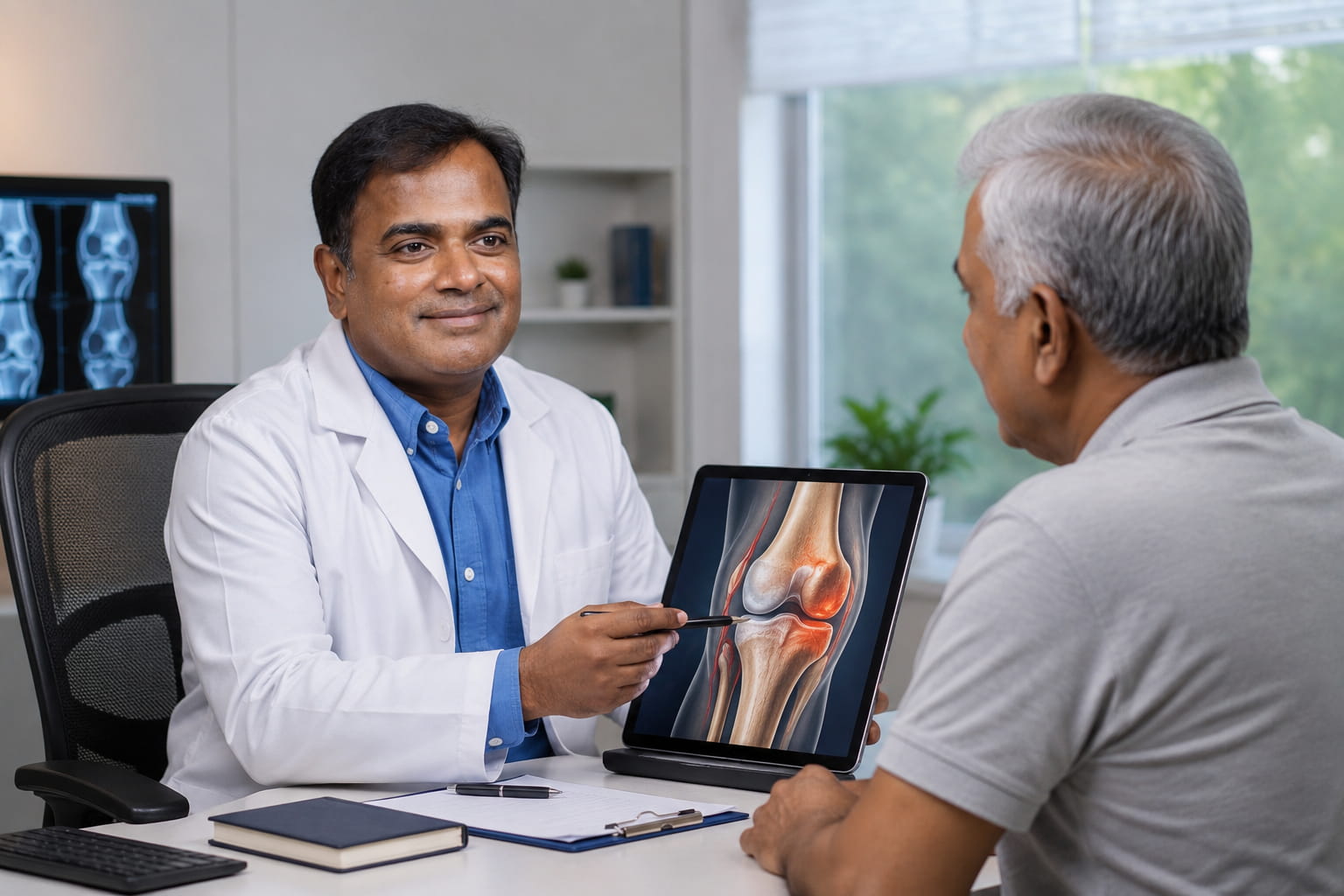
Conclusion
Many people believe worsening knee pain during the monsoon is simply something they have to live with. While rainy weather may make existing joint problems feel worse, persistent knee pain should never be ignored.
If medications, injections, or physiotherapy are no longer providing relief, it does not automatically mean knee replacement surgery is your only choice. Modern treatments such as Genicular Artery Embolization provide a promising alternative to knee replacement for carefully selected patients.
If you are experiencing persistent osteoarthritis knee pain or are looking for a non-surgical solution, schedule a consultation with Dr. Ram Kishore Gurajala, a Cleveland Clinic-trained Interventional Radiologist with over 13 years of experience. He provides advanced knee osteoarthritis treatment and Genicular Artery Embolization consultations for patients in Hyderabad and Chennai, helping them explore safe, evidence-based alternatives before considering knee replacement surgery.
Book your consultation today and find out whether GAE is the right treatment option for your knee pain.