- Myth 1: Interventional Radiology Is Only Used for Rare Conditions
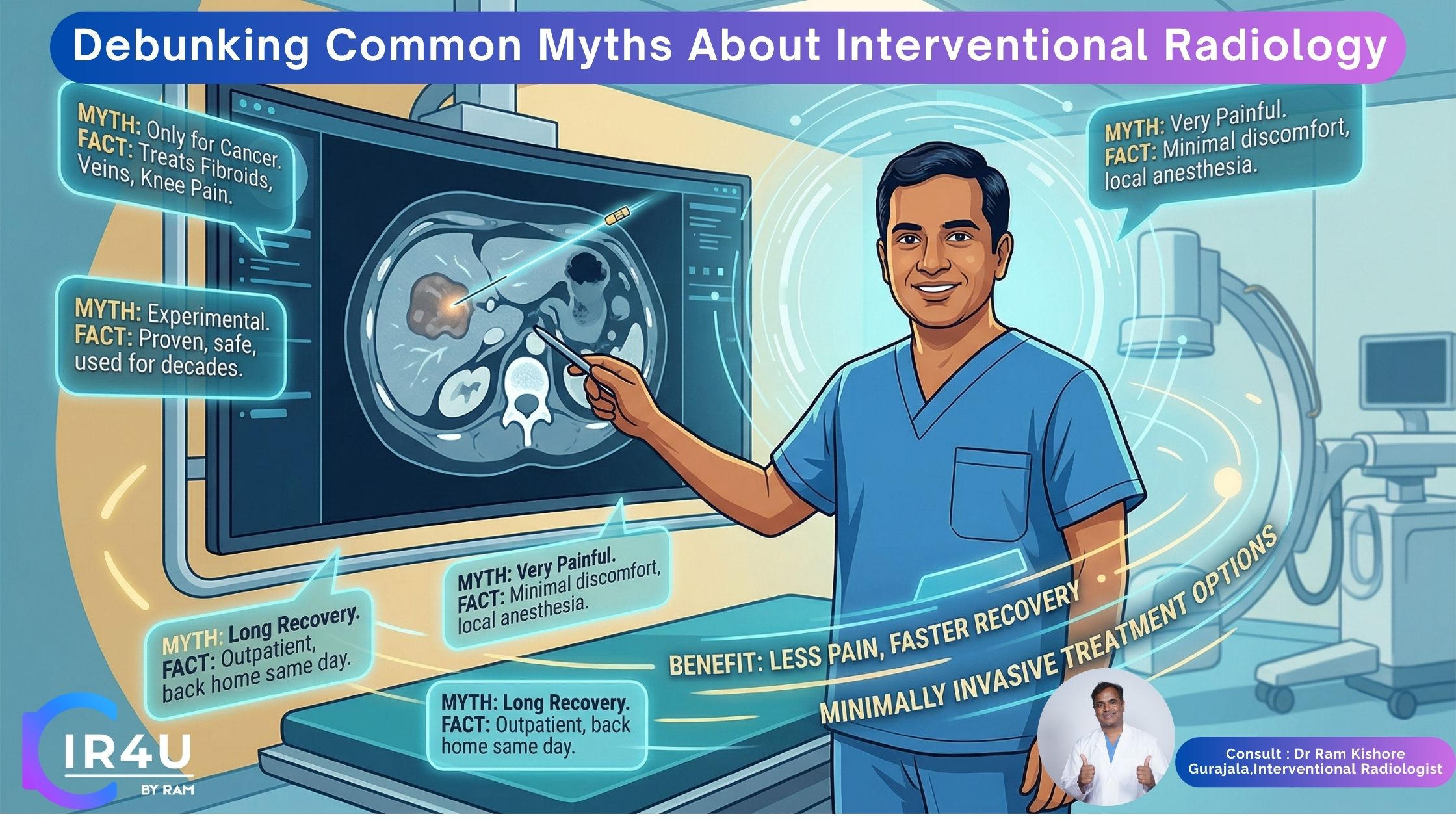
Many people believe that interventional radiology treatments are only used for uncommon diseases. In reality, these procedures are used to treat several common medical conditions.
These include:
- Uterine fibroids
- Varicose veins
- Peripheral artery disease
- Liver tumors
- Kidney tumors
Millions of patients worldwide benefit from minimally invasive interventional radiology procedures every year.
Myth 2: These Procedures Are Experimental
Another common misconception is that interventional radiology treatments are new or experimental. However, many of these procedures have been used safely for decades and are supported by extensive medical research.Procedures such as tumor ablation, vascular stenting, and embolization treatments are well-established and widely practiced across hospitals worldwide.
Myth 3: Interventional Radiology Is Only for Cancer Treatment
While tumor ablation treatment is a major part of interventional radiology, the field covers many other conditions beyond cancer.
Doctors also use these procedures to treat:
- Vascular diseases
- Chronic pain conditions
- Fibroids
- Internal bleeding
- Blocked blood vessels
This makes interventional radiology a versatile treatment option for many medical problems.
Myth 4: Minimally Invasive Procedures Are Not Effective
Some patients believe that non-surgical treatments are less effective than traditional surgery. In reality, many minimally invasive procedures provide results that are comparable or even superior to open surgery for certain conditions.
For example:
- Uterine fibroid embolization effectively reduces fibroid symptoms.
- Vascular stenting procedures restore blood flow in blocked arteries.
- Tumour ablation treatments destroy cancer cells without removing organs.
These treatments often provide effective outcomes with less trauma to the body.
Myth 5: Interventional Radiology Procedures Are Painful
Another myth is that these procedures cause significant pain. In fact, most interventional radiology treatments are performed under local anaesthesia or mild sedation.
Because there are no large surgical cuts, patients usually experience:
- Minimal discomfort
- Faster healing
- Reduced need for strong pain medications
Myth 6: Recovery Takes Just as Long as Surgery
Traditional surgery can require weeks or even months of recovery, depending on the procedure. However, minimally invasive interventional radiology procedures typically allow patients to recover much faster.Many procedures are performed as outpatient treatments, allowing patients to return home the same day and resume normal activities within a few days.
Myth 7: Only Certain Patients Can Receive Interventional Radiology Treatments
Some people believe that only a small group of patients can benefit from these procedures. In reality, interventional radiology is suitable for a wide range of patients.
Patients who may benefit include those who:
- Want treatment without major surgery
- Have higher surgical risks
- Need faster recovery times
- Have tumors or vascular conditions that can be treated with minimally invasive procedures
A specialist consultation can determine whether these treatments are appropriate for each patient.
Benefits of Interventional Radiology Treatments
Interventional radiology procedures offer several advantages over traditional surgery.
Key Benefits
- Minimally invasive treatment
- Smaller incisions and less scarring
- Reduced risk of infection
- Faster recovery times
- Many procedures performed on an outpatient basis
- Shorter hospital stays
These advantages make alternatives to open surgery increasingly popular among patients and doctors.
Who Is a Good Candidate for Interventional Radiology?
Patients who may benefit from interventional radiology treatments include those who:
- Prefer non surgical treatment options
- Have health conditions that make surgery risky
- Need faster recovery times
- Have tumors that can be treated using tumour ablation procedures
- Have vascular conditions that require vascular stenting procedures
An evaluation by a specialist helps determine the most appropriate treatment approach.
Why Choose Dr. Ram Kishore Gurajala?
Dr. Ram Kishore Gurajala is an experienced Interventional Radiologist specializing in advanced minimally invasive treatments. Using state-of-the-art medical imaging technology and precise techniques, he offers targeted procedures that improve treatment outcomes.
Patients benefit from:
- Advanced image guided therapy
- Personalized treatment plans
- Faster recovery and minimal discomfort
Modern minimally invasive procedures
Conclusion
Misconceptions about modern medical treatments can sometimes prevent patients from exploring better healthcare options. Understanding the truth behind common myths about interventional radiology treatments helps patients make informed decisions about their care.
Interventional radiology offers safe, effective, and minimally invasive alternatives to traditional surgery for many medical conditions. With shorter recovery times and fewer complications, these procedures are transforming the way many diseases are treated today.Consulting an experienced specialist can help determine whether interventional radiology treatments are the right option for your condition