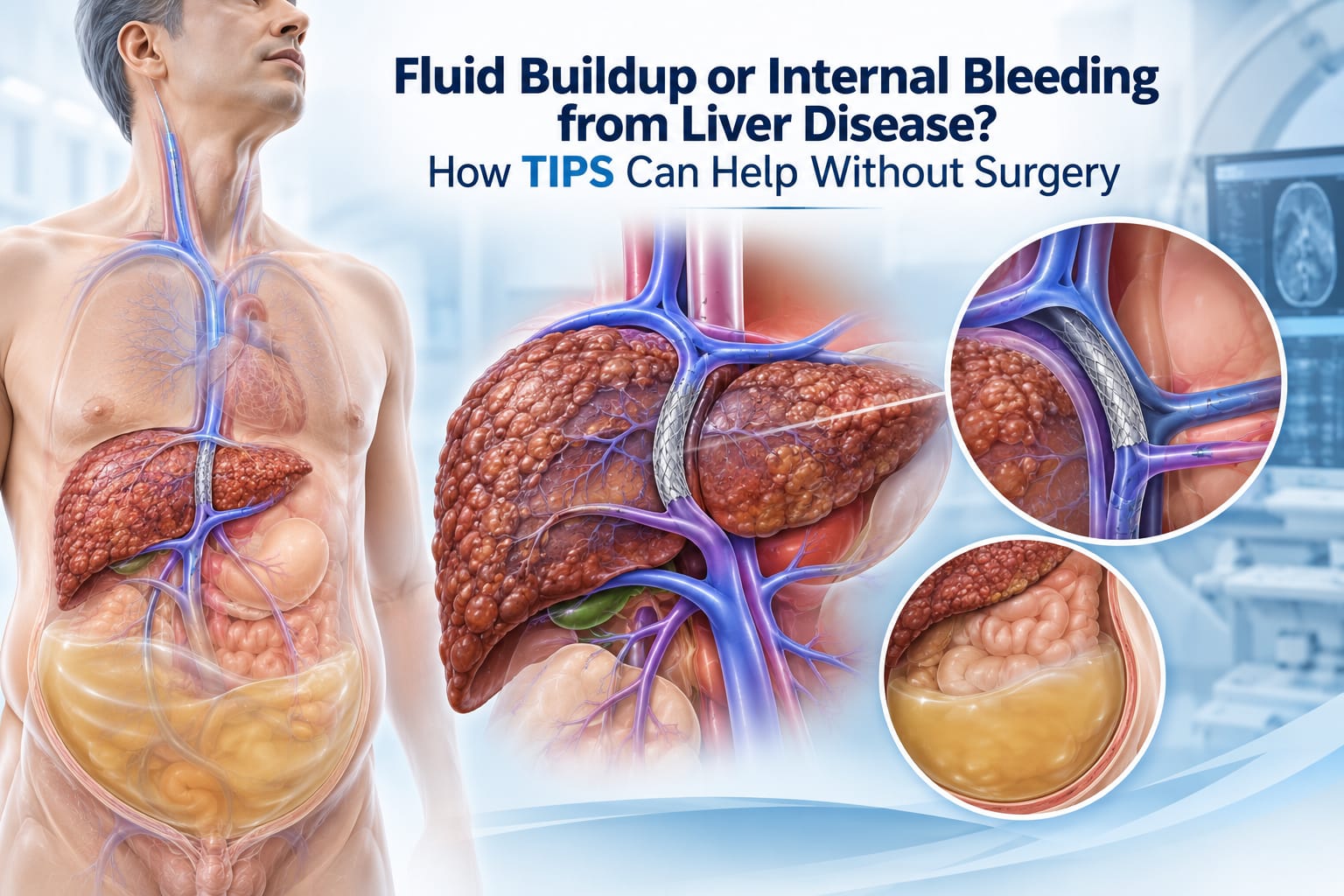
Liver cirrhosis can lead to serious complications when increased pressure develops inside the portal venous system. This condition, known as portal hypertension, can cause fluid to accumulate in the abdomen, enlarge veins in the digestive tract, and sometimes result in life-threatening bleeding.
When medications, endoscopic treatment, or other approaches are not enough, a procedure called a transjugular intrahepatic portosystemic shunt (TIPS) may be considered for selected patients.
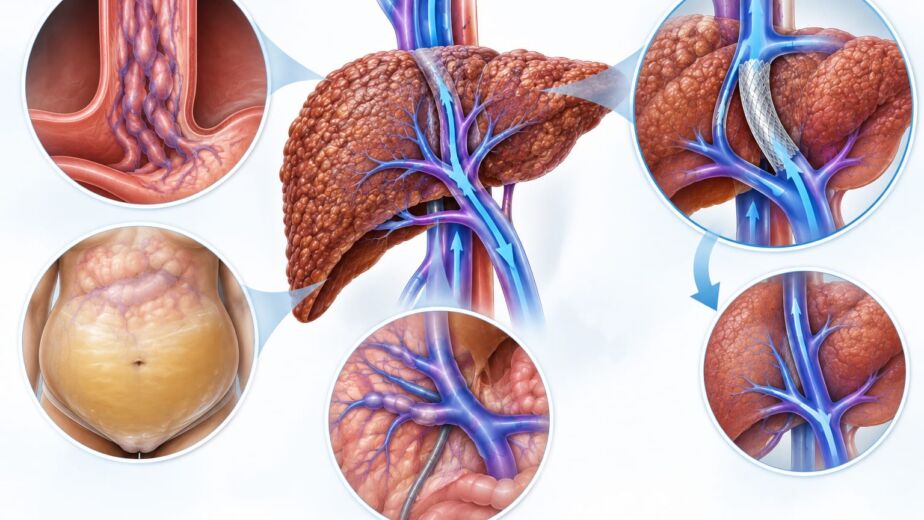
TIPS is a minimally invasive procedure performed by an interventional radiologist. It creates a controlled pathway between the portal vein and a hepatic vein inside the liver, helping reduce portal pressure without open surgery.
For patients in Hyderabad and Chennai dealing with complications of advanced liver disease, understanding TIPS, when it may be recommended, and what to expect can help them have a more informed discussion with their treating team.
What Is a Transjugular Intrahepatic Portosystemic Shunt?
A transjugular intrahepatic portosystemic shunt is a small channel created within the liver between the portal venous system and a hepatic vein.
In cirrhosis, scarring of the liver can make it difficult for blood to flow normally through the liver. This increases pressure in the portal venous system. The increased pressure contributes to complications such as ascites and varices.
During TIPS, an interventional radiologist accesses the venous system through the internal jugular vein in the neck. A catheter is guided into the liver, and a stent is placed to create the shunt. This allows some portal blood to bypass the high-resistance liver and flow toward the systemic circulation, reducing portal pressure.
Why Does Portal Hypertension Develop?
Portal hypertension commonly occurs because cirrhosis changes the structure of the liver. Scar tissue and altered blood vessels increase resistance to blood flowing through the liver.
As pressure rises, blood may be redirected through smaller veins that are not designed to handle the increased flow. These veins can become enlarged and form varices.
Portal hypertension can contribute to:
- Abdominal fluid buildup known as ascites
- Esophageal or gastric varices
- Variceal bleeding
- Enlarged spleen
- Other complications associated with advanced liver disease
Therefore, portal hypertension treatment focuses not only on reducing symptoms but also on preventing or controlling serious complications.
When Is TIPS Considered?
TIPS is not required for everyone with portal hypertension. The appropriate management of portal hypertension depends on the cause, severity of liver disease, symptoms, previous complications, and response to other treatments.
TIPS may be considered particularly in selected patients with:
- Recurrent or uncontrolled variceal bleeding
- Variceal bleeding that does not respond adequately to medication and endoscopic treatment
- Refractory ascites that does not respond adequately to medical management
- Certain other complications associated with portal hypertension
AASLD guidance identifies TIPS as an important treatment option for selected patients with complications of portal hypertension, including variceal hemorrhage and refractory ascites.
How Can TIPS Help With Internal Bleeding?
One of the most serious complications of portal hypertension is bleeding from enlarged veins, or varices, in the esophagus, stomach, or other parts of the digestive system.
Esophageal varices and portal hypertension are closely associated because increased portal pressure can cause veins in the esophagus to become enlarged and fragile.
If these veins rupture, severe gastrointestinal bleeding can occur. Initial management may involve resuscitation, medications that reduce portal pressure, antibiotics when indicated, and urgent endoscopic treatment. TIPS may be considered when bleeding cannot be adequately controlled or in selected patients at high risk of further bleeding.
By creating a low-resistance pathway between the portal and hepatic veins, TIPS can decompress the portal venous system. This reduction in pressure can help control portal hypertension-related bleeding in appropriately selected patients.
How Can TIPS Help With Ascites?
Ascites is the accumulation of fluid inside the abdomen and is a common complication of advanced cirrhosis.
Medical treatment may include dietary sodium restriction and diuretics. When ascites becomes refractory, repeated large-volume paracentesis may be required.
For appropriately selected patients with refractory ascites, TIPS can be considered as part of the liver cirrhosis with portal hypertension treatment plan. AASLD notes that TIPS may be considered for refractory ascites after careful assessment of risks and benefits compared with repeated large-volume paracentesis.
TIPS does not cure cirrhosis itself. Instead, it addresses the abnormal portal pressure that contributes to certain complications.
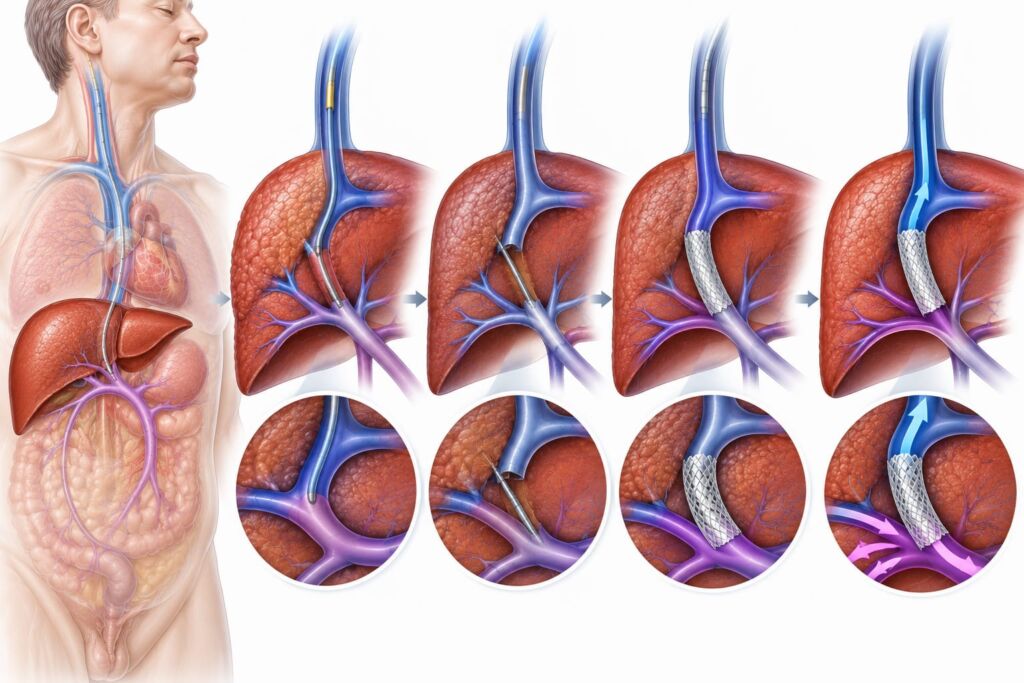
What Happens During a TIPS Procedure?
The TIPS liver procedure is performed using imaging guidance rather than through open abdominal surgery.
Step 1: Venous access
A catheter is introduced through the internal jugular vein in the neck.
Step 2: Catheter guidance
The catheter is advanced into a hepatic vein using imaging guidance.
Step 3: Creating the pathway
The interventional radiologist creates a controlled channel between the hepatic vein and a branch of the portal vein.
Step 4: Stent placement
A covered stent is placed to keep the new pathway open and allow blood to flow through it.
Step 5: Pressure assessment
Portal and hepatic venous pressures can be measured before and after the procedure to assess the effectiveness of portal decompression.
Because the access is through a vein in the neck, TIPS avoids the need for conventional open surgery.
Is TIPS Suitable for Everyone?
No. Patient selection is an important part of the management of portal hypertension.
Before recommending TIPS, doctors may evaluate liver function, kidney function, blood tests, imaging findings, heart function, previous episodes of hepatic encephalopathy, and the severity of portal hypertension.
Cross-sectional imaging such as CT or MRI can help assess the portal and hepatic veins, spleen, ascites, and collateral blood vessels. Cardiac assessment may also be necessary in patients with relevant heart or pulmonary conditions.
TIPS can have complications. One important concern is hepatic encephalopathy, which can occur or worsen after the procedure. Shunt dysfunction and liver-related complications are other considerations.
Therefore, the potential benefits and risks need to be assessed individually.
TIPS and Other Portal Hypertension Treatments
TIPS is one component of portal hypertension treatment, not a replacement for all other treatments.
Depending on the patient’s condition, treatment may involve:
- Medications
- Endoscopic variceal treatment
- Diuretics for ascites
- Large-volume paracentesis
- TIPS
- Evaluation for liver transplantation when appropriate
The correct approach depends on the underlying liver disease and the specific complication being treated.
What Patients Should Know About TIPS
If you have cirrhosis and experience repeated fluid accumulation, recurrent variceal bleeding, or complications that are difficult to control, ask your hepatologist or gastroenterologist whether an interventional radiology evaluation may be appropriate.
A TIPS procedure may help reduce portal pressure in selected patients, but it is not suitable for everyone and does not reverse liver cirrhosis.
Patients in Hyderabad and Chennai can discuss their imaging, liver function, previous treatments, and overall health with their treating specialists to determine whether TIPS has a role in their care.
TIPS Treatment in Hyderabad and Chennai
If you have liver cirrhosis with complications such as refractory ascites or recurrent portal hypertension-related bleeding, TIPS may be one of the treatment options evaluated by your medical team.
An interventional radiologist can review your imaging and clinical history to determine whether a TIPS liver procedure is appropriate and explain its potential benefits, limitations, and risks.
If you or a family member has been advised to consider TIPS, schedule a consultation with dr ram kishore gurajala to understand whether this minimally invasive treatment may be suitable for your condition.
Frequently Asked Questions
1. What is a transjugular intrahepatic portosystemic shunt?
A transjugular intrahepatic portosystemic shunt, or TIPS, is a minimally invasive shunt created inside the liver between the portal and hepatic veins to reduce portal pressure.
2. Can TIPS treat ascites?
TIPS can be considered for selected patients with refractory ascites, particularly when medical treatment is inadequate or poorly tolerated.
3. Can TIPS stop bleeding from varices?
TIPS can help control portal hypertension-related variceal bleeding in appropriately selected patients, particularly when standard medical and endoscopic treatments are unsuccessful or when early TIPS is indicated for selected high-risk patients.
4. Is TIPS a surgery?
TIPS is a minimally invasive, image-guided interventional radiology procedure. It does not require conventional open abdominal surgery.
5. Is TIPS a treatment for liver cirrhosis itself?
No. TIPS treats portal hypertension and selected complications resulting from it. It does not remove the underlying cirrhosis.
6. What are the risks of TIPS?
Potential complications include hepatic encephalopathy, shunt dysfunction, bleeding, liver dysfunction, and other procedure-related complications. Careful patient selection and follow-up are important.