

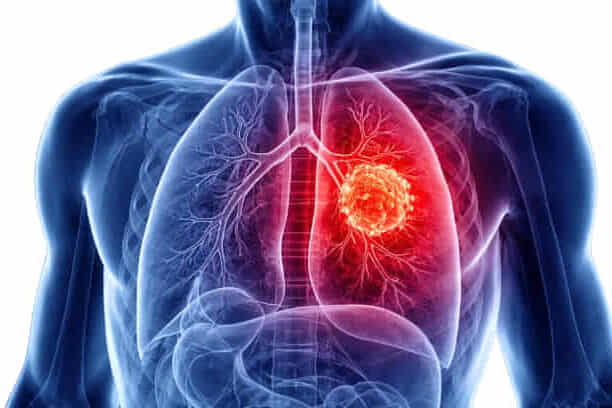
Advanced interventional oncology treatment for cancer in Hyderabad and Chennai.
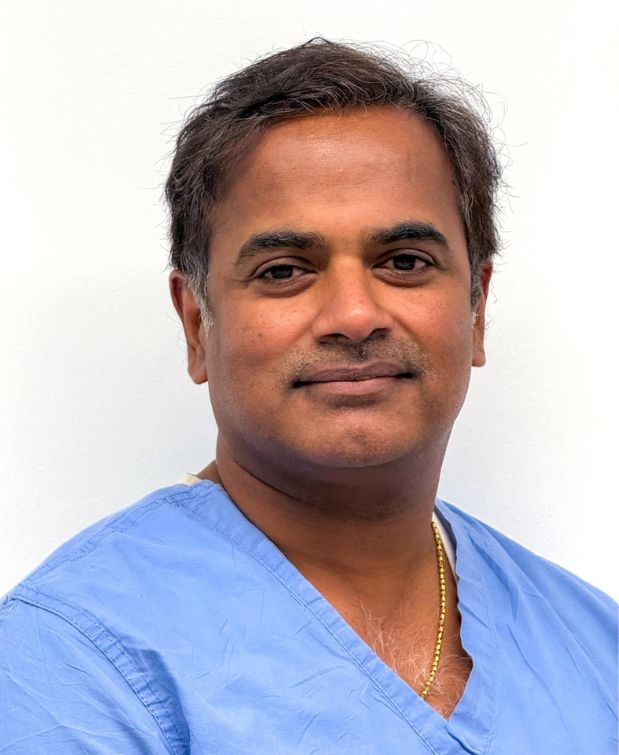
✓ Advanced Minimally Invasive Cancer Treatment
Regain control of your life with Interventional Oncology treatment…
A minimally invasive cancer treatment that targets tumors precisely while preserving healthy tissue and improving recovery outcomes.
Interventional oncology is an advanced, image-guided cancer treatment that uses non-surgical techniques to destroy or shrink tumors. These procedures deliver targeted therapy directly to cancer cells, minimizing damage to surrounding organs. It is widely used for liver cancer, kidney tumors, lung nodules, and metastatic cancers, offering an effective alternative to traditional surgery.
 Faster Recovery in 5–7 Days
Quick recovery compared to surgery, with minimal hospital stay.
No Major Surgery or Large Incisions
Minimally invasive treatment with small punctures, less pain, faster healing.
Targeted Tumor Treatment with Higher Precision
Precisely targets tumors, protecting healthy tissue and improving treatment outcomes.
✓ Advanced Minimally Invasive Cancer Treatment
Regain control of your life with Interventional Oncology treatment…
A minimally invasive cancer treatment that targets tumors precisely while preserving healthy tissue and improving recovery outcomes.
Interventional oncology is an advanced, image-guided cancer treatment that uses non-surgical techniques to destroy or shrink tumors. These procedures deliver targeted therapy directly to cancer cells, minimizing damage to surrounding organs. It is widely used for liver cancer, kidney tumors, lung nodules, and metastatic cancers, offering an effective alternative to traditional surgery.

Faster Recovery in 5–7 Days
Faster recovery than traditional cancer surgery with minimal hospital stay.
No Major Surgery or Large Incisions
Minimally invasive cancer treatment with less pain and faster healing.
Targeted Tumor Treatment with Higher Precision
Targeted cancer treatment destroys tumors while protecting healthy surrounding tissue.
Dr Ram will be consulting in Hyderabad from August 1st.
Early Signs That May Require Interventional Oncology
 Unexplained Weight Loss
A sudden and unexplained weight loss can be an early symptom of cancer. Tumor growth may affect metabolism, leading to rapid weight loss without changes in diet or activity, often associated with fatigue, reduced appetite, muscle loss, and noticeable weakness over a short period.
Early detection helps doctors consider advanced interventional oncology treatments for precise, non-surgical cancer diagnosis and targeted therapy options.
“You might notice a steady decline in weight without effort.”
Common Signs Associated with Unexplained Weight Loss
- Losing weight without dieting or exercise
- Clothes fitting looser than usual
- Reduced muscle mass or strength
- Feeling weak or low on energy
- Loss of appetite along with weight loss
 Fatigue & Weakness
Persistent fatigue and weakness are common early signs of cancer. The body uses extra energy to fight abnormal cell growth, causing constant tiredness, often accompanied by reduced stamina, lack of concentration, and difficulty performing routine daily activities.
Interventional oncology treatments can help manage symptoms and improve quality of life through minimally invasive, targeted cancer therapies that support faster recovery and better patient outcomes.
“You may feel exhausted all the time, even after a full night’s sleep.”
Common Signs Associated with Fatigue & Weakness
- Feeling tired throughout the day
- Low energy despite proper rest
- Difficulty performing daily activities
- Lack of motivation or focus
- General body weakness
 Loss of Appetite
A persistent loss of appetite can be an early symptom of cancer. Tumor activity may affect digestion and metabolism, causing early fullness and reduced interest in eating, often leading to weight loss, weakness, fatigue, and overall decline in nutritional intake and body strength.
Over time, this can lead to nutritional deficiencies and further weakness, making early diagnosis important for effective, minimally invasive interventional oncology treatment and better recovery outcomes.
“You may notice that even your favourite meals no longer feel appealing.”
Common Signs Associated with Loss of Appetite
- Feeling full very quickly
- Skipping meals frequently
- Reduced interest in food
- Nausea after eating
- Unintentional weight loss
 Organ-Specific Symptoms
Cancer symptoms can vary depending on the affected organ. For example, liver cancer may cause abdominal pain and jaundice, while lung cancer may lead to coughing or breathlessness, along with fatigue, weight loss, and changes in normal body functions over time.
Recognizing these symptoms early can help in timely diagnosis and treatment, allowing access to advanced interventional oncology procedures for precise, minimally invasive cancer management and improved patient outcomes.
“Symptoms often depend on where the tumor is located in the body.”
Common Signs Associated with Organ-Specific Symptoms
- Abdominal pain or swelling (liver-related)
- Persistent cough or breathlessness (lung-related)
- Blood in urine (kidney-related)
- Chest discomfort or pressure
- Changes in normal organ function
 Bleeding
Unusual or unexplained bleeding can be a warning sign of cancer. It may occur internally or externally depending on the affected area and should not be ignored, often presenting as blood in stool, urine, coughing blood, or abnormal vaginal bleeding.
Early medical evaluation is important to identify the underlying cause, enabling timely diagnosis and access to advanced interventional oncology treatments for effective and targeted cancer care.
“Any unexpected bleeding or bruising should be checked by a doctor.”
Common Signs Associated with Bleeding
- Blood in urine or stool
- Frequent nosebleeds
- Easy bruising
- Internal bleeding symptoms (weakness, dizziness)
- Bleeding that doesn’t stop easily
 Fever & Infections
Frequent fever or recurring infections may indicate a weakened immune system due to cancer. The body becomes more vulnerable to infections and takes longer to recover, often accompanied by chills, night sweats, fatigue, and a general decline in overall health and immunity.
These symptoms may persist even without a clear source of infection, making early evaluation important for timely diagnosis and advanced interventional oncology treatment options.
“You may experience repeated fevers or infections without a clear reason.”
Common Signs Associated with Fever & Infections
- Recurring fever without an infection cause
- Frequent colds or infections
- Slow recovery from illness
- Night sweats
- General feeling of being unwell
Early Signs That May Require Interventional Oncology
Unexplained Weight Loss
A sudden and unexplained weight loss can be an early symptom of cancer. Tumor growth may affect metabolism, leading to rapid weight loss without changes in diet or activity, often associated with fatigue, reduced appetite, muscle loss, and noticeable weakness over a short period.
Early detection helps doctors consider advanced interventional oncology treatments for precise, non-surgical cancer diagnosis and targeted therapy options.
“You might notice a steady decline in weight without effort.”
Common Signs Associated with Unexplained Weight Loss
- Losing weight without dieting or exercise
- Clothes fitting looser than usual
- Reduced muscle mass or strength
- Feeling weak or low on energy
- Loss of appetite along with weight loss
Fatigue & Weakness
Persistent fatigue and weakness are common early signs of cancer. The body uses extra energy to fight abnormal cell growth, causing constant tiredness, often accompanied by reduced stamina, lack of concentration, and difficulty performing routine daily activities.
Interventional oncology treatments can help manage symptoms and improve quality of life through minimally invasive, targeted cancer therapies that support faster recovery and better patient outcomes.
“You may feel exhausted all the time, even after a full night’s sleep.”
Common Signs Associated with Fatigue & Weakness
- Feeling tired throughout the day
- Low energy despite proper rest
- Difficulty performing daily activities
- Lack of motivation or focus
- General body weakness
Loss of Appetite
A persistent loss of appetite can be an early symptom of cancer. Tumor activity may affect digestion and metabolism, causing early fullness and reduced interest in eating, often leading to weight loss, weakness, fatigue, and overall decline in nutritional intake and body strength.
Over time, this can lead to nutritional deficiencies and further weakness, making early diagnosis important for effective, minimally invasive interventional oncology treatment and better recovery outcomes.
“You may notice that even your favourite meals no longer feel appealing.”
Common Signs Associated with Loss of Appetite
- Feeling full very quickly
- Skipping meals frequently
- Reduced interest in food
- Nausea after eating
- Unintentional weight loss
Organ-Specific Symptoms
Cancer symptoms can vary depending on the affected organ. For example, liver cancer may cause abdominal pain and jaundice, while lung cancer may lead to coughing or breathlessness, along with fatigue, weight loss, and changes in normal body functions over time.
Recognizing these symptoms early can help in timely diagnosis and treatment, allowing access to advanced interventional oncology procedures for precise, minimally invasive cancer management and improved patient outcomes.
“Symptoms often depend on where the tumor is located in the body.”
Common Signs Associated with Organ-Specific Symptoms
- Abdominal pain or swelling (liver-related)
- Persistent cough or breathlessness (lung-related)
- Blood in urine (kidney-related)
- Chest discomfort or pressure
- Changes in normal organ function
Bleeding
Unusual or unexplained bleeding can be a warning sign of cancer. It may occur internally or externally depending on the affected area and should not be ignored, often presenting as blood in stool, urine, coughing blood, or abnormal vaginal bleeding.
Early medical evaluation is important to identify the underlying cause, enabling timely diagnosis and access to advanced interventional oncology treatments for effective and targeted cancer care.
“Any unexpected bleeding or bruising should be checked by a doctor.”
Common Signs Associated with Bleeding
- Blood in urine or stool
- Frequent nosebleeds
- Easy bruising
- Internal bleeding symptoms (weakness, dizziness)
- Bleeding that doesn’t stop easily
Fever & Infections
Frequent fever or recurring infections may indicate a weakened immune system due to cancer. The body becomes more vulnerable to infections and takes longer to recover, often accompanied by chills, night sweats, fatigue, and a general decline in overall health and immunity.
These symptoms may persist even without a clear source of infection, making early evaluation important for timely diagnosis and advanced interventional oncology treatment options.
“You may experience repeated fevers or infections without a clear reason.”
Common Signs Associated with Fever & Infections
- Recurring fever without infection cause
- Frequent colds or infections
- Slow recovery from illness
- Night sweats
- General feeling of being unwell
Board-Certified Expertise
Internationally trained with credentials from leading medical institutions
FRCR
Fellow, Royal College of Radiologists
DABIR
Diplomate, American Board of Interventional Radiology
MRCSEd
Member, Royal College of Surgeons Edinburg
40+ Publications
Peer-reviewed scientific research
Why Dr. Ram Kishore Stands Out
 Cleveland Clinic Training
Advanced interventional radiology fellowship from one of the world’s top medical institutions.
✅ Research Pioneer
40+ Peer-reviewed publications advancing the field of interventional radiology
✅ 14+ Years Experience
Thousands of successful treatments, with exceptional patient outcomes
✅ Patient-Centered Care
Evidence-based approach with focus on patient education and informed decision making
Board-Certified Expertise
Internationally trained with credentials from leading medical institutions
FRCR
Fellow, Royal College of Radiologists
DABIR
Diplomate, American Board of Interventional Radiology
MRCSEd
Member, Royal College of Surgeons Edinburgh
40+ Publications
Peer-reviewed scientific research
Why Dr. Ram Kishore Stands Out
✅ Cleveland Clinic Training
Advanced interventional radiology fellowship from one of the world’s top medical institutions.
✅ Research Pioneer
40+ Peer-reviewed publications advancing the field of interventional radiology
✅ 14+ Years Experience
Thousands of successful treatments, with exceptional patient outcomes
✅ Patien-Centered Care
Evidence-based approach with focus on patient education and informed decision making
Advanced Interventional Oncology Treatment for Cancer Care in India
Delayed Symptoms Can Impact Your Health Silently
Interventional oncology is an advanced, minimally invasive approach used to treat cancer when traditional surgery may not be possible or effective. It offers targeted treatment directly to tumors using image-guided techniques.
While it provides effective tumor control with fewer complications, cancer progression and delayed symptoms can still affect overall health if not treated on time.As tumors grow or spread, patients may experience symptoms such as pain, fatigue, or organ-related issues. Early diagnosis and expert interventional oncology care are essential to manage these conditions and improve treatment outcomes.
The impact of a tumour that is not treated
💔 Persistent Pain
Ongoing pain caused by tumor growth or pressure on nearby organs may worsen over time.
💔 Unexplained Weight Loss
Sudden weight loss without any lifestyle changes can be an early sign of cancer progression
 Fatigue & Weakness
Continuous tiredness and low energy levels may indicate the body is affected by cancer.
Organ-Specific Symptoms
Symptoms like abdominal pain, breathlessness, or changes in organ function may occur depending on tumor location.
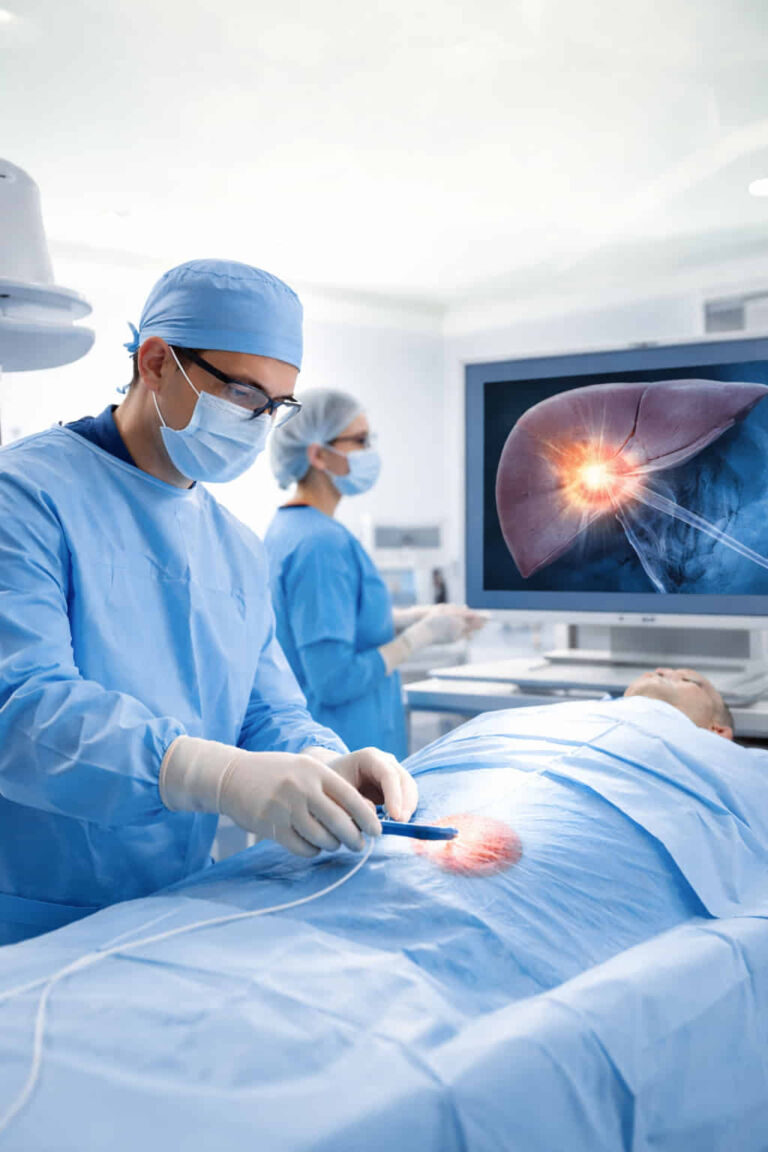
Advanced Interventional Oncology Treatment for Cancer Care in India
Delayed Symptoms Can Impact Your Health Silently
Interventional oncology is an advanced, minimally invasive approach used to treat cancer when traditional surgery may not be possible or effective. It offers targeted treatment directly to tumors using image-guided techniques.
While it provides effective tumor control with fewer complications, cancer progression and delayed symptoms can still affect overall health if not treated on time.As tumors grow or spread, patients may experience symptoms such as pain, fatigue, or organ-related issues. Early diagnosis and expert interventional oncology care are essential to manage these conditions and improve treatment outcomes.
The impact of a tumour that is not treated
💔 Persistent Pain
Ongoing pain caused by tumor growth or pressure on nearby organs may worsen over time.
💔 Unexplained Weight Loss
Sudden weight loss without any lifestyle changes can be an early sign of cancer progression.
💔 Fatigue & Weakness
Continuous tiredness and low energy levels may indicate the body is affected by cancer.
💔 Organ-Specific Symptoms
Symptoms like abdominal pain, breathlessness, or changes in organ function may occur depending on tumor location.

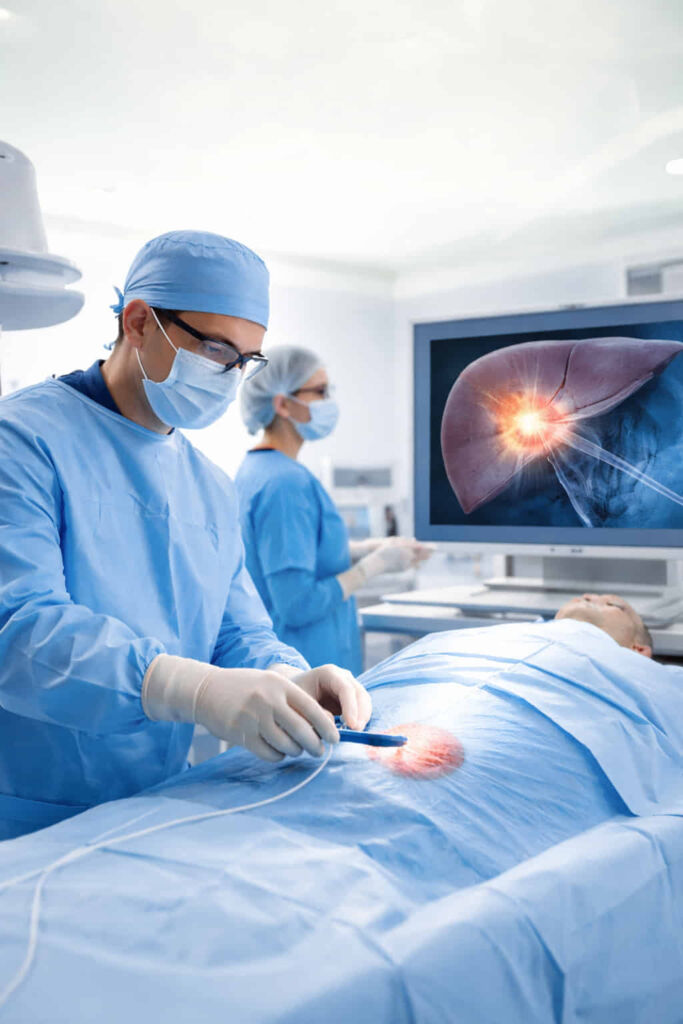
How Interventional Oncology Works for Cancer Treatment
Minimally invasive, image-guided treatment that targets and destroys tumors.
Image-Guided Targeting of Tumor
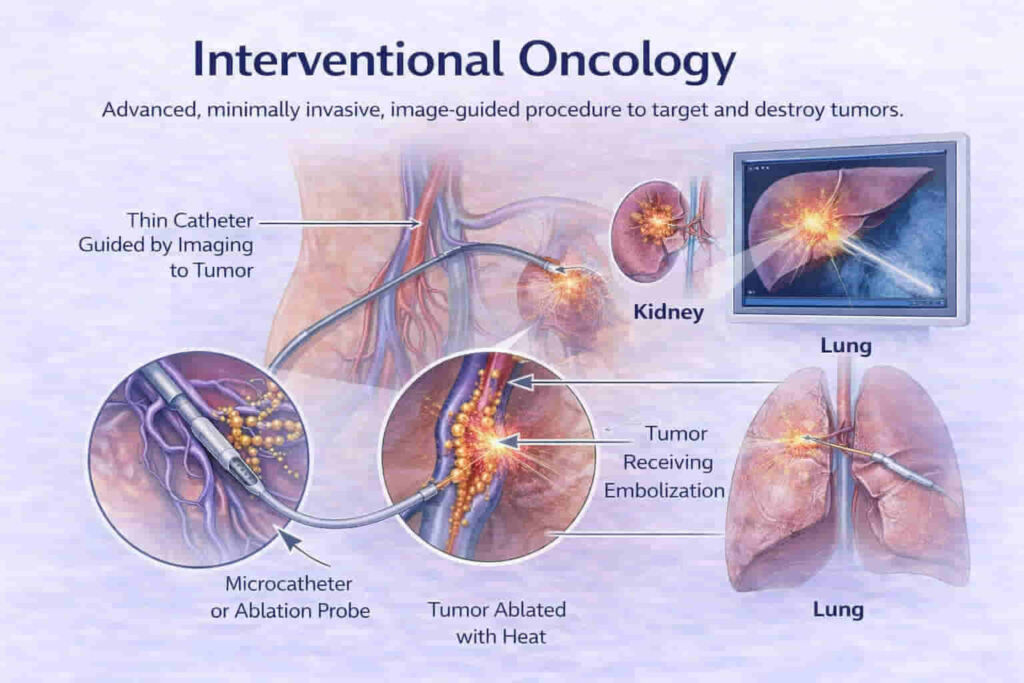
A thin catheter or needle is guided to the tumor using imaging like CT, ultrasound, or fluoroscopy. This ensures precise targeting of cancer cells while protecting nearby healthy tissue.
Insertion of Specialized Instruments
Once the tumor is located, microcatheters or ablation probes are placed into or near it. These tools deliver targeted treatment such as heat, cold, or medication.
Tumor Destruction (Ablation or Embolization)
Treatments include ablation, which destroys tumors using extreme temperatures, and embolization, which blocks blood supply to shrink the tumor. These methods are effective for various cancers.
Monitoring and Controlled Treatment Process
Real-time imaging monitors the procedure to ensure accuracy. Doctors can make adjustments during treatment for better outcomes and safety.
Tumor Shrinkage and Recovery
The tumor gradually shrinks as treated cells are absorbed by the body. Patients experience faster recovery, less pain, and shorter hospital stays.
Get a complete, detailed explanation of Interventional Oncology by Dr Ram Kishore
How Interventional Oncology Works for Cancer Treatment
Minimally invasive, image-guided treatment that targets and destroys tumors.
Image-Guided Targeting of Tumor
A thin catheter or needle is guided to the tumor using imaging like CT, ultrasound, or fluoroscopy. This ensures precise targeting of cancer cells while protecting nearby healthy tissue.
Insertion of Specialized Instruments
Once the tumor is located, microcatheters or ablation probes are placed into or near it. These tools deliver targeted treatment such as heat, cold, or medication.
Tumor Destruction (Ablation or Embolization)
Treatments include ablation, which destroys tumors using extreme temperatures, and embolization, which blocks blood supply to shrink the tumor. These methods are effective for various cancers.
Monitoring and Controlled Treatment Process
Real-time imaging monitors the procedure to ensure accuracy. Doctors can make adjustments during treatment for better outcomes and safety.
Tumor Shrinkage and Recovery
The tumor gradually shrinks as treated cells are absorbed by the body. Patients experience faster recovery, less pain, and shorter hospital stays.
Interventional Oncology: Targeted Tumor Treatment Without Major Surgery
Interventional Oncology vs Traditional Cancer Surgery: Effectiveness, Recovery, and Safety
 Benefits of Interventional Oncology
- Highly Invasive Procedure – Requires large incisions and extensive tissue disruption.
- Longer Recovery Time – Extended hospital stay and delayed return to normal activities.
- Higher Pain Levels – More post-operative discomfort and need for pain management.
- Increased Risk of Complications – Greater chances of bleeding, infection, and surgical errors
- Organ Function Impact – Possible damage or reduced function of vital organs.
- Not Suitable for High-Risk Patients – Unsafe for elderly or those with comorbidities.
- Longer Hospitalization – Requires intensive monitoring and post-surgical care.
- Limited Repeatability – Difficult to perform multiple surgeries if cancer recurs.
⚡ Limitations of Traditional Cancer Surgery
- Highly Invasive – Large incisions and tissue damage.
- Long Recovery – Delayed return to normal activities.
- More Pain – Increased post-surgical discomfort.
- Higher Risk – Greater chances of complications.
- Organ Impact – May affect vital organ function.
- Not for High-Risk Patients – Unsafe for elderly or comorbid cases.
- Long Hospital Stay – Requires extended monitoring.
- Limited Repeatability – Difficult to repeat if cancer returns.
Interventional Oncology: Targeted Tumor Treatment Without Major Surgery
Interventional Oncology vs Traditional Cancer Surgery: Effectiveness, Recovery, and Safety
🛡️Benefits of Interventional Oncology
- Minimally Invasive Treatment – Image-guided procedures without major surgery.
- Targeted Therapy – Destroys tumors while protecting healthy tissue.
- Faster Recovery – Short hospital stay and quick return to normal life.
- Reduced Pain & Risk – Fewer complications than traditional surgery.
- Organ Preservation – Protects liver, lung, and kidney function.
- Outpatient Procedures – No long hospital stays required.
- Repeatable Treatment – Can be safely repeated if needed.
- Improved Quality of Life – Less stress and better patient comfort.
⚡ Limitations of Traditional Cancer Surgery
- Highly Invasive – Large incisions and tissue damage.
- Long Recovery – Delayed return to normal activities.
- More Pain – Increased post-surgical discomfort.
- Higher Risk – Greater chances of complications.
- Organ Impact – May affect vital organ function.
- Not for High-Risk Patients – Unsafe for elderly or comorbid cases.
- Long Hospital Stay – Requires extended monitoring.
- Limited Repeatability – Difficult to repeat if cancer returns.
★★★★★
“After being diagnosed with a liver tumor, I was anxious about undergoing major surgery. Interventional oncology gave me a minimally invasive cancer treatment option that didn’t require large incisions. The procedure was quick, and I was discharged the next day. My recovery was smooth, and follow-up scans showed excellent results. I’m grateful for this advanced, image-guided cancer treatment that helped me return to my normal life faster.”

David Paul
Hyderabad, India
Age 42| 1 years Post – Interventional Oncology
★★★★★
“I was not a good candidate for traditional cancer surgery due to my age and health conditions. Interventional oncology provided a safe and effective alternative treatment. The targeted therapy treated my tumor without damaging surrounding organs like the lungs and kidneys. I experienced very little pain, and my recovery time was much shorter than expected. This treatment truly improved my quality of life.”

Suresh K
Chennai, India
Age 73| 1.4years Post Interventional Oncology
Patient Experiences with Interventional Oncology Treatment
★★★★★
“After being diagnosed with a liver tumor, I was anxious about undergoing major surgery. Interventional oncology gave me a minimally invasive cancer treatment option that didn’t require large incisions. The procedure was quick, and I was discharged the next day. My recovery was smooth, and follow-up scans showed excellent results. I’m grateful for this advanced, image-guided cancer treatment that helped me return to my normal life faster.”

David Paul
Hyderabad, India
Age 42 | 1.5 years Post – Interventional Oncology
★★★★★
“I was not a good candidate for traditional cancer surgery due to my age and health conditions. Interventional oncology provided a safe and effective alternative treatment. The targeted therapy treated my tumor without damaging surrounding organs like the lungs and kidneys. I experienced very little pain, and my recovery time was much shorter than expected. This treatment truly improved my quality of life.”

Suresh K
Chennai, India
Age 73| 2 years Post Interventional Oncology
Frequently Asked Questions About Interventional Oncology
What is Interventional Oncology?
Interventional oncology is a minimally invasive cancer treatment that uses image-guided techniques like CT, MRI, or ultrasound to target tumors. It allows doctors to destroy or shrink cancer cells without major surgery. This approach reduces damage to healthy tissues and improves recovery time.
How does Interventional Oncology work?
It works by using small instruments such as catheters or needles guided precisely to the tumor. Treatments like ablation or embolization are then used to destroy cancer cells. The procedure is highly targeted, ensuring minimal impact on surrounding organs.
What types of cancers can be treated?
Interventional oncology is commonly used for liver, kidney, lung, and bone cancers. It is also effective for treating metastatic tumors that have spread from other parts of the body. Many patients who are not candidates for surgery can benefit from this approach.
Is Interventional Oncology safe?
Yes, it is generally considered safe with a lower risk compared to traditional surgery. Since it is minimally invasive, there is less bleeding, reduced infection risk, and fewer complications. Most procedures are performed under imaging guidance for high precision.
What are the benefits of Interventional Oncology?
It offers faster recovery, less pain, and shorter hospital stays compared to open surgery. The treatment is targeted, preserving healthy tissue and organ function. It is also repeatable, making it useful for managing recurring cancers.
What is the recovery time after treatment?.
Recovery is usually quick, with many patients discharged the same day or within 24 hours. Most people can return to normal activities within a few days to a couple of weeks. This is significantly shorter than traditional cancer surgery recovery times
Who is a good candidate for Interventional Oncology?
Patients who cannot undergo major surgery due to age, health conditions, or tumor location are ideal candidates. It is also suitable for those looking for less invasive treatment options. A specialist evaluates each case to determine suitability.
Are Interventional Oncology procedures painful?
Most procedures are done under local anesthesia or mild sedation, making them relatively painless. Patients may experience mild discomfort after the procedure, but it is usually manageable with medication. Recovery is generally smooth and comfortable.
Frequently Asked Questions About Intervetional Oncology
What is Interventional Oncology?
Interventional oncology is a minimally invasive cancer treatment that uses image-guided techniques like CT, MRI, or ultrasound to target tumors. It allows doctors to destroy or shrink cancer cells without major surgery. This approach reduces damage to healthy tissues and improves recovery time.
How does Interventional Oncology work?
It works by using small instruments such as catheters or needles guided precisely to the tumor. Treatments like ablation or embolization are then used to destroy cancer cells. The procedure is highly targeted, ensuring minimal impact on surrounding organs.
What types of cancers can be treated?
Interventional oncology is commonly used for liver, kidney, lung, and bone cancers. It is also effective for treating metastatic tumors that have spread from other parts of the body. Many patients who are not candidates for surgery can benefit from this approach.
Is Interventional Oncology safe?
Yes, it is generally considered safe with a lower risk compared to traditional surgery. Since it is minimally invasive, there is less bleeding, reduced infection risk, and fewer complications. Most procedures are performed under imaging guidance for high precision.
What are the benefits of Interventional Oncology?
It offers faster recovery, less pain, and shorter hospital stays compared to open surgery. The treatment is targeted, preserving healthy tissue and organ function. It is also repeatable, making it useful for managing recurring cancers.
What is the recovery time after treatment?
Recovery is usually quick, with many patients discharged the same day or within 24 hours. Most people can return to normal activities within a few days to a couple of weeks. This is significantly shorter than traditional cancer surgery recovery times.
Who is a good candidate for Interventional Oncology?
Patients who cannot undergo major surgery due to age, health conditions, or tumor location are ideal candidates. It is also suitable for those looking for less invasive treatment options. A specialist evaluates each case to determine suitability.
Are Interventional Oncology procedures painful?
Most procedures are done under local anesthesia or mild sedation, making them relatively painless. Patients may experience mild discomfort after the procedure, but it is usually manageable with medication. Recovery is generally smooth and comfortable.
Your Life Doesn't Have to Be Controlled by a Tumour
Thousands of women have reclaimed their freedom through UFE, a safe and minimally invasive treatment for uterine fibroids. You don’t have to live with constant pain, heavy bleeding, or exhaustion. You deserve relief without major surgery or long recovery. Take control of your health and take the first step toward a life free from fibroid symptoms today.
Available in Hyderabad & Chennai | Cleveland Clinic Trained | 14+ Years Experience | 90% Success Rate
First Consultation is Risk-Free: Meet with Dr. Kishore, discuss your symptoms, and explore all treatment options. No pressure, no obligation. We’re here to help you make the best decision for your health.
Your Life Doesn't Have to Be Controlled by a Tumour
Thousands of women have reclaimed their freedom through UFE, a safe and minimally invasive treatment for uterine fibroids. You don’t have to live with constant pain, heavy bleeding, or exhaustion. You deserve relief without major surgery or long recovery. Take control of your health and take the first step toward a life free from fibroid symptoms today.
Available in Hyderabad & Chennai | Cleveland Clinic Trained | 14+ Years Experience | 90% Success Rate
First Consultation is Risk-Free: Meet with Dr. Kishore, discuss your symptoms, and explore all treatment options. No pressure, no obligation. We’re here to help you make the best decision for your health.