
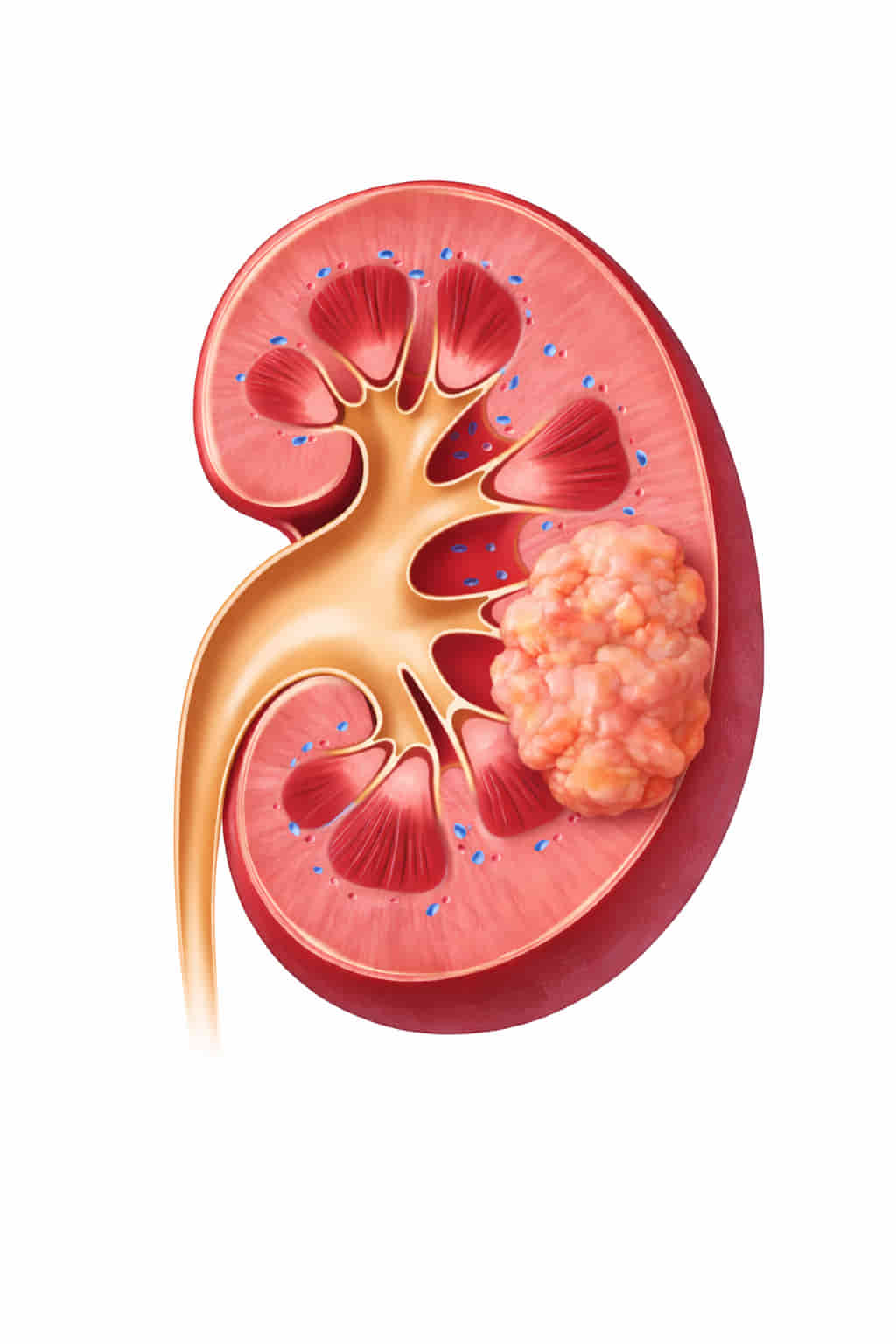
Renal Cancer: Renal Cryoablation
Understanding Kidney Tumors and When Minimally Invasive Treatment Is Needed
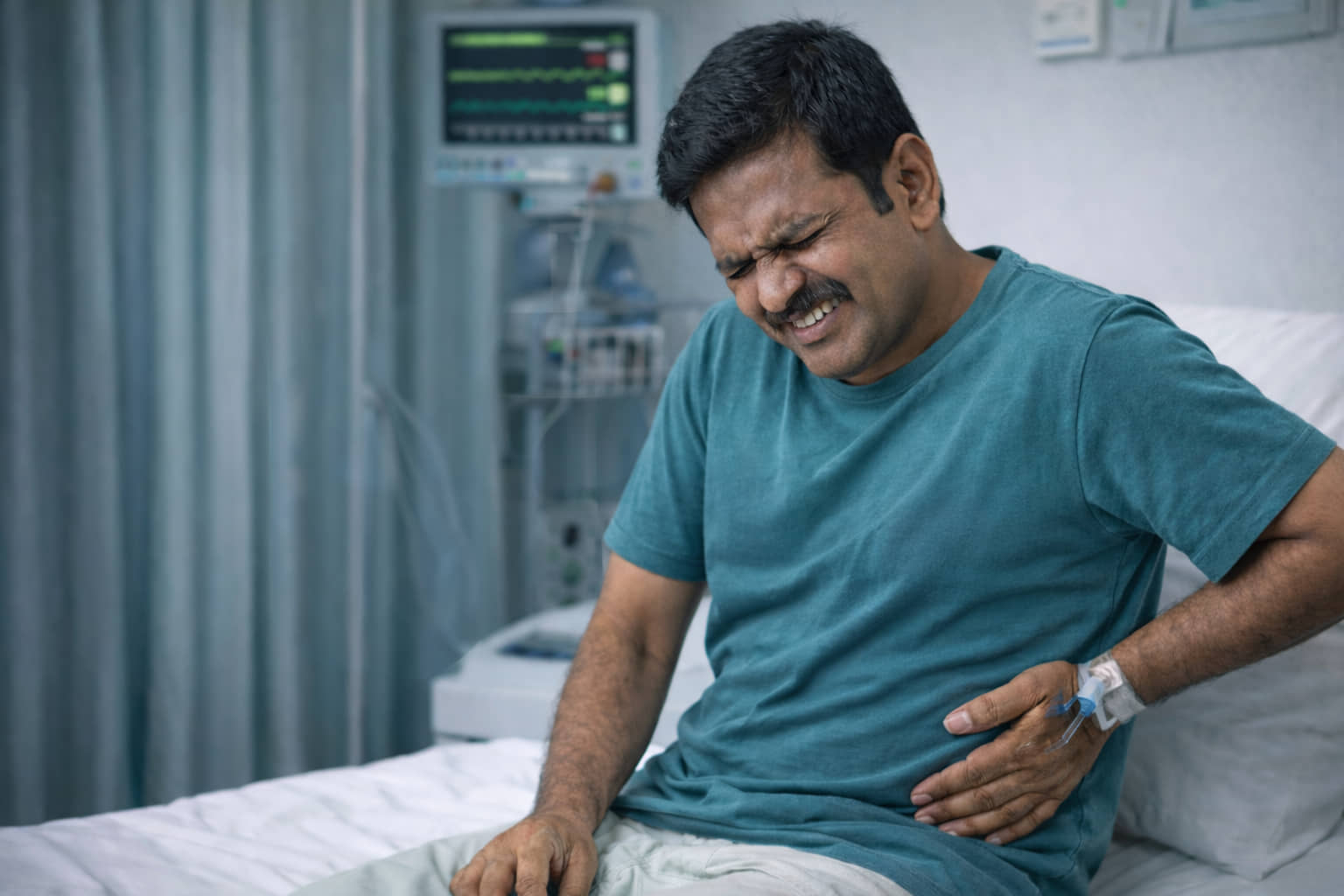
Many kidney tumors are found unexpectedly during scans done for other health problems. Some patients may notice symptoms like:
- blood in the urine.
- side pain.
- but often the tumor causes no warning signs.
- removing the entire kidney or undergoing major surgery may not always be necessary.
For patients who want to preserve kidney function or avoid a long recovery, minimally invasive treatments like Renal Cryoablation provide a safe and effective option—destroying the tumor while protecting the healthy part of the kidney.

Globally recognized innovator, Dr. Ram K Gurajala MD, leads the frontier with patented technologies, 40+ pioneering publications, and breakthroughs that redefine vascular care for patients in Hyderabad, Chennai, and across India.



Non-surgical – Targeted tumor freezing – Preserves kidney function – Faster recovery – Non-surgical – Targeted tumor freezing – Preserves kidney function – Faster recovery
🩺 What Is Renal Cryoablation?
For patients diagnosed with small kidney tumors, traditional surgery to remove part or all of the kidney is no longer the only option.
Renal Cryoablation is a cutting-edge, minimally invasive treatment that uses extreme cold to destroy cancerous cells while leaving the healthy part of the kidney intact.
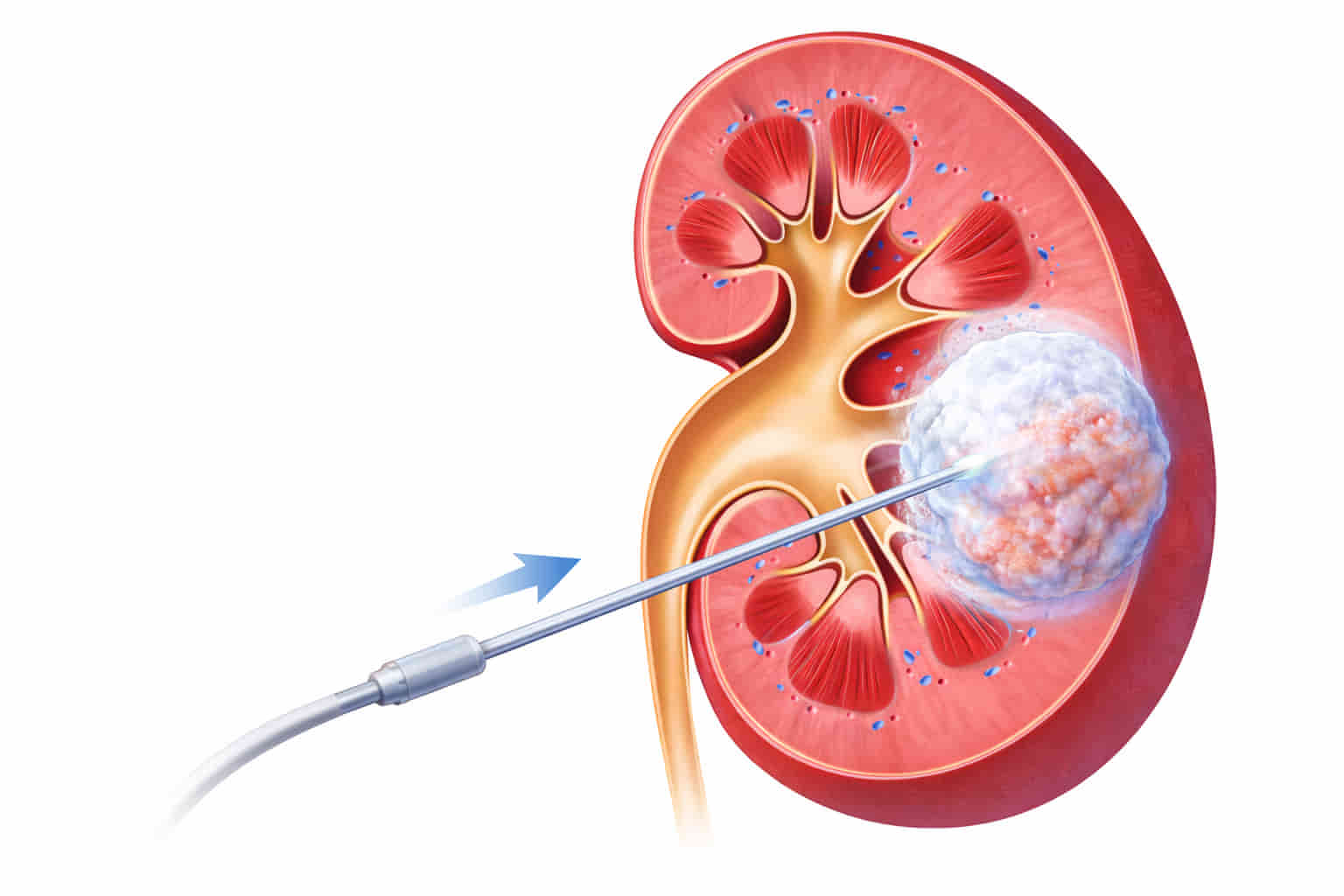
🎯 How Cryoablation Works: The Power of Ice
Renal Cryoablation is particularly effective for:
- Small Renal Masses: Tumors that are typically 4cm or smaller (Stage T1a).
- High-Risk Patients: Individuals who may not tolerate general anesthesia or major surgery due to age or other health conditions (e.g., heart or lung disease).
- Single Kidney Patients: Those who have only one functioning kidney and need to preserve as much healthy tissue as possible.
- Patients seeking a minimally invasive option with faster recovery and less pain
👥 Who Is a Candidate for Cryoablation?
Renal Cryoablation is particularly effective for:
- Small Renal Masses: Tumors that are typically 4cm or smaller (Stage T1a).
- High-Risk Patients: Individuals who may not tolerate general anesthesia or major surgery due to age or other health conditions (e.g., heart or lung disease).
- Single Kidney Patients: Those who have only one functioning kidney and need to preserve as much healthy tissue as possible.
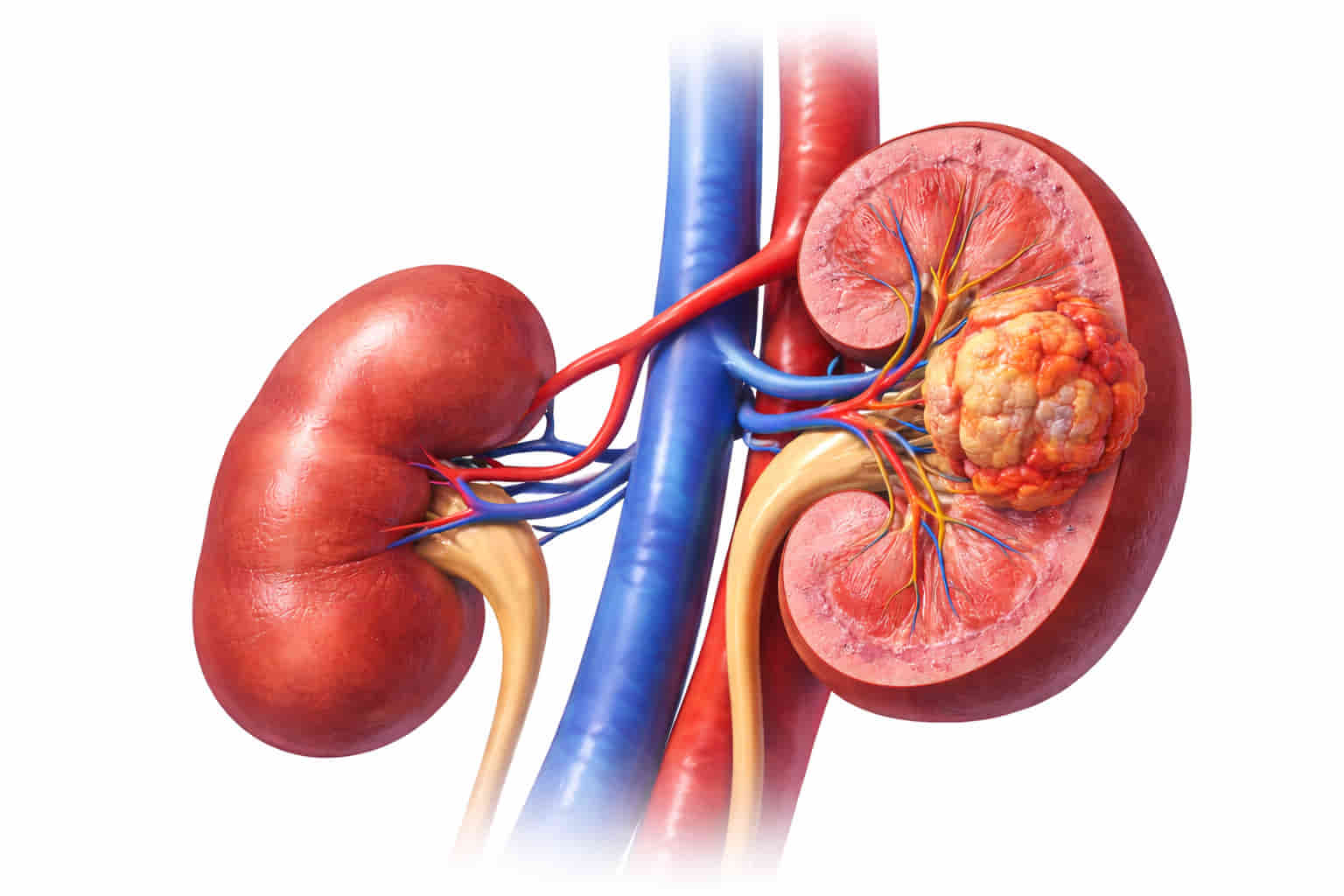
✅ Effectiveness and Recovery
Proven Benefits:
Proven Benefits:
- Kidney Preservation: Superior at maintaining overall kidney function compared to a total nephrectomy (removal of the entire kidney).
- Low Complication Rate: Significant reduction in the risk of bleeding and infection compared to open surgery.
- Rapid Return to Life: Most patients are discharged the same day or after a single night of observation.
- High Success Rate: For small tumors, cryoablation shows local control rates comparable to surgery.
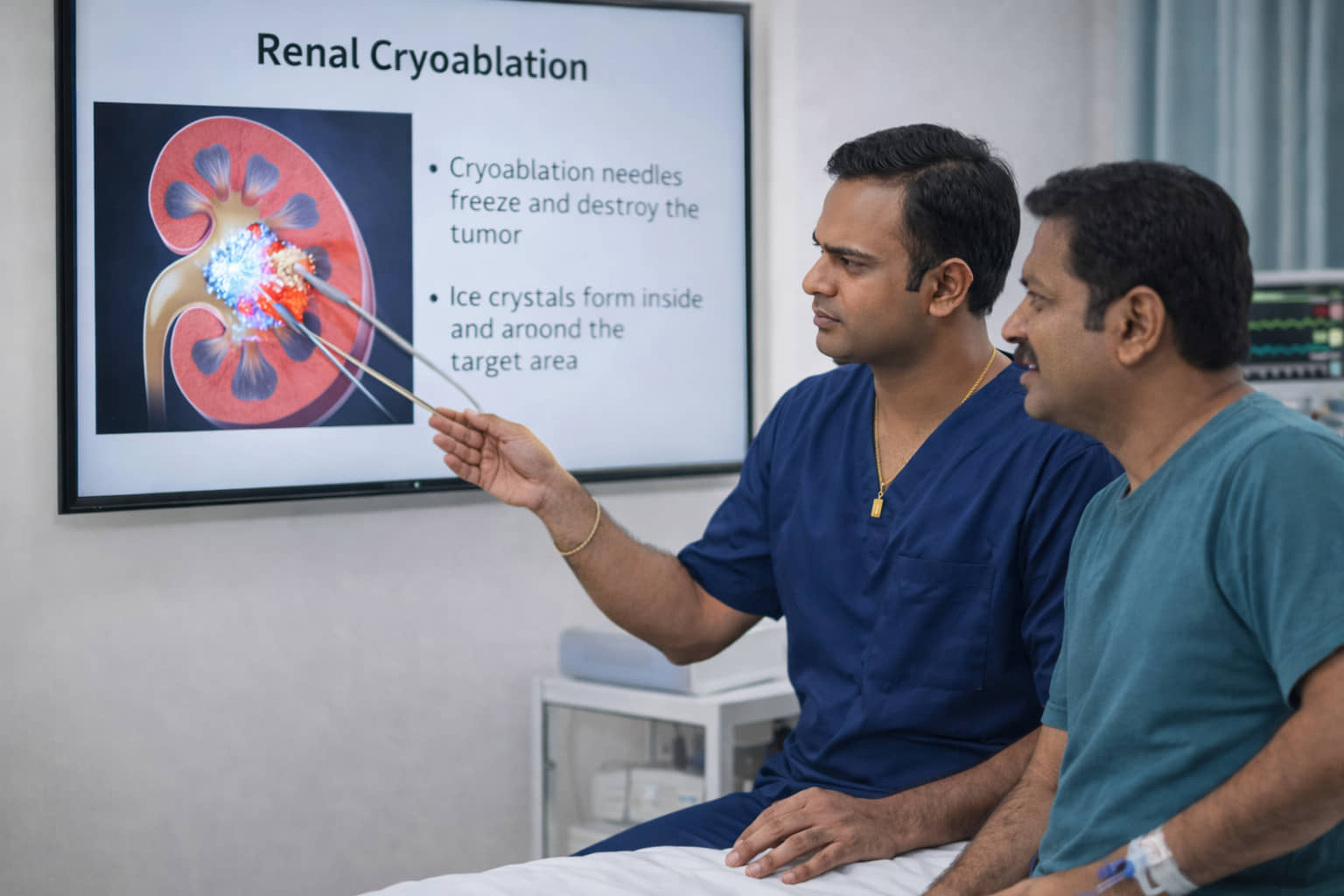
Recovery Timeline:
Recovery Timeline:
- Most patients return to light activities within 48 hours.
- Strenuous exercise can typically be resumed within 1–2 weeks.
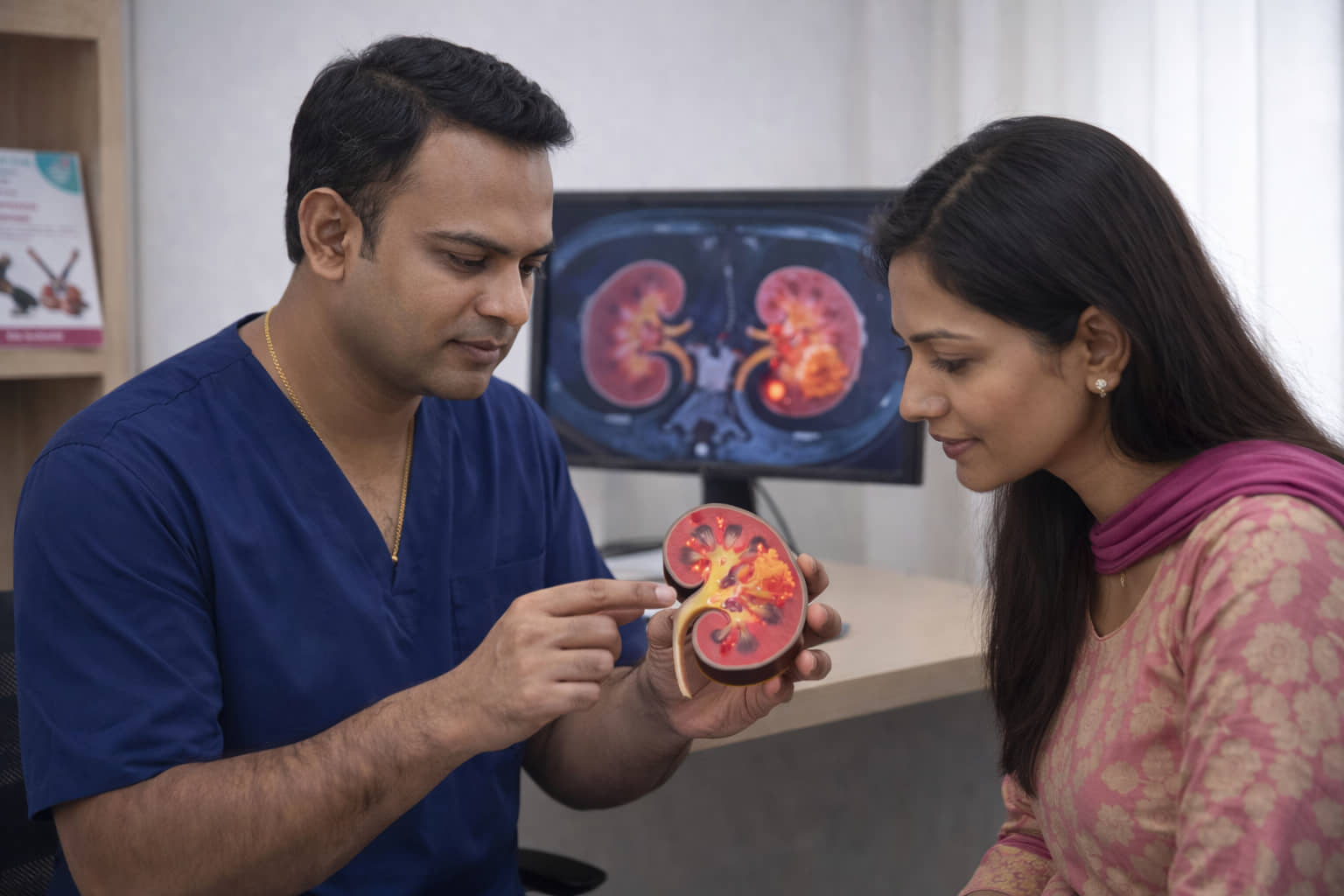
- Follow-up imaging (MRI or CT) is performed at regular intervals to ensure the tumor is completely resolved.
Non-surgical – Targeted tumor freezing – Preserves kidney function – Faster recovery – Non-surgical – Targeted tumor freezing – Preserves kidney function – Faster recovery

“When I was diagnosed with a small mass on my kidney, I was terrified of losing the whole organ. Dr. Ram Kishore explained that we could ‘freeze’ it away. I was amazed that the whole procedure was done through a few tiny needles. I went home the next day with almost no pain, and my follow-up scans show the cancer is gone. I’m back to my normal life in Chennai with my kidney function perfectly intact.”
— Venkat R
Chennai

It emphasizes that this is for when "others say it's impossible."
Bridge the worry and reclaim your future with Dr. Ram Kishore Gurajala’s no-cut expertise.
Move beyond the fear of losing a kidney. Consult Dr. Ram Kishore Gurajala for modern Renal Cryoablation—a precise, no-cut solution that saves your organ and restores your peace of mind when others say it’s impossible.
-
Advanced treatments
-
Personalized approach
-
Compassionate comfort
Common questions
Frequently asked questions about Renal Cryoablation
❓ What is "Renal Cryoablation" ?
Renal cryoablation is a minimally invasive procedure that uses extreme cold to destroy kidney tumors. It is often called a "no-cut" procedure because it is performed percutaneously (through the skin) using small needles rather than a surgical incision.
Here is a breakdown of how it works and why it is a vital "lifeline" for many:
1. How it Works
The "Pinhole" Access: An interventional radiologist uses live imaging (like a CT scan or ultrasound) to guide one or more thin, needle-like probes through the skin directly into the tumor.
The Freezing Cycle: Argon gas is circulated through the needles, creating an "ice ball" that reaches temperatures as low as -180°C. This extreme cold ruptures the cancer cells, destroying the tumor while it remains inside the body.
Natural Healing: After the procedure, the needles are removed and the body naturally absorbs the dead tumor tissue over time, leaving only a small amount of scar tissue.
❓ Is Renal Cryoablation painful?
The procedure is performed under deep sedation or general anesthesia, so you will not feel anything during the treatment. Afterward, most patients only report mild soreness at the site, which is easily managed with over-the-counter pain relievers.
❓ how to prepare for Renal Cryoablation ?
1. Medication Management
This is the most critical part of your preparation.
Blood Thinners: You may need to stop medications like Aspirin, Warfarin (Jantoven), Clopidogrel (Plavix), or Eliquis. This is usually done 3 to 7 days before the procedure to prevent bleeding.
❓ How long does the procedure take?
The actual freezing process takes about 30 to 45 minutes, but the total time in the procedure room—including setup and imaging—is usually around 2 hours.
❓ What happens to the tumor after it is frozen?
The dead cancer cells remain in the kidney but are no longer active. Over several months, your body’s immune system naturally breaks down the dead tissue and replaces it with a small, harmless scar.
❓ Will I have a scar?
No. The cryoprobes are about the size of a standard needle. There are no incisions to stitch; we simply place a small adhesive bandage over the entry points.
❓ Can cryoablation be used for other types of cancer?
Yes. In addition to renal cancer, cryoablation is successfully used to treat tumors in the lung, bone, and liver. Dr. Ram will evaluate if this technology is the best fit for your specific diagnosis.