Introduction
Many patients believe that surgery is the only way to treat serious medical conditions. However, advances in modern medicine now allow doctors to treat many diseases without large surgical incisions. One of the most important innovations in modern healthcare is Interventional Radiology, a medical specialty that uses image guided therapy and minimally invasive procedures to diagnose and treat diseases.
Interventional radiologists use advanced imaging technologies such as ultrasound, CT scans, and fluoroscopy to guide thin catheters and needles inside the body. These procedures are highly precise and allow doctors to treat the affected area without major surgery.
Because of this minimally invasive approach, patients usually experience less pain, fewer complications, shorter hospital stays, and faster recovery times compared to traditional surgery. Today, many conditions can be treated effectively through interventional radiology procedures.
In this article, we will explore 10 common conditions that can be treated without surgery using interventional radiology.
What Is Interventional Radiology?
Interventional radiology is a medical specialty that focuses on treating diseases using image guided medical procedures. Instead of making large surgical cuts, doctors insert a small catheter or needle through a tiny puncture in the skin and guide it to the affected area using real-time imaging.
These procedures are part of a broader category called minimally invasive treatment options and are commonly used for many medical conditions.
Benefits of interventional radiology include:
- Smaller incisions
- Minimal scarring
- Reduced pain
- Lower risk of infection
- Faster recovery
- Many procedures performed on an outpatient basis
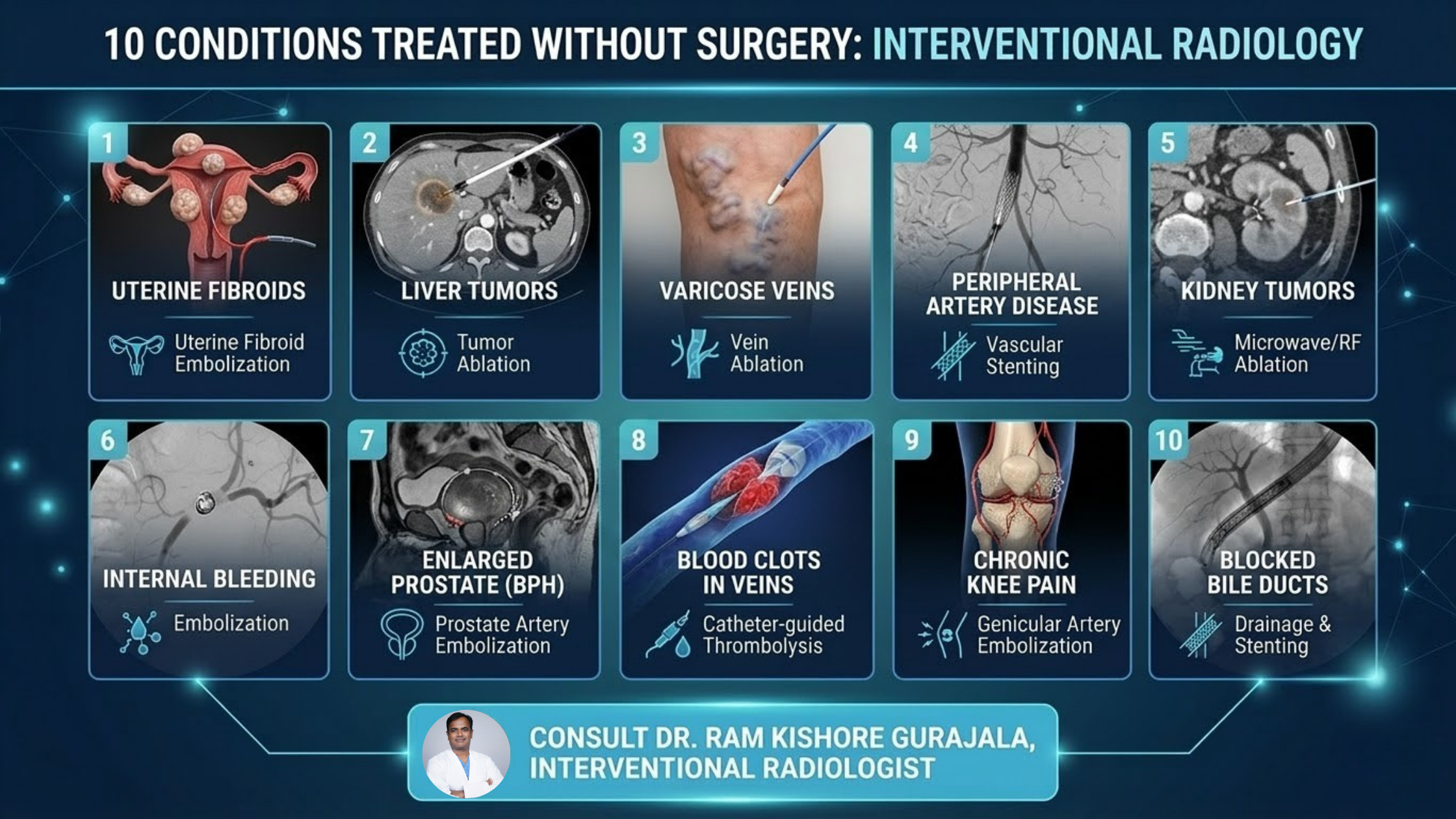
10 Conditions That Can Be Treated Without Surgery
1. Uterine Fibroids
Uterine fibroids are non-cancerous growths that develop in the uterus and can cause symptoms such as heavy menstrual bleeding, pelvic pain, and pressure in the abdomen.A minimally invasive treatment called uterine fibroid embolization blocks blood supply to fibroids, causing them to shrink. This procedure provides a non surgical treatment for uterine fibroids without removing the uterus.
2. Liver Tumors
Certain liver cancers and metastatic tumors can be treated using tumor ablation treatment. During this procedure, doctors insert a needle directly into the tumor and destroy cancer cells using heat or cold energy.
This minimally invasive cancer treatment allows targeted destruction of tumor tissue without open surgery.
3. Varicose Veins
Varicose veins can cause leg pain, swelling, and discomfort. Interventional radiology offers treatments such as endovenous laser therapy and radiofrequency ablation that close damaged veins and restore proper blood flow.
These treatments are effective alternatives to traditional vein surgery.
4. Peripheral Artery Disease
Peripheral artery disease occurs when arteries in the legs become narrowed or blocked. Interventional radiologists can perform angioplasty and vascular stenting procedures to open these arteries and improve circulation.
This catheter based treatment restores blood flow without major surgery.
5. Kidney Tumors
Small kidney tumors can often be treated using radiofrequency ablation or microwave ablation, which destroy tumor tissue while preserving healthy kidney tissue.
These procedures are considered minimally invasive procedures for tumors.
6. Internal Bleeding
In cases of internal bleeding, doctors can perform embolization procedures to stop bleeding by blocking the damaged blood vessel. This treatment is highly effective in emergencies and trauma cases.
7. Enlarged Prostate (Benign Prostatic Hyperplasia)
Men suffering from benign prostatic hyperplasia (BPH) may experience urinary symptoms such as frequent urination or difficulty passing urine.
Prostate arteryhttps://ir4ubyram.com/prostate-artery-embolization/ embolization is a minimally invasive treatment that reduces blood supply to the prostate, helping relieve symptoms.
8. Blood Clots in Veins
Conditions such as deep vein thrombosis (DVT) can be treated using catheter-guided techniques that dissolve or remove blood clots. This reduces the risk of complications such as pulmonary embolism.
9. Chronic Knee Pain
Patients suffering from osteoarthritis-related knee pain may benefit from genicular artery embolization, a procedure that reduces inflammation and abnormal blood flow around the knee joint.
This treatment can help delay or avoid knee replacement surgery.
10. Blocked Bile Ducts or Kidney Drainage Problems
When bile ducts or kidney drainage pathways become blocked, image guided drainage procedures can relieve pressure and restore normal function.
These minimally invasive procedures help avoid complex surgical interventions.
Benefits of Interventional Radiology Treatments
Interventional radiology provides several advantages compared to traditional surgery.
Key Benefits
- Minimally invasive treatment
- Smaller incisions and less scarring
- Reduced risk of complications
- Faster recovery times
- Many procedures performed as outpatient treatments
- Shorter hospital stays
Because of these benefits, alternatives to open surgery are becoming increasingly popular among patients.
Who Is a Good Candidate for Interventional Radiology?
Patients who may benefit from interventional radiology treatments include those who:
- Want treatment without major surgery
- Have high surgical risk due to other health conditions
- Need faster recovery times
- Have tumors suitable for ablation procedures
- Have vascular blockages that can be treated with stents
A consultation with an experienced interventional radiologist can help determine the best treatment option.
Why Choose Dr. Ram Kishore Gurajala?
Dr. Ram Kishore Gurajala is a skilled Interventional Radiologist who specializes in advanced minimally invasive procedures. Using modern medical imaging technology and precision techniques, he provides targeted treatments designed to improve patient outcomes.
Patients benefit from:
- Advanced image guided procedures
- Less invasive treatment options
- Faster recovery
- Personalized patient care
Conclusion
Advancements in modern medicine have made it possible to treat many diseases without the need for traditional surgery. Through interventional radiology procedures, doctors can treat tumors, fibroids, vascular diseases, and other conditions using minimally invasive techniques.
For patients looking for treatment without major surgery, interventional radiology offers safer procedures, faster recovery, and highly effective results. Consulting a specialist can help determine whether these minimally invasive treatments are the right option for your condition.

Estimated reading time: 5 minutes